


 Home
 XBD
 Oct 21,2026

Paper roll thermal sensitivity should be assessed with the actual printer: readable output depends on the paper grade, approved settings and the conditions of the comparison.
Two white rolls can look almost identical and produce different results in the same receipt printer. The outside diameter and width describe fit, but they do not fully describe the response of the coated surface. Conversely, a darker receipt does not automatically identify a better roll. The useful question is whether the chosen paper produces reliable, readable output within the equipment manufacturer's supported operating conditions.
A controlled comparison makes that question answerable. It separates mechanical fit, printing response and later handling instead of treating them as one impression. This article focuses on ordinary receipt-paper selection. It does not establish that a roll is suitable for medical imaging, another specialized printer or a particular chemical declaration simply because it responds to heat.
What The Coating Changes At The Print Head
Appearance Does Not Describe Heat Response
The thermal coating creates an image when the printer applies heat in the required pattern. Koehler's explanation of conventional thermal paper describes this basic operating principle. It explains why the surface response matters, but it does not provide a universal setting for every paper and printer combination. The practical response still has to be considered with the selected grade and supported equipment.
A roll's clean white appearance is therefore only one observation. It does not establish sensitivity, image retention, consistency across a lot or suitability for the printer. A scratch mark made by hand is also a poor basis for comparing finished print performance because the applied pressure and friction are uncontrolled. Use a repeatable print file and a documented equipment condition when the decision concerns printed output.
Readability Is A Different Goal From Maximum Darkness
Print density should support the information that the receipt must carry. Small characters, fine rules and machine-readable symbols may reveal a problem that a large solid logo does not. Increasing darkness until the whole page looks bold can hide the question of whether thin features remain distinct. A useful evaluation considers the intended content and its acceptance method instead of rewarding the darkest-looking sample.
Nor does a visually acceptable receipt prove barcode quality. Where codes matter, define the relevant scanning or verification requirement and use suitable equipment and procedures. A quick successful scan with one device can be a useful observation, but it should not be described as a complete grading result. Keep these conclusions separate in the comparison record so that an appearance check does not silently become a performance certificate.
Establish Fit Before Adjusting The Printer
Confirm The Complete Media Specification
Start with the exact printer model and its current instructions. Relevant media information can include width, maximum roll diameter, thickness, core arrangement and loading direction. Not every printer uses the same dimensions or supports the same paper construction. The Epson TM-T20IV-L technical reference guide is one model-specific example of documented media and setting requirements; its limits should not be generalized to unrelated devices.
The thermal-paper catalogue is a starting point for identifying roll options. Match the chosen option to the equipment specification rather than assuming all products in the category are interchangeable. A roll that closes inside the compartment can still have an unsuitable width, thickness or winding condition. Confirm the relevant values in the order specification and retain the exact grade or product identifier.
Remove Mechanical Variables From The Comparison
A damaged edge, loose winding or a roll loaded in the wrong direction can confuse a print-response trial. Inspect the supplied roll and load it according to the printer instructions before comparing paper grades. Check the equipment condition using the manufacturer's normal maintenance guidance. Do not compensate for a mechanical problem by continually increasing energy settings, and do not open guarded or energized parts to conduct an informal test.
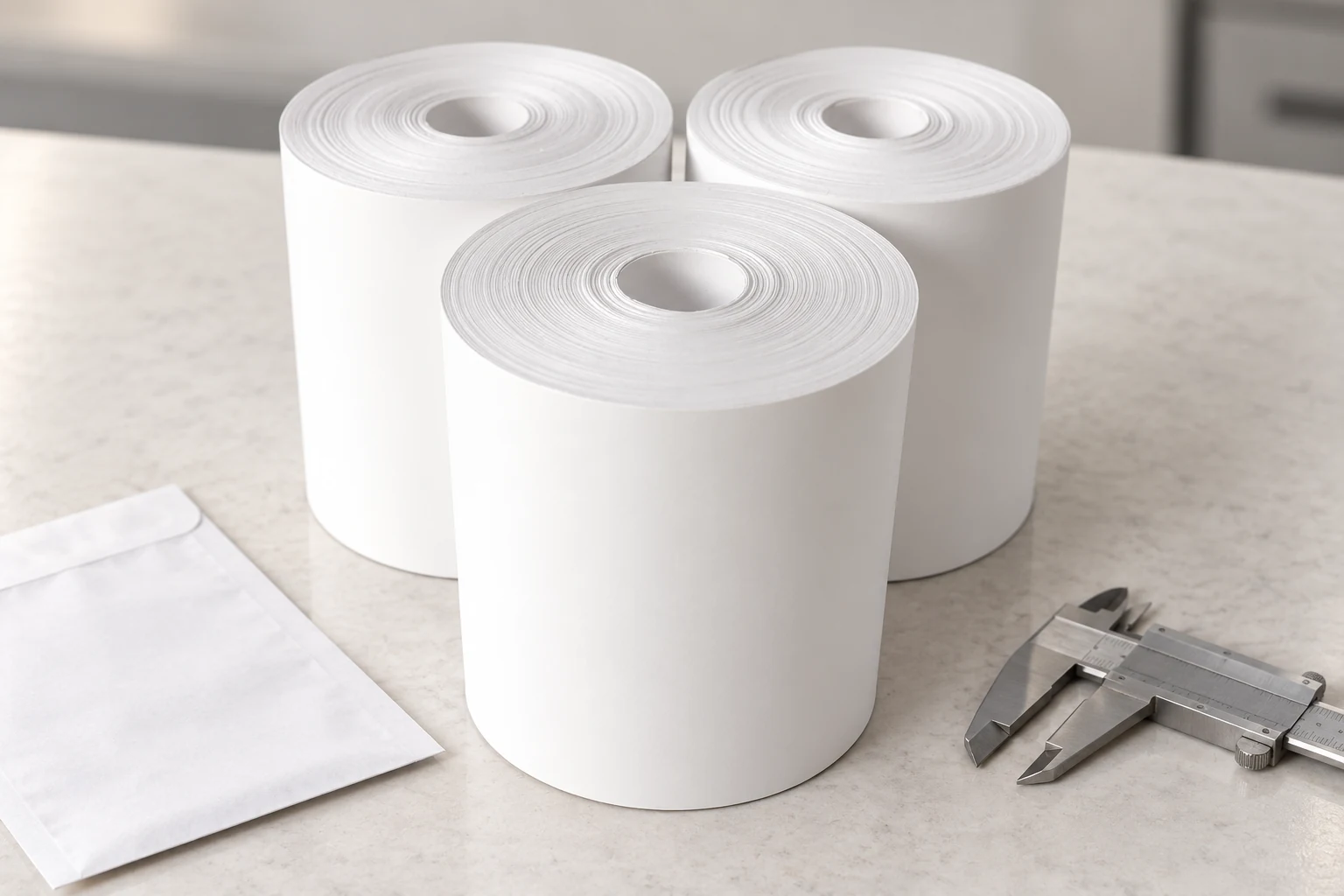
For the comparison, use rolls whose identity and condition can be traced. Record the supplier designation and lot where available, then keep the wrapper or another identifying record separate from the printed samples. If one roll has spent several days near a hot window and another is newly unpacked, their conditions are different even if the labels name the same grade.
Run A Comparison That Produces A Useful Record
Choose A Representative File And Stable Baseline
A realistic test file includes the features that matter in daily use: normal text, smaller text where actually required, rules and the relevant symbol format. Keep the file version fixed while comparing rolls. Record the printer model, configuration and any software setting that could affect output. Otherwise a changed driver option may be mistaken for a difference in paper. The baseline should use supported settings, not an improvised attempt to stress the equipment.
Paper roll thermal response is easier to interpret when the comparison has a clear sequence. Print the reference under the recorded baseline, load the candidate correctly, print the same file and identify both outputs immediately. If an approved adjustment is necessary, change one documented variable at a time. Note the result and the reason for the adjustment. Do not invent a universal darkness number: setting scales and behavior differ between equipment families.
Define Acceptance Before Looking At The Best Sample
A trial becomes biased when the acceptance rule is invented after a particularly attractive receipt appears. Decide first which content must be readable and how it will be assessed. Include the intended handling period and environment where they affect the business requirement. If the project needs a formal retention or durability claim, agree on the appropriate evidence with the paper supplier rather than treating a brief desk observation as a validated long-term test.
The retail application context can help identify realistic receipt content and handling steps. It cannot specify a universal test for every checkout environment. A shop that prints mostly short text receipts may evaluate a different workload from an operation using dense graphics or machine-readable returns information. The selection record should describe the actual use rather than relying on a broad application label.
| Observation | Variable to check | Useful next comparison | Conclusion to avoid |
|---|---|---|---|
| Light characters across the page | Supported settings, paper identity and equipment condition | Same file and printer with the known reference | Every light result proves inferior paper |
| Small features merge | Content design and approved energy setting | Compare fine text and symbols under recorded settings | Darker always means more readable |
| Uneven output across width | Loading, roll condition and printer maintenance | Repeat after approved checks, preserving the first sample | A setting change can fix every mechanical issue |
| Receipts change after handling | Storage history and exposure conditions | Compare identified samples with a protected reference | A short trial proves a lifetime claim |

Keep Paper Identity Stable After The Trial
Order The Grade That Was Actually Evaluated
A successful comparison loses value if the eventual purchase description says only “white thermal rolls.” Record the agreed dimensions, grade identifier, relevant construction details and any declarations required by the project. Where a supplier proposes an alternative, ask which characteristics differ and whether the earlier evidence remains applicable. An alternative may be suitable, but it should enter the decision through an explicit review instead of a silent substitution.
The factory information gives context for paper converting and supply. It does not establish that every listed option has the same thermal coating or the same print density at a given setting. A purchase record should link the approved sample and its test conditions to the product actually ordered. This is particularly useful when the same roll dimensions are offered in several grades.
Retain A Comparison Pair With Its Settings
Keep an identified reference receipt and candidate receipt with the comparison notes. Include the date, file version and any approved setting changes. Store them in a way that follows the paper supplier's guidance and preserves their value for later review. A photograph can supplement the record, but camera exposure and screen settings make it a weak substitute for the physical comparison where subtle tone matters.
When another delivery behaves differently, first confirm that the grade, printer settings and handling conditions match the original record. If they do not, the apparent difference may have more than one cause. The aim is to give the supplier an understandable observation: which lot, which machine, which file, which setting and which visible feature changed. A message saying only “printing is worse” leaves too many possibilities unresolved.

Include Handling In The Selection Boundary
Heat, light, moisture and contact with unsuitable materials can affect thermal-paper behavior or the retained image. The precise handling instructions depend on the grade, so obtain them for the product being selected. Do not assume that every paper shares the same storage limit or retention period. Where printed records must remain available, the operational plan may also include an appropriate digital record instead of relying solely on a receipt kept under uncontrolled conditions.

Frequently Asked Questions
Is A Roll Suitable If It Fits Inside The Printer?
Physical fit is necessary but incomplete. Confirm the full media specification and supported paper type for the exact model. Then assess output under documented conditions. Compartment space alone does not establish the correct thickness, winding or thermal response.
Should The Darkest Receipt Win The Comparison?
No. The goal is readable content and any required symbol performance within supported settings. Excessively bold output can obscure fine features. Use the acceptance criteria defined for the actual receipt rather than judging a large dark area in isolation.
Can One Successful Scan Establish Barcode Quality?
It shows that one device read that sample under those conditions. Formal quality requirements need the appropriate verification approach. Keep the limited scan observation separate from any broader claim about grading, reliability or compatibility across devices.
Must A New Delivery Repeat The Entire Trial?
That depends on the agreed quality arrangements and what has changed. Stable product identity and receiving checks support continuity. A changed grade, construction or equipment configuration may justify further review, even when the nominal roll dimensions remain the same.
Before approving paper roll thermal response for routine use, assemble the model, grade, comparison file and observed issue. A focused paper-and-printer review can then address a specific next check without guessing a universal setting.
 You May Also Like