


 Home
Home XBD
XBD  Jul 30,2026
Reliable atm paper rolls suppliers prove machine fit with an exact roll drawing, stable converting controls, sample testing, and lot-specific inspection records. “ATM roll” is not a complete specification: the paper system must match the printer's width, maximum outer diameter, core, winding direction, sensing method, print characteristics, and loading path. Supplier qualification should therefore begin with the installed machine matrix, not a generic size list.
Proof One: A Machine Matrix Tied To A Controlled Drawing
There is no universal ATM roll. Equipment manuals demonstrate how sharply requirements can differ by model; one manufacturer manual, for example, defines a 79.5 ± 0.5 mm width, a maximum 210 mm exterior diameter, an 18.0 mm inside diameter, inside printing, and semi-automatic loading for a particular unit. Those figures are useful evidence of model dependence, not default values for every machine.
Build a matrix with manufacturer, model, printer module, approved paper reference, width tolerance, maximum roll diameter, core inside and outside dimensions, winding orientation, sensing marks, and any spindle or loading restriction. Attach a drawing to each purchasing code. When a supplier proposes a change, the response should identify the affected models rather than describing the alternative as “standard.” The site's financial-services application page confirms the relevant use setting, but actual compatibility must still be established against the buyer's equipment records.
Proof Two: Converting Controls That Protect Fit
Paper chemistry matters, but many service failures begin with conversion. Excess width can drag against guides; excessive diameter can prevent the compartment from closing; a distorted or off-center core can load poorly; loose winding can change roll geometry; and dust or rough edges can affect feeding. Ask how slitting, winding tension, core placement, diameter, edge quality, and roll hardness are set and checked.
- Require measurement methods and tolerances, not only nominal dimensions.
- Ask for the sampling frequency at start-up, during the run, and before packing.
- Request a lot record that connects slit width, outer diameter, core, winding, and inspector.
- Define the disposition process for rolls or cartons that fall outside an acceptance limit.
Proof Three: Paper Performance Under The Actual Printer
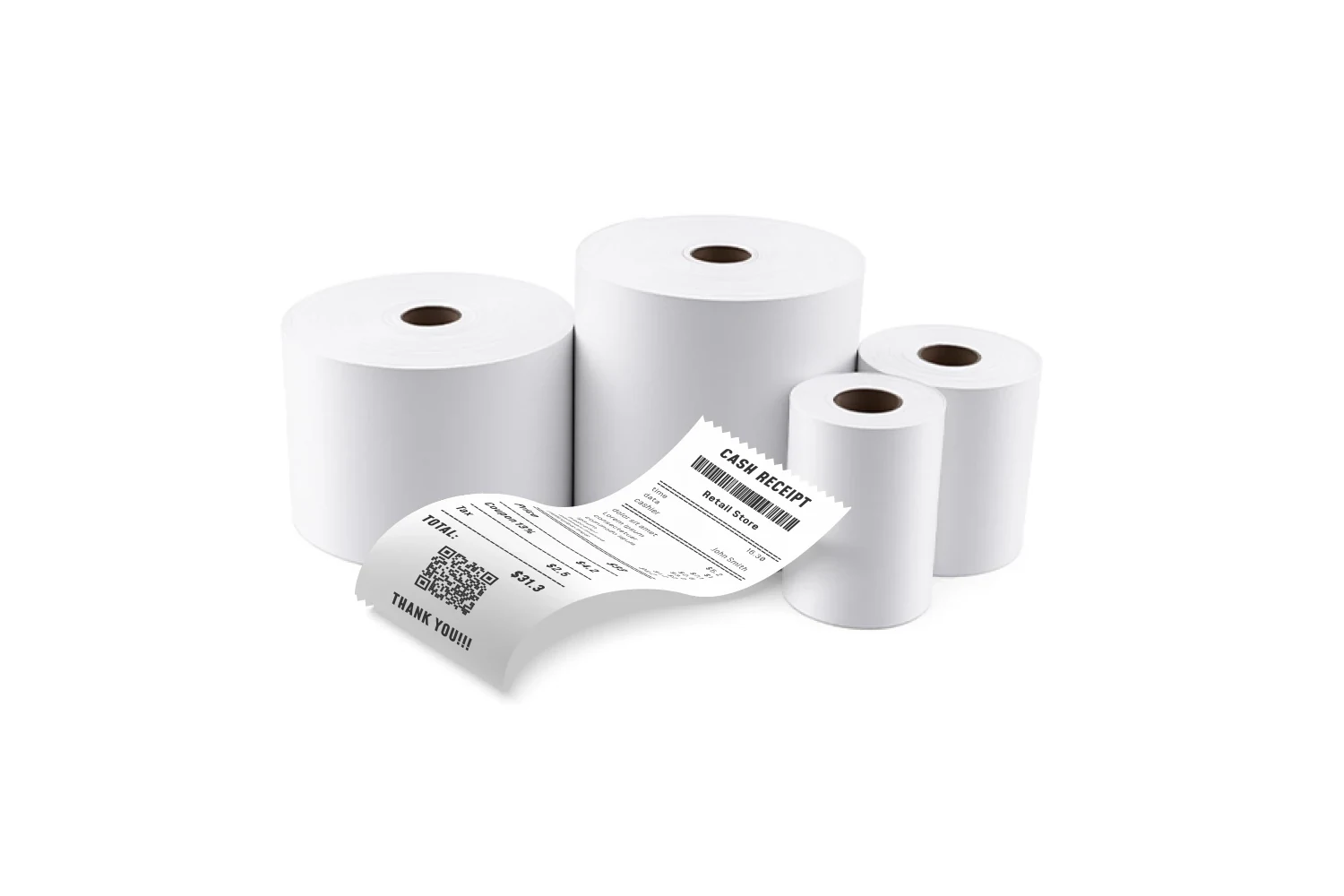
A sample should be tested in the installed ATM rather than judged only by scratching the coating. Confirm feed, cutting or tearing, barcode or small-text readability, image density, background cleanliness, head energy compatibility, curl, dust, and residue under realistic transaction cycles. Where the printer uses sense marks, printed logos, security copy, or reverse-side content, approve their position, contrast, repeat length, and winding orientation as part of the same trial.
Thermal image stability also depends on handling and storage. Technical paper guidance warns that elevated heat and humidity can adversely affect paper and the thermal image. For warm, humid distribution routes or long storage periods, request written conditions for unconverted stock, finished rolls, warehouse rotation, sealed packing, carton protection, and transport. Do not convert a general “long-lasting” claim into a retention promise unless the test method, storage conditions, and acceptance criterion are stated.
Proof Four: A Specific Material And Developer Declaration
“BPA-free” alone does not identify the complete developer system or prove suitability for a destination market. ECHA's public information on thermal paper shows why substitution questions can extend beyond BPA to other developers. Ask the supplier to name the paper grade and mill, state the developer declaration supported by current documentation, identify any topcoat or protective treatment, and confirm whether the proposed grade changes during the contract.
The same discipline applies to basis weight, caliper, whiteness, smoothness, sensitivity, and coating side. These values should appear in a product specification with test methods or referenced mill documentation. If the supplier offers custom or coated options through its thermal paper range, the proposal should distinguish a verified current grade from an optional configuration that still needs sampling.
Proof Five: Lot Evidence That Survives Shipping
A production lot should remain identifiable after individual rolls are wrapped, packed, palletized, shipped, and received. Agree the roll or pack code, carton mark, quantity per carton, inner protection, carton dimensions, pallet pattern, moisture barrier, and traceability information before approval. The outer pack must protect roll edges and geometry without making the product difficult to identify at the service point.
| Proof Point | Supplier Evidence | Acceptance Question | Common Gap |
|---|---|---|---|
| Machine fit | Model matrix and controlled roll drawing | Does every dimension and winding detail map to a printer? | One nominal size is offered for unrelated models |
| Conversion | In-process width, diameter, core, and winding record | Are limits, tools, frequency, and disposition defined? | Only a finished-roll photo is supplied |
| Print trial | Approved sample plan and machine results | Were feed, image, marks, curl, and dust checked together? | A hand-scratch test replaces printer validation |
| Material | Grade, mill, coating, and developer declaration | Can the supplied paper be linked to current documents? | “BPA-free” is the entire material specification |
| Packing | Pack drawing, carton mark, and traceability example | Will roll geometry and lot identity survive transport? | Carton details are decided after production |
Reviewing the supplier's online factory presentation can help identify questions about converting and packing, but the purchasing decision should rest on records for the quoted product and production site.
Proof Six: Change Control From Sample To Repeat Order
A passing sample is valuable only when its identity is preserved. Record the paper grade, mill, batch or reel reference, coating side, dimensions, core, winding, printing artwork, packaging, and test results for the approved sample. The purchase specification should require written approval before a change to material source, developer system, dimensions, core, printing, packaging, production site, or test method.
For repeat orders, compare incoming cartons and retained samples with the approved reference and review the supplier's lot records. Track defects by machine model and lot, not only by shipment. This turns field feedback into useful evidence: a jam linked to one model and one width result demands a different investigation from fading across several models after prolonged heat exposure.
Frequently Asked Questions
Can One ATM Roll Size Be Approved For Every Machine?
No. Approve compatibility by manufacturer, model, and printer module. Even when nominal width matches, maximum diameter, core, winding, sensing, loading, and paper sensitivity may differ. A consolidated purchasing code is safe only after the complete specification is verified for every mapped machine.
What Should Be Included In An ATM Roll Sample Test?
Test loading, feeding, transaction-length printing, cutting or tearing, density, fine text, barcodes where used, sense marks, curl, dust, and repeated operation. Record machine settings, sample identity, environmental conditions, test count, observations, and approval authority so the result can be reproduced.
Is A Mill Datasheet Enough To Qualify The Converter?
No. A mill datasheet supports the paper-grade review, while the converter controls slitting, winding, cores, printed marks, pack configuration, lot identity, and finished-roll inspection. Both material evidence and converting records are needed for a defensible approval.
How Should A Supplier Quote Be Compared Across Different Pack Configurations?
Normalize the exact roll specification, usable roll length or agreed measurement basis, rolls per carton, inner protection, carton and pallet configuration, destination basis, inspection scope, and documentation. Record every deviation beside the price; otherwise a lower quote may represent a different roll or a weaker pack.
Send the printer matrix, controlled roll drawing, sample plan, material declaration, and pack specification through the supplier contact page, then require the proposal to list every deviation before sample approval.
 You May Also Like