


 Home
 XBD
 Oct 09,2026

Billing paper rolls manufacturers should be assessed on their ability to keep converted rolls consistent across the delivered lot. A suitable sample establishes a starting point, but it does not show whether winding, cutting, packing and material identification remain controlled during a larger order. The useful distinction is between a roll that works once and a production system that can explain why successive rolls should behave similarly. Evaluation should connect the printer requirement, the manufacturing controls and the evidence accompanying shipment.
Start With The Roll's Actual Printing Function
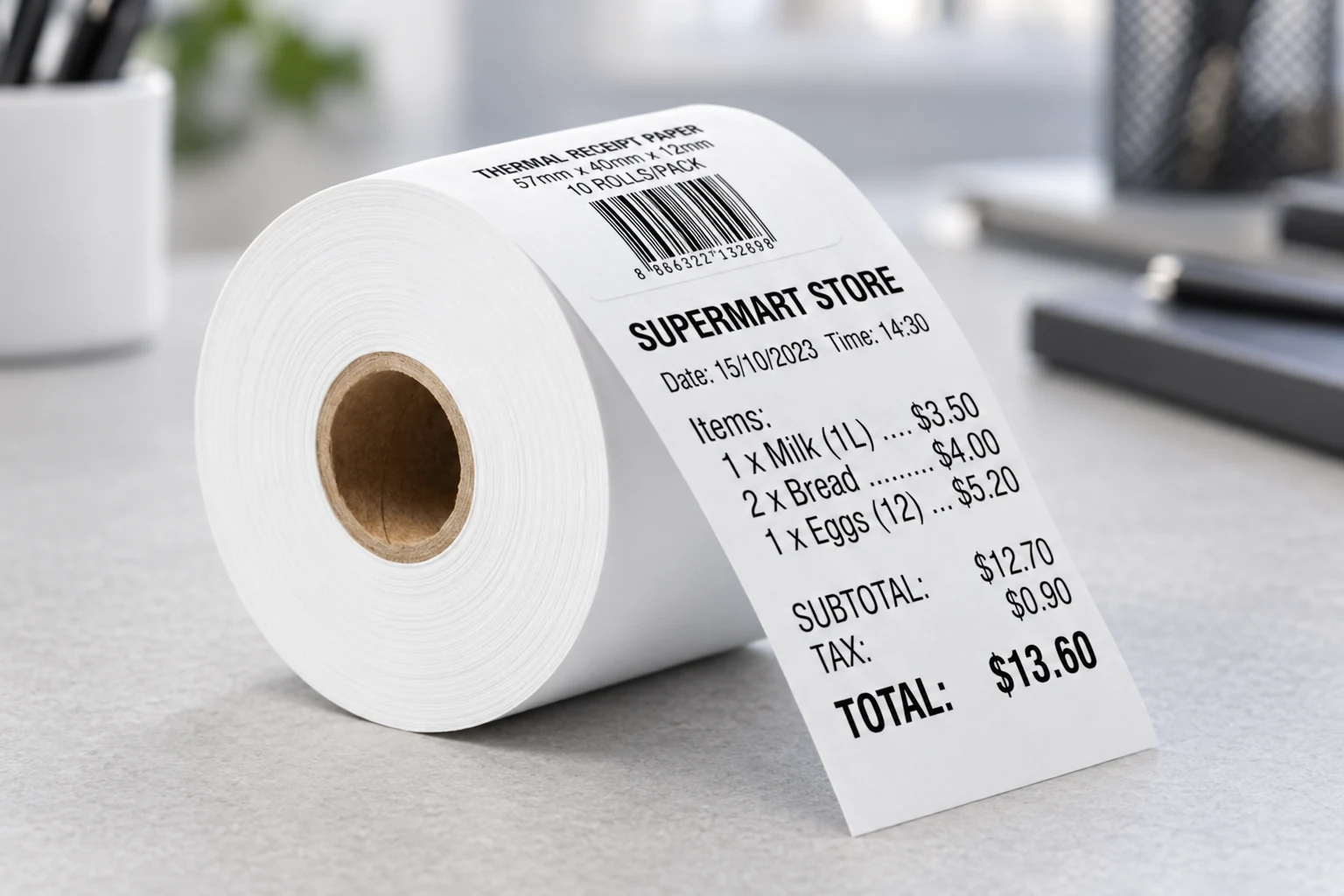
Billing paper is a broad commercial description. The required paper may be a direct-thermal receipt roll, another printing medium or a multi-part form. The printing method should be established before manufacturer claims are compared. This article focuses on thermal billing and receipt rolls because that is the relevant catalogue context, while keeping other paper formats separate. Compare the illustrated receipt roll format against the approved requirement.
Distinguish Thermal Receipts From Other Billing Media
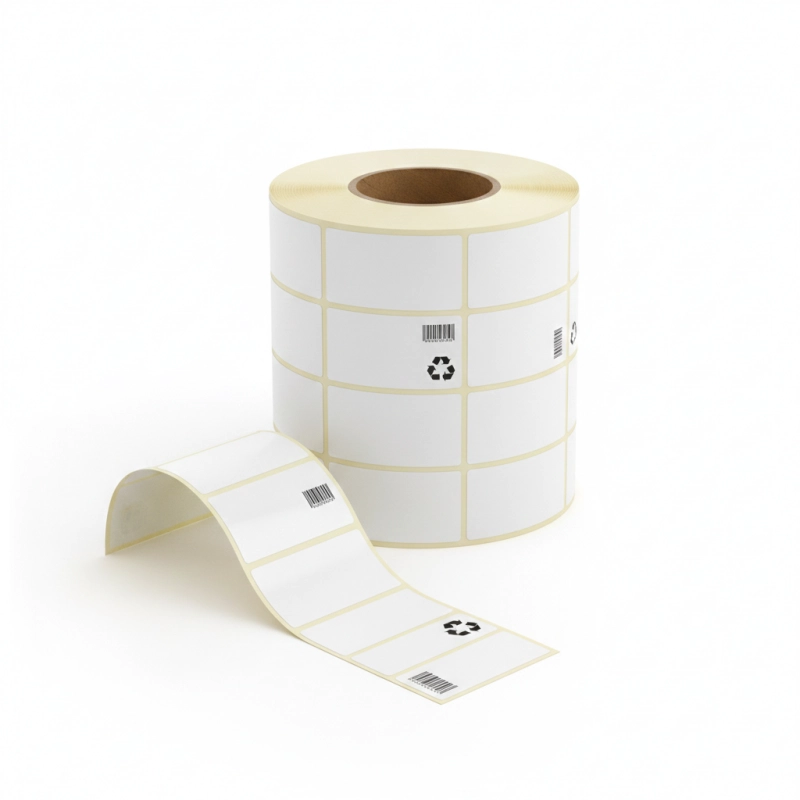
Direct-thermal printing uses a compatible thermal medium; it is not interchangeable with every paper sold for billing. The site lists thermal paper alongside self-adhesive labels, carbonless forms and copy paper. Those products answer different requirements. A request should identify the printer model, paper path and intended receipt format before a manufacturer offers an equivalent. The combined product catalogue helps distinguish formats, but a broad product range is not evidence that each one is suitable for the same machine.
Translate Machine Requirements Into Acceptance Criteria
Printer compatibility depends on more than the roll's nominal width. The allowed roll diameter, core arrangement, winding direction, paper characteristics and operating conditions need confirmation from the equipment documentation. Epson technical references specify media and roll constraints for individual models; those constraints should not be transferred to a different model without checking its documentation.
Connect The Paper Grade To The Delivered Lot
Roll consistency begins before small rolls are converted. The manufacturer should identify the material grade proposed for the order and the route for approving a replacement. A trade name, whiteness impression or paper weight alone does not establish every printing characteristic that matters to the equipment.
Keep Material Identity Separate From Marketing Claims
The paper grade should be tied to an approved description and relevant supporting documents. Claims about coating, composition or retention need their own evidence and conditions. A carton marking can identify an offered size or quantity, but it is not a test report for the material inside. The company information provides business context; the material evidence should relate specifically to the roll being qualified. Unverified certifications or performance statements should remain open questions until suitable documents are provided.
Look For Controls That Govern Roll Consistency
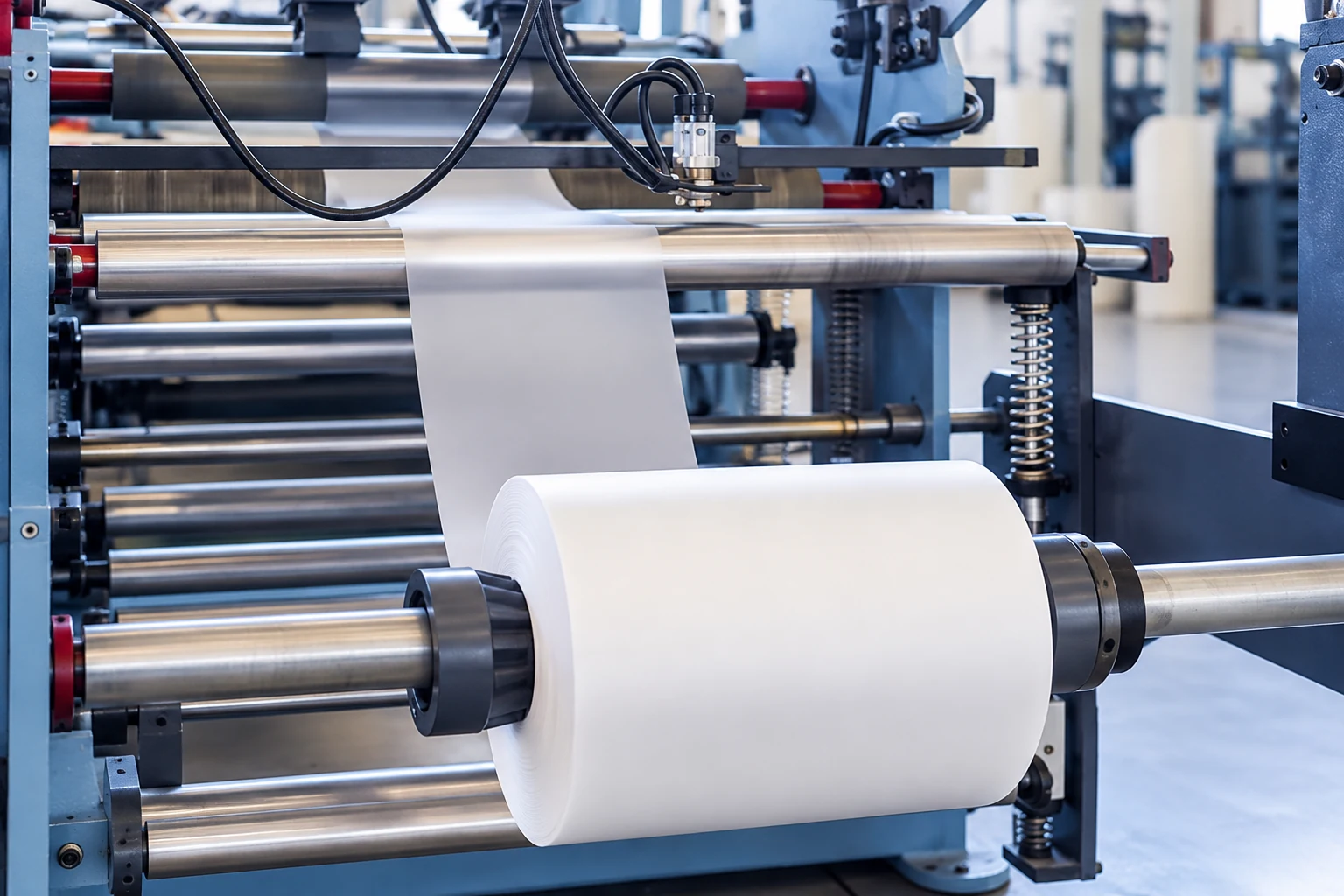
Conversion determines how the paper reaches the printer as a usable roll. Slitting, winding and cutting need to produce an agreed physical result without creating an avoidable problem at the paper path. Manufacturer evaluation should examine the controls and checks associated with those operations rather than infer them from the appearance of a neat sample.
Relate Winding And Cutting To The Printer's Paper Path
A roll needs an appropriate wind and an edge condition compatible with the intended feeding arrangement. Excessive looseness, uneven edges or an unexpected join can affect use even when nominal dimensions appear acceptable. The supplier should explain the acceptance checks applied to these features and how exceptions are handled. The factory page can locate an initial production discussion, but project-specific checks should be supported by current records or a witnessed demonstration where necessary.
The basis for roll consistency should be repeatable. If one operator measures the outside diameter while another relies on a packing label, the records do not represent the same check. A practical control plan identifies the measurement method, sampling point and acceptance criterion for each agreed characteristic.
Billing paper rolls manufacturers should distinguish a routine adjustment from a material or process change that affects the accepted product. A production setting may be changed to restore an agreed result, but the reason should remain visible if it influences subsequent investigation. Consistent communication about these changes is more useful than an assurance that every roll receives unspecified inspection.
Use Evidence That Can Explain Variation
A collection of measurements is valuable when the checks correspond to the agreed specification and can identify the affected lot. A sheet of unrelated laboratory results is not sufficient. Manufacturer evaluation should ask whether the evidence can explain a complaint such as feeding trouble, poor print contrast or inconsistent usable length.
Give Each Check A Defined Purpose
Dimensions establish fit constraints; a printing trial examines behavior in a defined printer and setting; material records support grade identity. These forms of evidence answer different questions. The supplier should identify the check, its conditions, the result and the decision made from it. A measurement picture does not establish calibration or a passing result.

| Question | Relevant evidence | What It Does Not Prove |
|---|---|---|
| Will the roll fit? | Dimensions and core arrangement checked against equipment limits | Print or cutting behavior under every setting |
| Will it print acceptably? | Controlled printer trial with recorded settings | Every future lot will use the same grade |
| Is conversion consistent? | Winding and cutting checks linked to production records | Upstream coating operations are performed on site |
| Can a problem be traced? | Lot identity linking material, conversion and shipment | A root cause has already been established |
| Will transport preserve the roll? | Agreed wrapping, carton and handling arrangements | Unlimited storage life or resistance to all environments |
A useful acceptance record also identifies departures from the planned method. If a sample was tested in a substitute printer or with an unrecorded setting, its result may still be informative but has a limitation. The evaluation should retain that limitation instead of presenting the result as a full confirmation of printer compatibility. This makes the evidence easier to interpret when the actual operating fleet includes several printer models.
Make Batch Traceability Practical For Mixed Deliveries
Batch traceability connects the paper source, conversion activity and shipped units. The link needs to survive the point at which rolls are repacked or divided among locations. A manufacturer's internal code is only useful to the receiving organization when its meaning and location are explained.
Identify The Smallest Unit That Can Be Investigated
The project should define how a carton or smaller pack is linked to its production evidence. A delivery may contain several manufacturing lots, even when it arrives under one purchase order. If all packs carry only the order number, a later problem can be difficult to isolate. The agreed identification method should preserve enough detail to distinguish an affected lot without requiring a complete shipment to be treated as identical. Batch traceability should also cover a material substitution or a split conversion run where that distinction matters.
The manufacturer and receiver should agree how codes are retained when cartons are opened and rolls are redistributed. A distribution record does not need unnecessary complexity, but it should preserve the link required for investigation. The site's retail application context illustrates why rolls may pass through multiple checkout locations. Actual storage and distribution practices should be reviewed for the intended operation, rather than inferred from an application photograph.
Protect Accepted Rolls During Packing And Storage
An acceptable roll can be affected after conversion. Packaging should protect the agreed product through handling and transport, while storage instructions should reflect the actual medium and expected use. Broad claims such as waterproof or long-lasting need defined conditions and supporting evidence before they become acceptance promises.
State The Packaging And Handling Conditions Explicitly
The packing plan should identify the inner protection, carton arrangement and relevant handling instructions. A quantity printed on a reference carton does not establish the contents of a new order. The actual pack count, roll identity and any agreed transport protection should be confirmed for the shipment.

Approve A Supply Process That Can Be Repeated
Qualification should finish with a controlled product and a clear route for managing exceptions. The accepted sample, specification and evidence need to describe the same roll. Commercial terms can then be compared against a common basis instead of against different assumptions about dimensions, material, packing and included checks.
Keep The Trial Decision Connected To The Next Order
An initial order can be accepted conditionally while an evidence gap remains open, provided the condition is clear and appropriate to the decision. The record should state what has been demonstrated, which limitation remains and what will be checked next. Billing paper rolls manufacturers should receive the same printer and acceptance information when their offers are compared.
The repeat order should refer to the accepted specification and any approved changes. A new quotation should disclose whether material grade, packing or conversion scope has changed. Roll consistency is best assessed through that continuing evidence chain, rather than through a fresh promotional sample that cannot be reconciled with the previous delivery.
Frequently Asked Questions
Is A Nominal Roll Size Enough To Select A Manufacturer?
No. It establishes only part of the requirement. Confirm the printer's media limits, core arrangement and operating needs, then define how physical fit, feeding, print quality and cutting will be checked.
Does A Factory Photograph Prove The Full Manufacturing Scope?
No. A photograph can illustrate an operation but does not establish which processes are performed for the proposed product. Ask the manufacturer to distinguish material sourcing, conversion, packing and any outsourced checks.
What Makes A Trial Result Comparable?
Use the same printer requirements, settings and acceptance basis. Record any substituted equipment or changed conditions. Without those details, different results may reflect different test conditions rather than different rolls.
Why Retain A Lot Code After Opening A Carton?
The code connects an affected roll to relevant production and material records. Retaining that link can narrow an investigation and prevent unrelated lots from being treated as one undifferentiated shipment.
Can A Certificate Replace Printer Testing?
A relevant certificate may support a specific material or process claim, but it does not automatically confirm printer compatibility. The evidence must match the claim being evaluated, and model-specific behavior still needs an appropriate check.
Provide the printer model, required roll format and trial acceptance criteria through the roll qualification enquiry, requesting the material identity, conversion checks and lot-code evidence proposed for that exact supply.
 You May Also Like