


 Home
Home XBD
XBD  Aug 12,2026
Searching for bill roll suppliers near me can reduce delivery distance, but proximity does not prove fit, feed, cutting, readability, or lot consistency across a checkout fleet. A defensible shortlist maps the actual fleet, converts device limits into one roll brief, and requires the same multi-printer trial before a multi-store award.
Treat “Near Me” As A Service Filter, Not A Compatibility Claim
A supplier may operate a factory, keep regional inventory, import rolls, or use a distributor. Those models provide different control over converting, packing, stock rotation, complaint containment, and urgent replenishment. Identify the material owner, converting site, stock location, parent-lot trace, and replacement authority. Distance matters only after responsibilities are visible.
Map The Fleet Before Requesting A Quote
List each printer family and meaningful configuration: model, guide, width setting, roll bay, sensor, cutter use, relevant firmware constraint, print density, transaction pattern, and location. Group identical devices and flag pharmacy, kiosk, kitchen, or older-lane exceptions. A printer compatibility matrix prevents one convenient printer from representing the whole estate.
Define local service in measurable terms: delivery radius, normal and emergency lead times, local stock quantity and ownership, lot rotation, minimum call-off, cutoff time, replacement route, and technical contact. Verify where inventory sits and whether it matches the approved lot and package. A nearby sales address with distant stock may not improve recovery.
Translate Printer Limits Into One Receipt Roll Specification
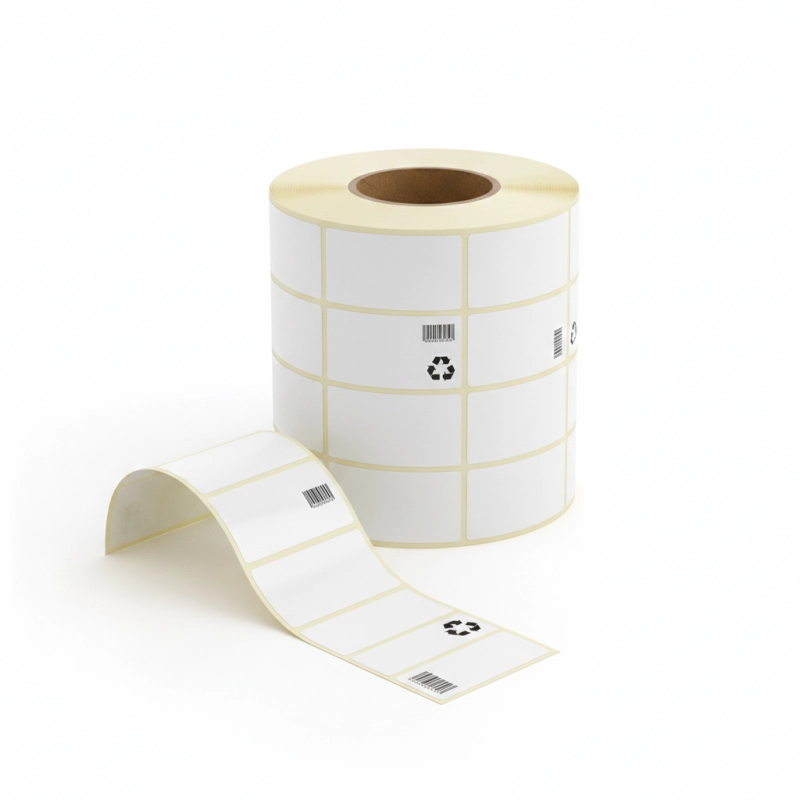
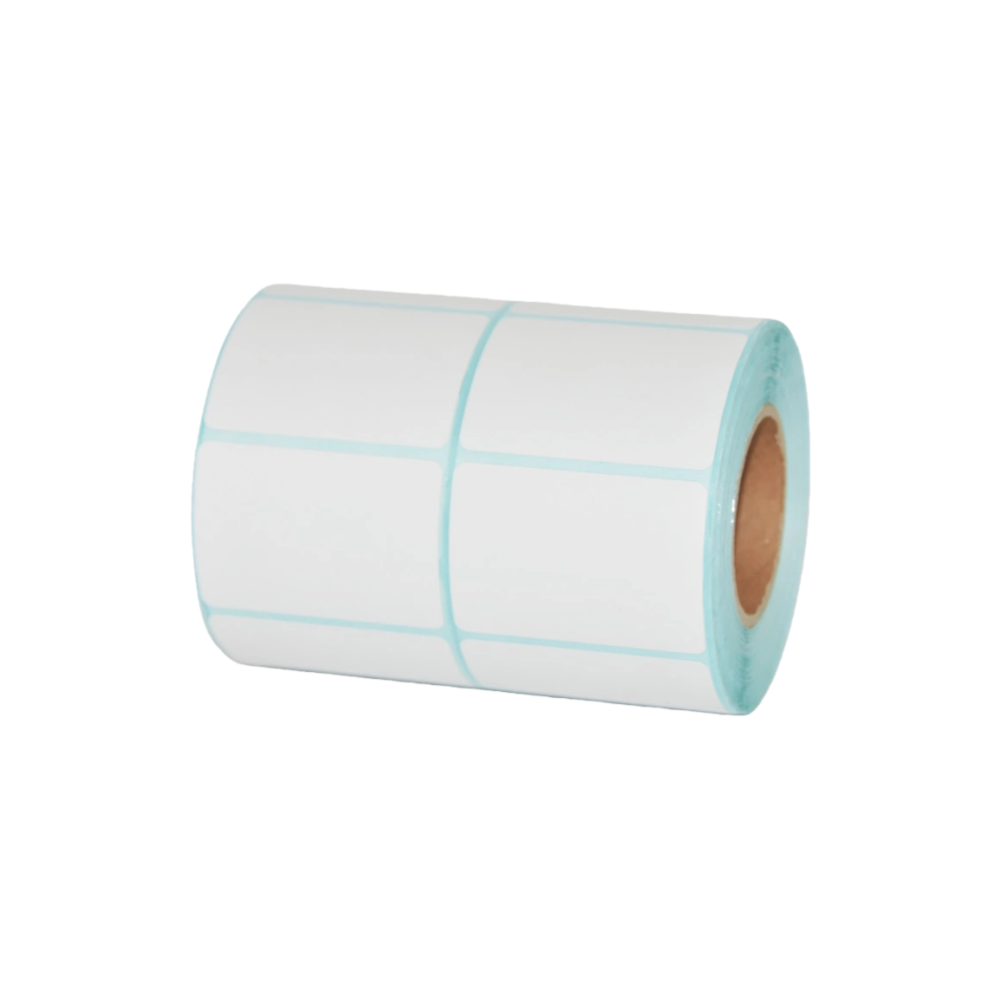
Official documentation shows why “80 mm roll” is incomplete. Epson Malaysia’s current TM-T82X-II specifications list nominal widths and maximum diameter. Star Micronics’ current mC-Print3 manual adds tolerance, thickness, core, coated-side orientation, and termination cautions. These are examples, not universal limits; use the manual and configuration for every deployed printer.
Control Dimensions, Winding, And End Conditions
The receipt roll specification should identify width and tolerance, maximum diameter, thickness, core dimensions, winding, sensitive side, tightness, edge quality, splice rule, end attachment, and tail treatment. Add packaging, carton, pallet, storage, and shelf-life requirements. Require measurement methods and action limits, not only nominal size.
Specify the print and use environment: image density, readability, transaction length, graphics or barcodes, cutter frequency, handling, temperature, humidity, light, and chemical exposure. The site’s application overview helps identify use cases, but the buyer must define actual lanes, storerooms, vehicles, chilled zones, and food-service counters. Requirements should reflect measured use rather than undefined “premium” claims.
Design A Multi-Printer Trial That Can Reject A Weak Roll
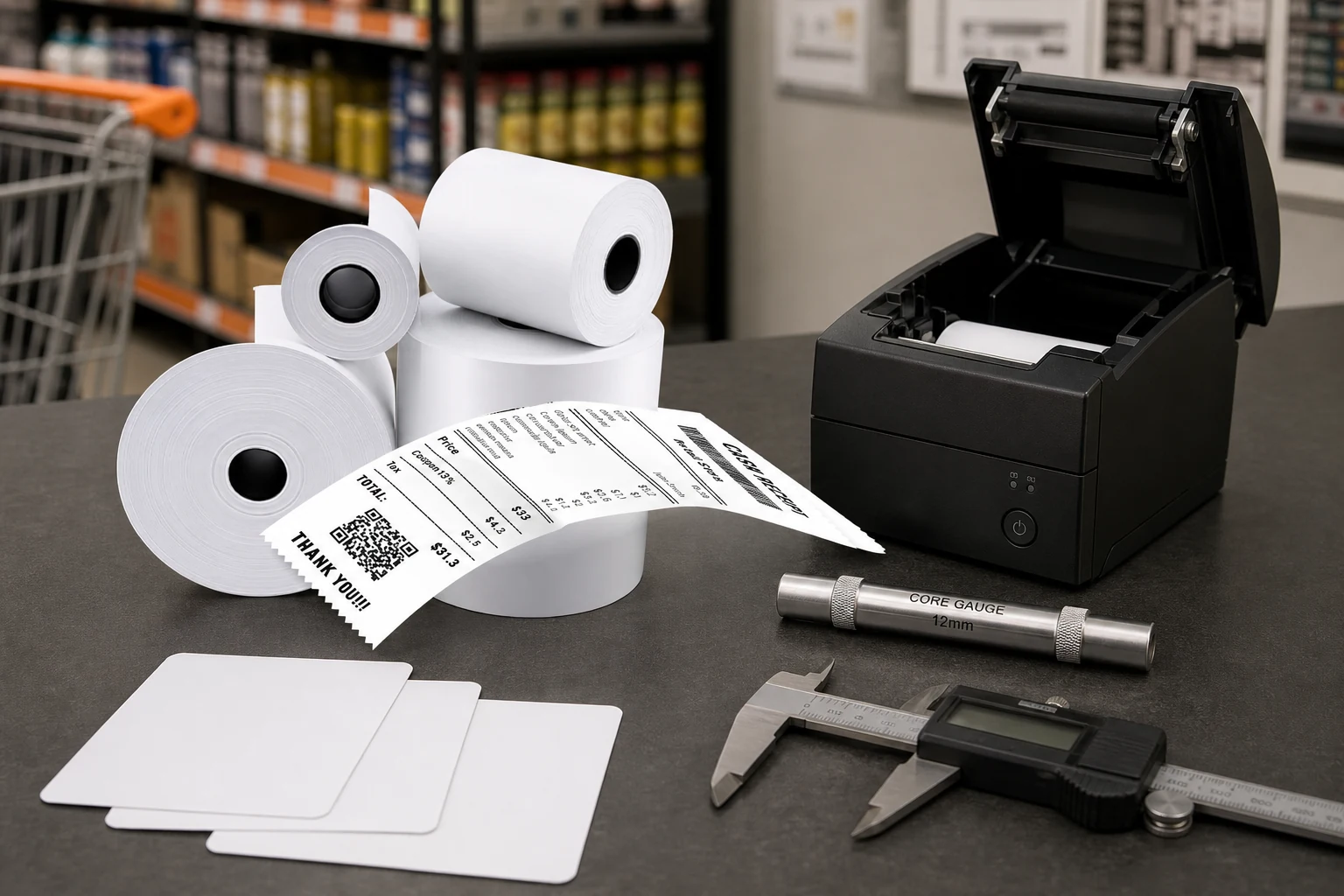
Write a trial roll acceptance plan before testing. Select representative printers from each fleet group, including an older or higher-use unit when relevant. Record roll lot, carton, printer, settings, operator, date, environment, and sequence. Preserve an approved comparator and repeatable evidence instead of relying on one short receipt.
Start With Fit And Loading
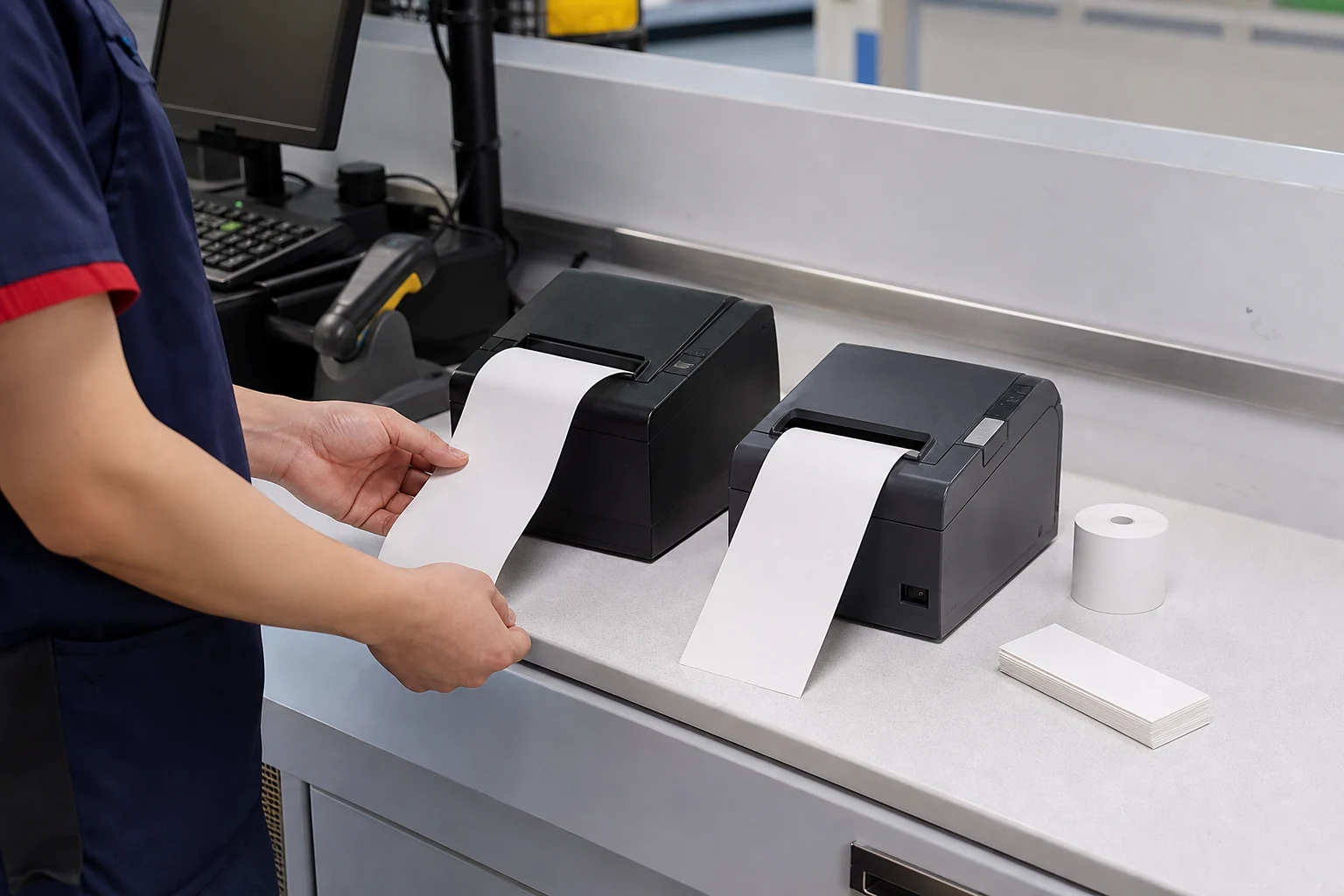
Measure width, diameter, core, winding, edge condition, and roll build. Load the roll without forcing the cover or guide, confirm free rotation and correct coated-side orientation, and observe initial feed, alignment, drag, noise, and sensor response. Record the tool and result. A roll that prints darkly but binds in the bay is not compatible; neither is one that fits initially but telescopes, unwinds loosely, or leaves an attached tail near the end.
Run Representative Transactions And Cutter Cycles
Use a controlled file covering normal text, dense areas, required graphics or codes, feed spaces, and the usual cut. Run enough cycles to reveal curl, skew, dust, residue, partial cuts, jams, and feed variation. Define code checks where needed and record printer-specific results. State which critical failure rejects the candidate and which permits investigation.
Separate Paper, Converting, Printer, And Setting Causes
When a test fails, do not immediately blame paper or printer. Repeat with the approved comparator, inspect the affected mechanism, confirm settings and loading, then retest the candidate on another representative unit. Preserve both rolls and outputs. This sequence helps distinguish material sensitivity, surface quality, winding, dimension, cutter wear, platen contamination, guide configuration, thermal energy, or operator loading.
Use A Controlled Failure Matrix
For faint image, compare the same file, settings, device, and environment with the comparator before changing density. For skew or jam, check width, edge, winding, roll build, clearance, guide, and feed path. For cutter issues, record thickness, curl, residue, and device condition. The goal is to identify whether the proposed specification and route are reliable.
Preserve Evidence From Every Fleet Group
Keep measured results, printed samples, failure photographs where useful, printer identity, settings, observations, and disposition under one trial ID. Save an approved roll and output for future comparison. When a new printer, paper grade, core, package, or source lot is introduced, run the affected part of the matrix again. This makes fleet coverage a maintained control rather than a one-time purchasing assumption.
Audit How The Supplier Reproduces The Accepted Roll
After the trial passes, examine how the candidate will reproduce it. The site’s current online factory material provides converting context, and its broader factory overview can frame follow-up questions. Project approval should connect the proposed parent paper, slitter-rewinder, core, settings, in-process checks, pack components, and release decision to the accepted sample.
Follow The Parent Lot Through Slitting And Rewinding
Ask how jumbo material is received, identified, held, released, and issued; how knives, guides, tension, cores, and diameter are set; how the first piece is approved; and how width, edge, roll build, winding, and appearance are checked. The record should show sampling frequency, actual results, operator, equipment, and disposition.
Verify removal of prior paper, cores, labels, cartons, and partial quantities; issue and reconciliation of correct components; material status; and segregation of dimensions. When formats share a line, mix-up prevention is critical. If coating or converting is outsourced, include the external site and record handoff in traceability.

Connect Lot Release To Local Inventory And Service
Lot consistency evidence should connect cartons in the local warehouse to the converting order, parent-paper lot, line and shift, core and packaging issues, in-process results, print check, quantity reconciliation, deviations, and authorized release. A generic test report or a certificate from another lot cannot establish that the delivered cartons match the trial.
Define The Release And Receiving Package
Agree which documents accompany each shipment or remain retrievable: lot code, quantity, specification version, dimensional results, print or sensitivity check where applicable, appearance and pack inspection, deviations, and disposition. At receipt, sample cartons across the shipment, verify identity and damage, measure critical features, and run a short confirmation on designated printers. This receiving check should confirm continuity with the approved trial rather than repeat the entire qualification.
Test Complaint Containment Before A Problem Occurs
Run a trace exercise from one carton back to its parent lot, then forward to affected cartons and locations. Ask how stock would be blocked, stores notified, evidence examined, and replacements prioritized. Response-time promises need owners, contact routes, operating hours, and escalation.

Score Local Candidates Against One Approval Table
The host company should pass the same gate as every alternative. Its thermal paper range, supermarket application context, and factory information justify a focused trial request; they do not independently prove fleet coverage or repeat-order consistency. Keep critical failures separate from weighted preferences so a nearby warehouse or favorable price cannot compensate for incompatible rolls.
| Decision area | Evidence to request | Pass question | Red flag |
|---|---|---|---|
| Fleet coverage | Printer groups, settings, guides, locations and representative units | Does the plan cover every material device configuration? | One successful printer is assumed to represent all lanes |
| Roll brief | Dimensions, tolerances, core, winding, paper, end condition and pack | Is the quotation tied to one controlled specification? | Only a nominal width and length are stated |
| Trial | Fit, feed, image, cutter, end-of-roll, environment and records | Can another operator reproduce the result? | Approval rests on one short visual print |
| Production | Parent lot, line setup, first piece, in-process results and changeover | Can the supplier reproduce the accepted roll build? | Inspection occurs only after all cartons are packed |
| Lot release | Traceability, pack checks, results, deviations and authorization | Do delivered cartons link to a lot-specific decision? | Report has no connection to the shipment identity |
| Local service | Stock location, rotation, call-off, emergency route and containment | Can the supplier locate, block, and replace affected stock? | Nearby address with unverified inventory or response ownership |
Once critical gates pass, compare unit price, roll length basis, carton quantity, minimum order, stock commitment, transport, payment, and lead time on the same scope. A local candidate becomes a credible fleet partner only when proximity is supported by controlled compatibility, repeatable production, traceable lots, and a service route that works under store pressure. Requalify bill roll suppliers near me after a material source, converter, critical dimension, printer configuration, or release method changes.
Frequently Asked Questions
Is An 80 Mm Roll Compatible With Every 80 Mm Printer?
No. Nominal width is only one variable. Printer-specific tolerances, diameter, thickness, core, guides, winding, coated side, end condition, settings, and device wear can affect fit, feed, print, and cutting.
How Many Printers Should Be Included In The Trial?
Use at least one representative unit from every meaningful fleet group and include a higher-use or older unit when it represents operational risk. A uniform estate may need fewer devices than a mixed fleet.
Can A Local Stockist Replace Factory Qualification?
No. Local inventory can improve availability, but the buyer still needs the converting source, specification, traceability, release evidence, change controls, and complaint route that protect the approved roll.
What Is A Critical Trial Failure?
Define this before testing. Examples can include inability to load or close, repeated jam, unacceptable skew, unreadable transaction or code, cutter failure, wrong dimension, mixed roll, missing traceability, or uncontrolled substitution.
What Should Be Sent With A Supplier Inquiry?
Send printer models and configurations, complete roll specification, transaction and cutter profile, environment, packaging, store and warehouse locations, monthly volume bands, call-off pattern, trial method, records required, and service expectations.
To compare bill roll suppliers near me, send the printer matrix, controlled roll brief, volume and call-off bands, storage locations, trial method, release records, and emergency-service expectations through the site’s contact channel; supermarket purchasing and wholesale teams can then score every candidate against the same fleet evidence.
 You May Also Like