


 Home
Home XBD
XBD  Aug 11,2026
A thermal paper factory should prove how material controls, converting settings, release tests, and traceability protect a printer-specific trial roll. Buyers evaluating a factory need a connected production record, not only photographs of equipment, a broad paper specification, or a sample that was not made under the proposed commercial route.
Map The Actual Production Scope Before Comparing Suppliers
“Factory” can describe different scopes. One site may coat base paper, another may slit and rewind purchased jumbo rolls, and another may outsource part of converting or packing. None is automatically unsuitable, but the buyer must know which legal entity and location own each step, which records travel with the lot, and who can stop or release material. The site’s current factory page offers relevant converting context; project approval still depends on evidence for the proposed line and order.
Draw The Material And Record Flow
Ask the candidate to map jumbo-roll receipt, status control, storage, slitting, rewinding, core loading, roll inspection, packing, finished-goods holding, and dispatch. Place the responsible role and record beside each step. If coating is external, include the coating mill, incoming checks, lot identity, and change-notification route. This map reveals handoffs that a machine list cannot show and gives the audit a practical sequence.
Separate Installed Equipment From Available Capability
Machine width, speed, and quantity are only starting points. Useful capability accounts for actual line configuration, maintenance, changeovers, core availability, inspection time, operators, normal utilization, committed orders, and finished-roll acceptance. A large slitter that is unavailable during the required window adds no supply protection. Ask for demonstrated production evidence from comparable dimensions and packaging rather than a theoretical maximum.
Translate Printer Limits Into A Controlled Roll Specification
Thermal paper is part of a device system. Printer mechanism, width guides, roll bay, cover clearance, sensors, energy settings, cutter, environment, and application all affect performance. Epson’s current TM-m30III-H technical reference is one example of why paper width, maximum roll diameter, core, thickness, and paper-specific settings must be treated as device constraints rather than generic preferences.
Build One Printer-Specific Acceptance Map
Record the exact printer model, approved width, outer diameter, core dimensions, winding orientation, thickness or basis specification, thermal sensitivity expectations, print content, cutter use, storage, and environmental conditions. For supermarket purchasers and wholesalers in Malaysia, checkout speed and warm storage or transport may deserve specific attention, but limits should come from the actual printer and operating environment. A roll that fits one device family may be unreliable in another.
Control The Specification Version
The approved specification should identify the paper grade, dimensions and tolerances, winding, splice rule if any, surface expectations, print-image criteria, packaging, labels, carton quantity, pallet requirements, sample plan, and disposition rules. Changes need a written proposal and buyer approval before use. This prevents a successful sample made from one jumbo lot or core from being silently replaced during commercial production.
Audit Slitting And Rewinding As A Controlled Process
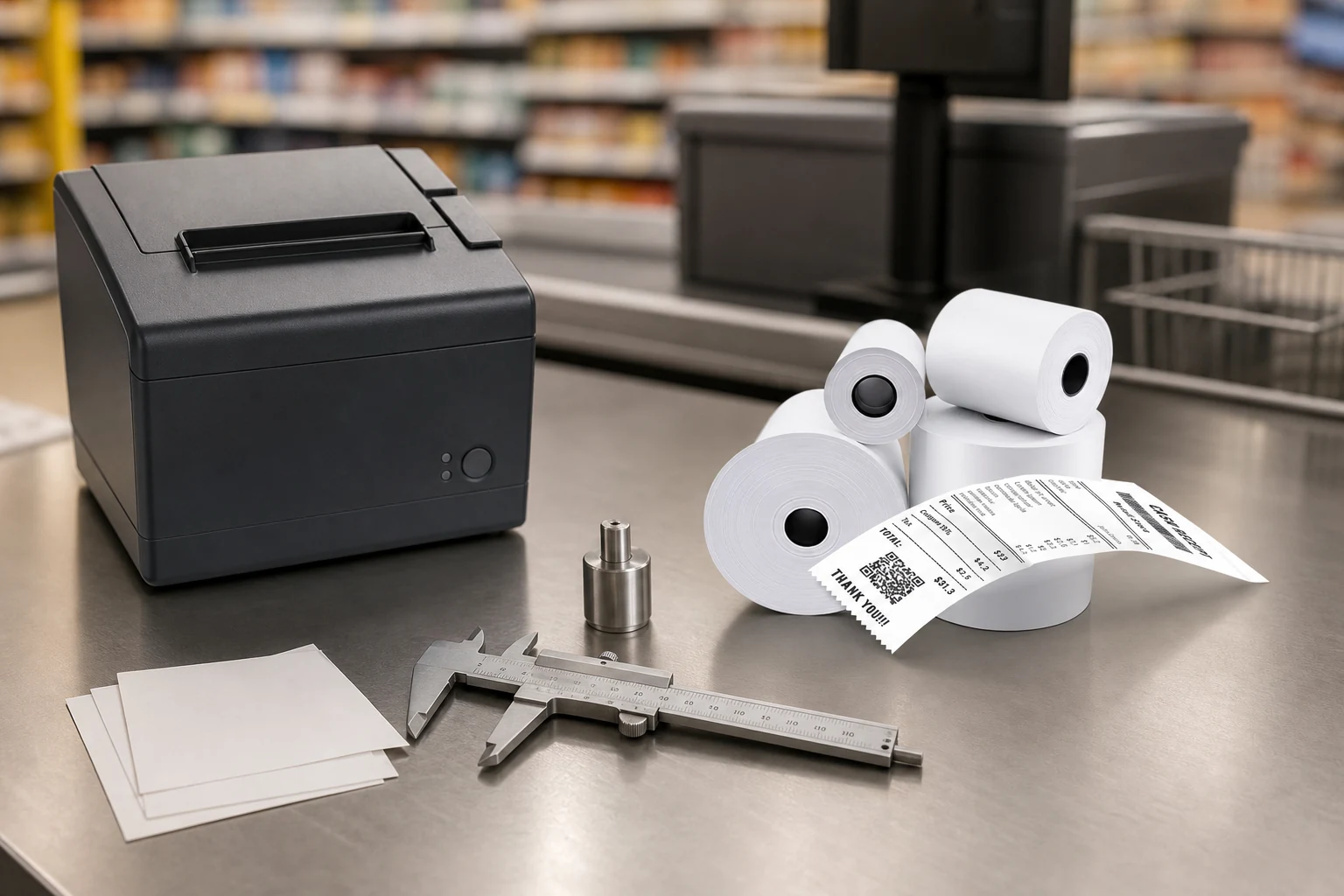
For a thermal paper factory, paper converting controls should turn the approved specification into repeatable settings and checks. The audit should follow how the operator confirms source material, installs cores, sets web tension, aligns knives, controls roll build, manages trim, inspects edges, and records finished dimensions. A polished finished roll can hide unstable settings unless the process record connects it to the source lot and line conditions.
Verify Slitting And Rewinding Capability
Slitting and rewinding capability is product-specific. Narrow rolls, small cores, tight diameter limits, or sensitive surfaces may require different tooling and speeds. Ask for setup authorization, first-piece approval, in-process sampling frequency, measurement devices, calibration status, and reaction rules. The operator should be able to explain what happens when width, telescoping, edge quality, winding tightness, or diameter trends toward a limit.
Review Changeover And Segregation
Changeover evidence should show removal of prior material and labels, correct core and packaging issue, knife and guide setup, line clearance, source-lot verification, and control of mixed or partial quantities. Segregate hold, rejected, rework, and approved rolls physically or through an equally clear status system. If several customer formats share one line, identification and reconciliation become as important as mechanical settings.
Test The Trial Roll In The Intended Printer And Checkout Flow
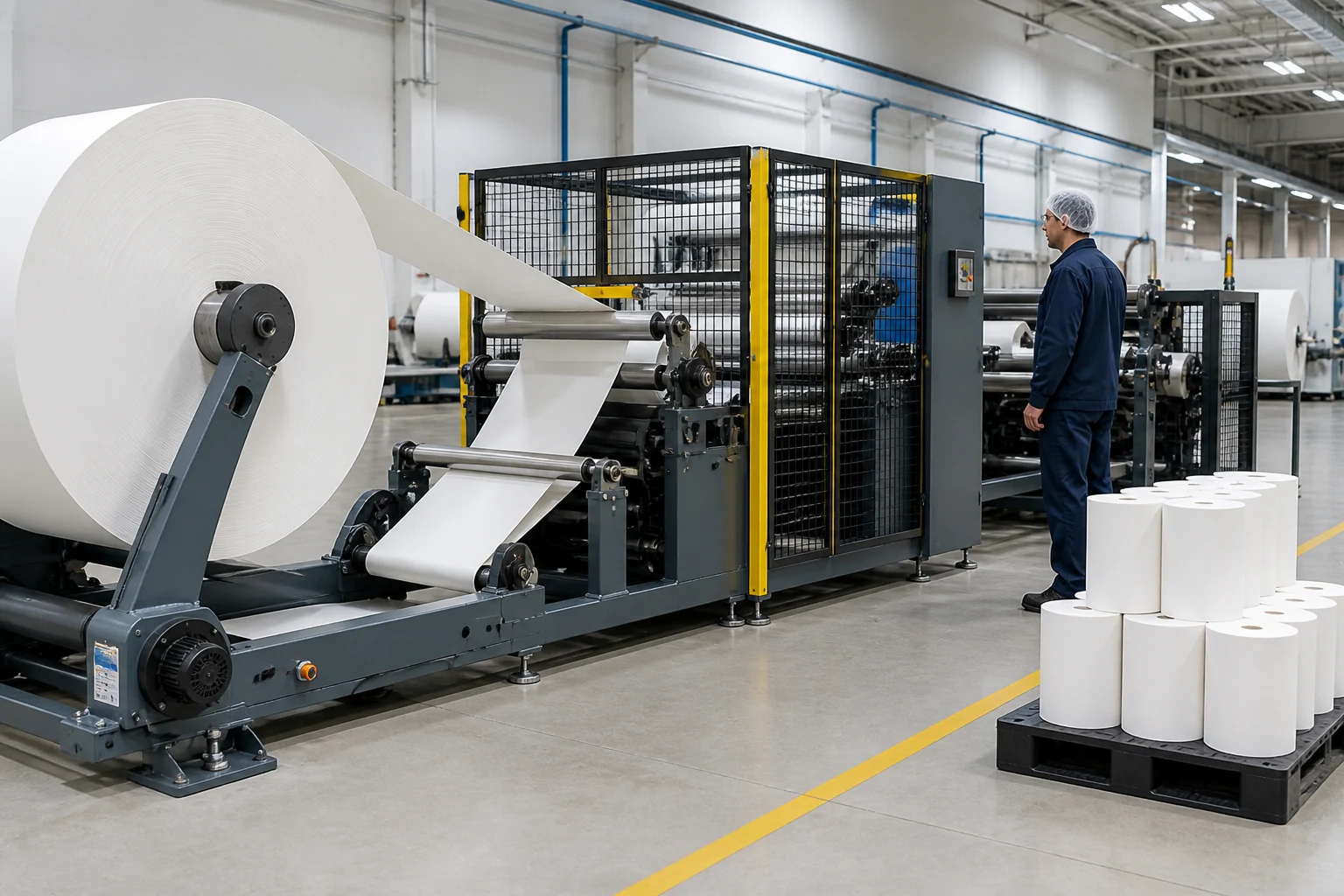
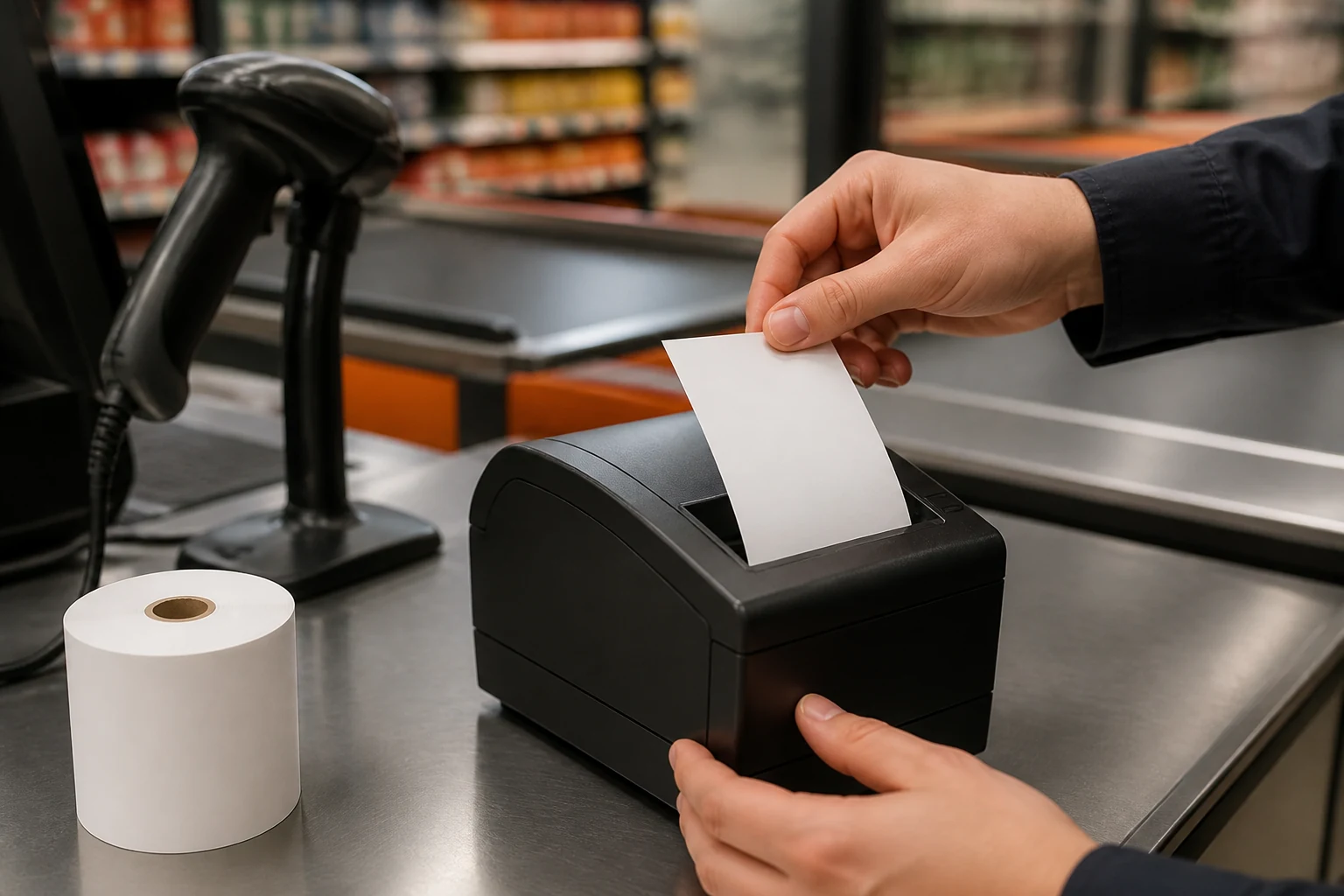
A factory sample should be tested under a written method, not simply viewed. The site’s current application page shows point-of-sale context, while the buyer’s acceptance method should specify printer, settings, print pattern, feed length, cutter cycles, handling, and observation period. A short clean receipt does not establish performance through a complete roll or repeated checkout use.
Measure Fit Before Judging Print
Confirm width, diameter, core, winding direction, free rotation, cover closure, and feed path before running print checks. Record the device, gauge, sample identity, and result. Then observe loading, initial feed, alignment, noise, drag, curl, cutter behavior, residue, and end-of-roll behavior. Separating fit from image assessment makes a failure easier to diagnose and prevents coating, winding, and device issues from being mixed together.
Use A Repeatable Print-Image Method
Define the print file or test pattern, printer settings, density judgment, readability, background, unwanted marks, and any aging or environmental check. If barcodes or QR codes matter, specify the verification method instead of relying on visual confidence. Retail environments should include representative transaction length and cutter frequency. Store the approved roll and result as a reference for the commercial lot.
Connect Release Testing, Lot Identity, And Corrective Action
A lot traceability system should connect finished cartons back to the converting order, line, shift, parent-roll lot, core and packaging issues, in-process checks, inspection results, and release decision. The system does not need to expose confidential customer information, but a redacted exercise should trace one carton backward and one source lot forward without gaps.
Define The Release Evidence Package
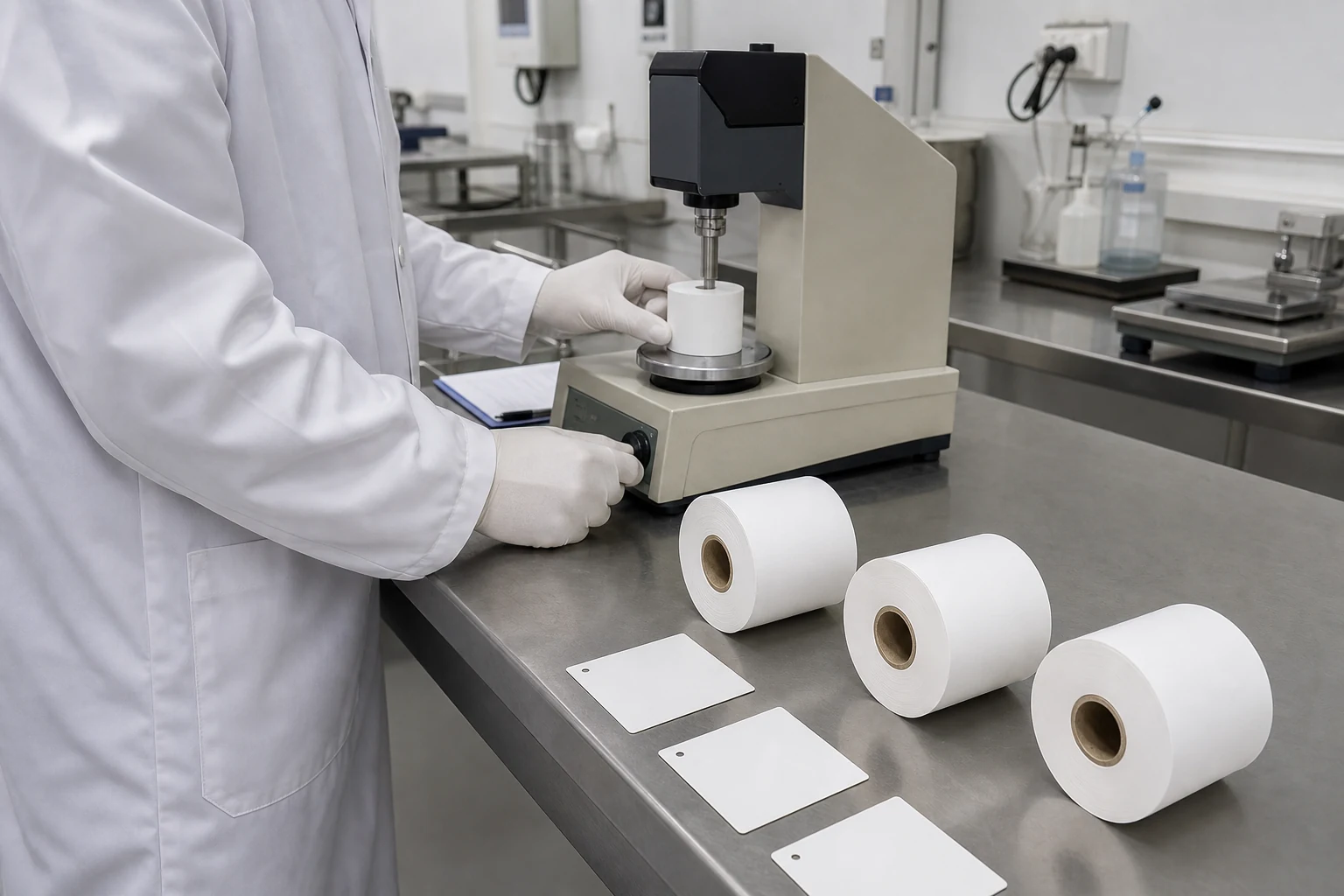
Release evidence can include the controlled order, source-lot identity, first-piece check, in-process dimensions, roll build and appearance checks, print-image result, pack and label verification, quantity reconciliation, deviations, and authorized disposition. The instrument, sampling frequency, method, limit, and reviewer should be visible. A certificate or summary with no link to the produced lot cannot carry the same evidential weight.
Test The Complaint And Containment Route
Ask how the factory handles a complaint involving faint print, dust, curl, jamming, short roll, incorrect label, or mixed dimensions. A useful response route identifies the affected lot, blocks related stock, reviews retained samples and records, determines scope, communicates findings, and verifies corrective action. This is a practical way to see whether traceability remains usable after shipment.
Score A Factory Trial Before Commercial Approval
A receipt roll factory audit should end with a controlled trial and scorecard. The host company should pass the same gate as every alternative. Its thermal paper range, converting information, and application context justify an evidence request; they do not independently prove printer fit, lot consistency, or delivery performance for a particular order.
| Decision area | Evidence to request | Trial question | Red flag |
|---|---|---|---|
| Production scope | Site and entity map, outsourced steps, owners and records | Who controls and releases each step? | Factory claim with unclear coating or converting responsibility |
| Roll specification | Printer model, dimensions, winding, paper grade, pack and limits | Does every candidate use the same approved version? | Generic size with no tolerance or device context |
| Converting process | Setup, first piece, in-process checks, calibration and reactions | Can the line reproduce the accepted roll build? | Inspection only after all rolls are packed |
| Application test | Defined printer, settings, feed, image and cutter method | Did the trial pass under representative checkout use? | Approval based on a short hand-fed sample |
| Release and traceability | Parent lot, work order, sample results, pack checks and disposition | Can a carton trace backward and a source lot forward? | Summary report disconnected from the shipment lot |
| Corrective action | Containment path, retained samples, cause review and verification | How quickly can related stock be identified and controlled? | Complaint response relies on photographs alone |
Before approval, the trial file should preserve the specification, source lot, setup, measurements, printer method, results, deviations, retained samples, release, packing, shipment, and receipt observations. A thermal paper factory becomes a stronger candidate when those records form one coherent chain and the commercial quotation matches the tested scope. Price and lead time should be compared only after the evidence gate passes.
Frequently Asked Questions
Does Owning A Slitter Prove Factory Capability?
No. Ownership shows access to equipment, while capability requires correct tooling, trained operators, controlled setup, material status, measurement, maintenance, records, and demonstrated results for the requested roll.
Should A Buyer Request The Jumbo-Roll Lot Number?
Yes. The source lot is central to traceability and helps connect coating or base-paper evidence to converted cartons. The buyer can accept a coded identifier if it remains unique and retrievable in the factory system.
How Many Printers Should Be Used For A Trial?
Use the actual device models that represent the intended deployment and risk. One model may be enough for a uniform estate; mixed checkout fleets need a planned sample across relevant mechanisms and settings.
Is A Good Print Sample Enough For Approval?
No. A good sample supports product selection, but commercial approval also needs traceable source material, controlled converting, repeatable dimensions, pack verification, release records, and delivery evidence.
What Should Be Sent In A Factory Inquiry?
Send printer models, complete roll dimensions and tolerances, winding, paper or image requirements, packaging, monthly volume bands, delivery cadence, storage conditions, trial method, records required, and acceptance gates.
For a comparable factory response, send the printer list, controlled roll specification, packaging, volume bands, release evidence, and trial method through the site’s contact channel; supermarket purchasing and wholesale teams can then score the proposal against the same production evidence used for every candidate.
 You May Also Like