


 Home
 XBD
 Oct 16,2026

Thermal paper production links a heat-sensitive surface to a finished roll that feeds reliably. Coating, handling and converting explain why similar-looking rolls can perform differently.
A finished receipt roll combines several manufacturing stages
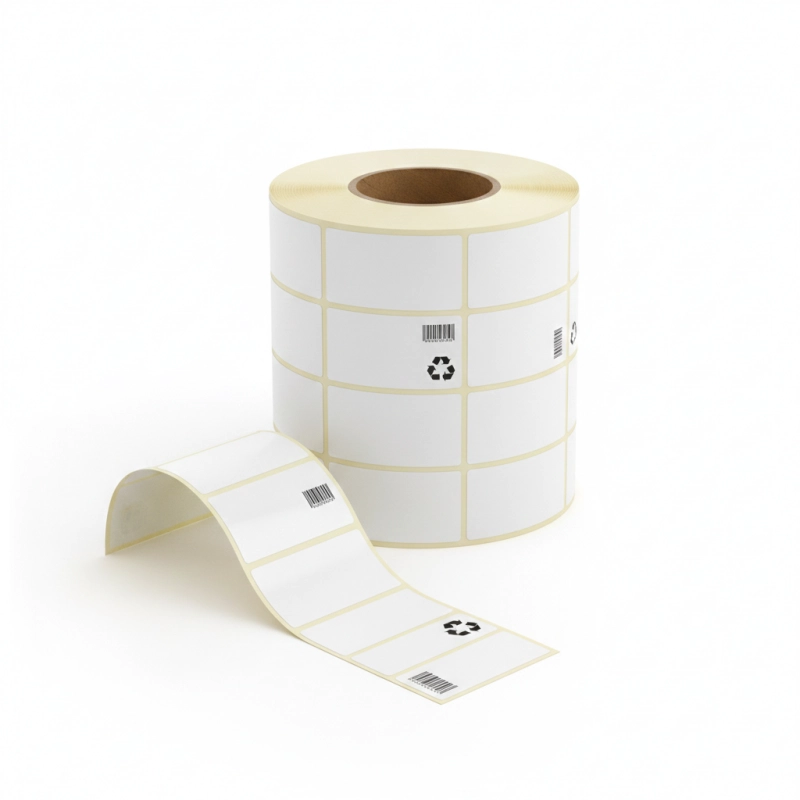
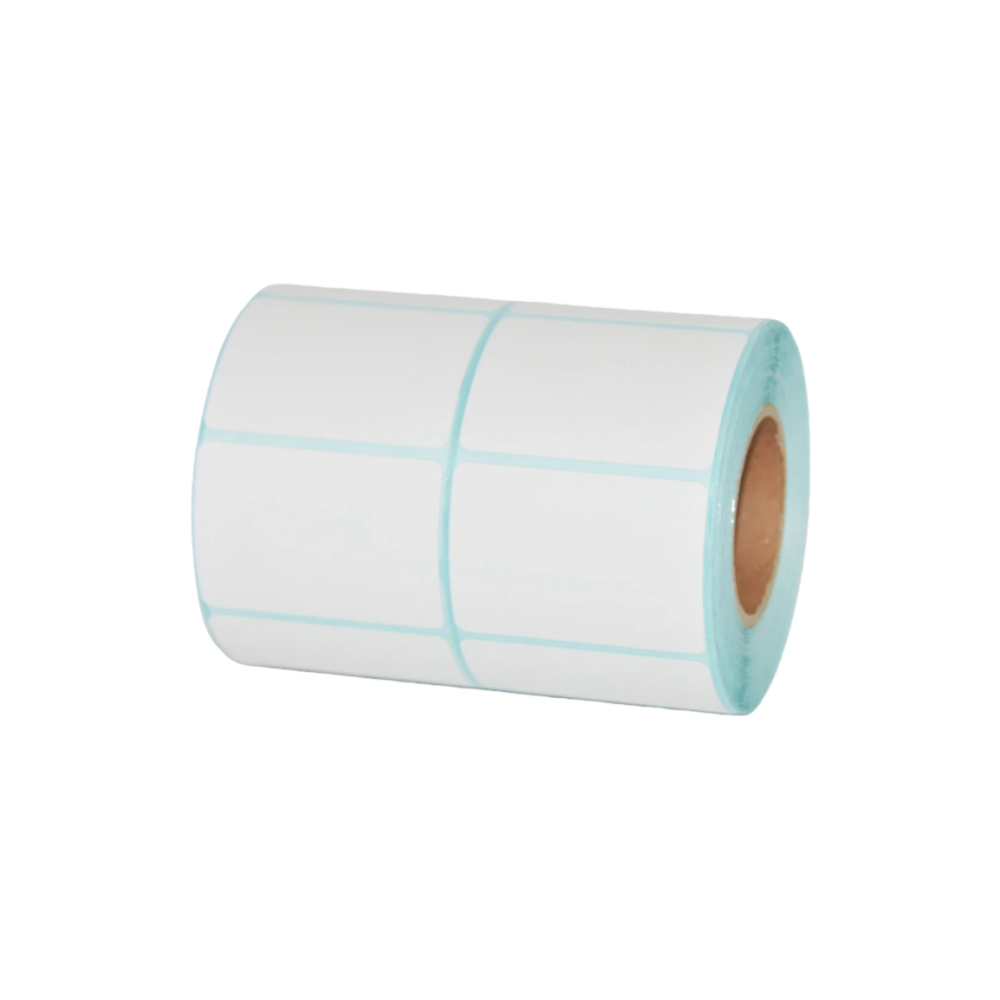
The familiar white roll is the end of a sequence. A paper substrate supports a functional coating that responds to the printer's heat. Depending on the grade, additional layers can serve other purposes. Large reels then pass through handling, slitting, rewinding and packing operations. These stages influence different properties, so a useful explanation follows the material from the sheet structure to the roll delivered to a customer.
Manufacturers do not necessarily perform every stage at one site. Some make coated paper; others convert purchased reels into smaller formats; some coordinate several operations. A photograph of a slitter cannot establish ownership of a coating line. The public thermal paper range identifies offered products, while the factory page provides operating context to clarify with the supplier.
Separate sheet properties from finished roll properties
Sheet properties include how the surface responds to printing and how it behaves under specified handling conditions. Finished roll properties include width, winding, core arrangement, edge condition and the quantity supplied. They are connected, but they are not interchangeable. A good print sample does not demonstrate that the delivered roll has the correct dimensions, and a neatly wound roll does not establish the performance of its functional coating.
Coating creates the printing function
The coating system belongs to a specified grade
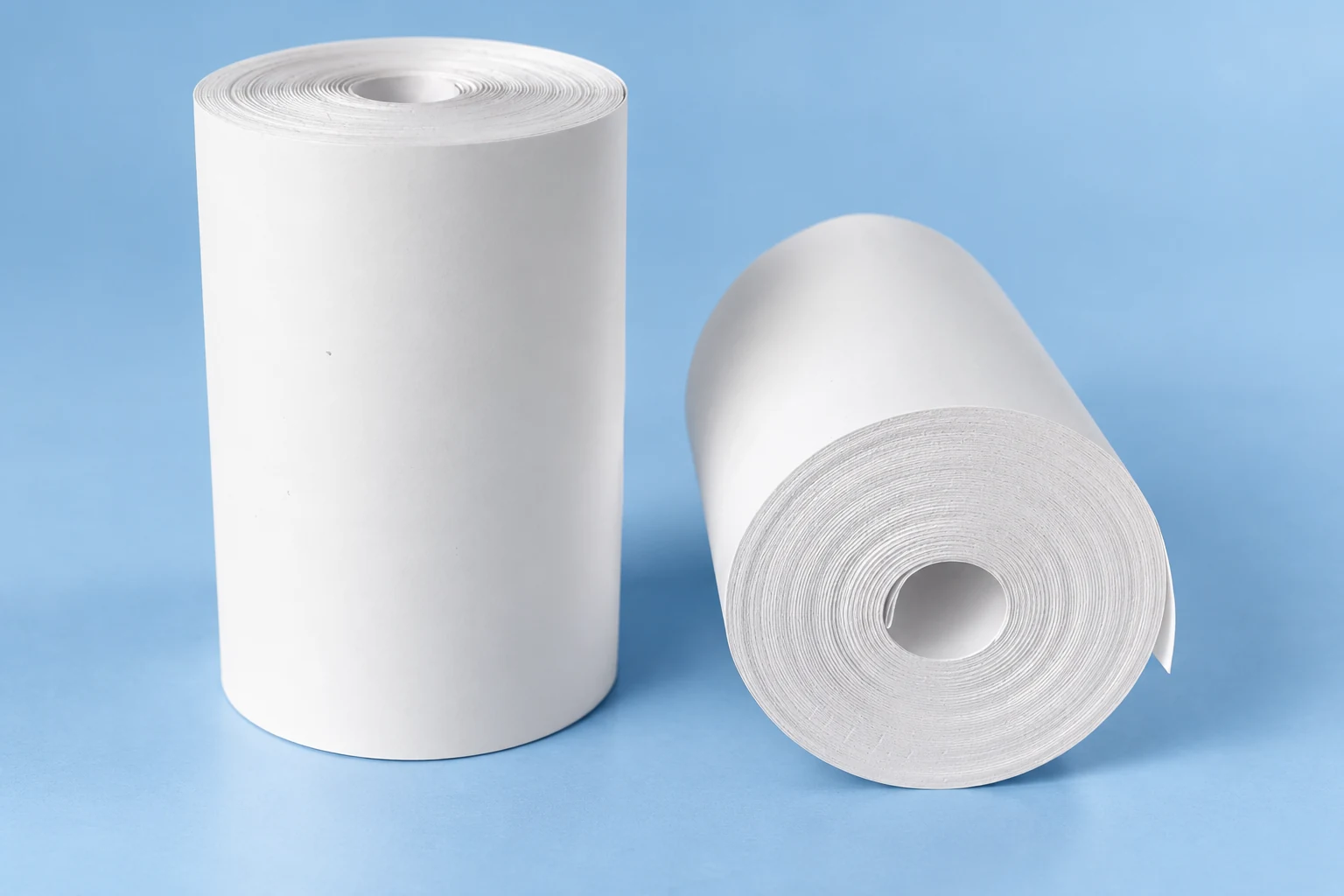
In thermal paper production, the coating system gives the sheet its intended response to heat. The precise formulation and layer construction are grade-specific. A process overview can explain the roles of preparation, application and drying without claiming that all papers use the same recipe. The functional coating should therefore be discussed through the supplier's documented grade information and agreed performance criteria.
Uniform application and drying affect the usable surface
Process control aims to produce a surface that is consistent across the web and through the run. Unevenness may become visible during printing, but the observed mark does not identify its cause by itself. Coating preparation, application conditions, drying and later handling can all be relevant investigation areas. An equipment manufacturer's process description, such as Jota's manufacturing overview, helps explain this sequence; it does not verify another company's production capability.
For buyers, the practical lesson is to ask for an identified grade and an agreed evaluation method. A trial should record the printer and settings used, the sample source and any environmental conditions material to the test. Without these details, an attractive demonstration print can be difficult to reproduce or compare with a later delivery. Test conditions matter as much as the visible result.
Web handling carries quality into the next operation
A continuous sheet must travel without avoidable damage
Web handling describes the controlled movement of a continuous sheet through equipment. Tension, alignment and contact with rollers affect how it travels. The correct operating approach depends on the material and equipment; this article does not prescribe machine settings. The important connection is that a coated sheet can still be creased, marked or distorted during later operations if movement is poorly controlled.
Keep production stages traceable across organisations
A converter may receive large reels from another manufacturer. Traceability should preserve the connection between the supplied parent reel and the smaller rolls made from it. If several parent reels are used for an order, the records should make that relationship understandable. Thermal paper production is easier to investigate when the converting and packing records preserve these links instead of treating each shipment as an undifferentiated quantity.
The supplier's company profile can introduce its business scope, but scope statements should be confirmed for the proposed order. Ask which grade is used, who controls substitutions and how a change will be communicated. Purchasing an equivalent-looking reel without review can alter the assumptions on which an earlier print trial was accepted.
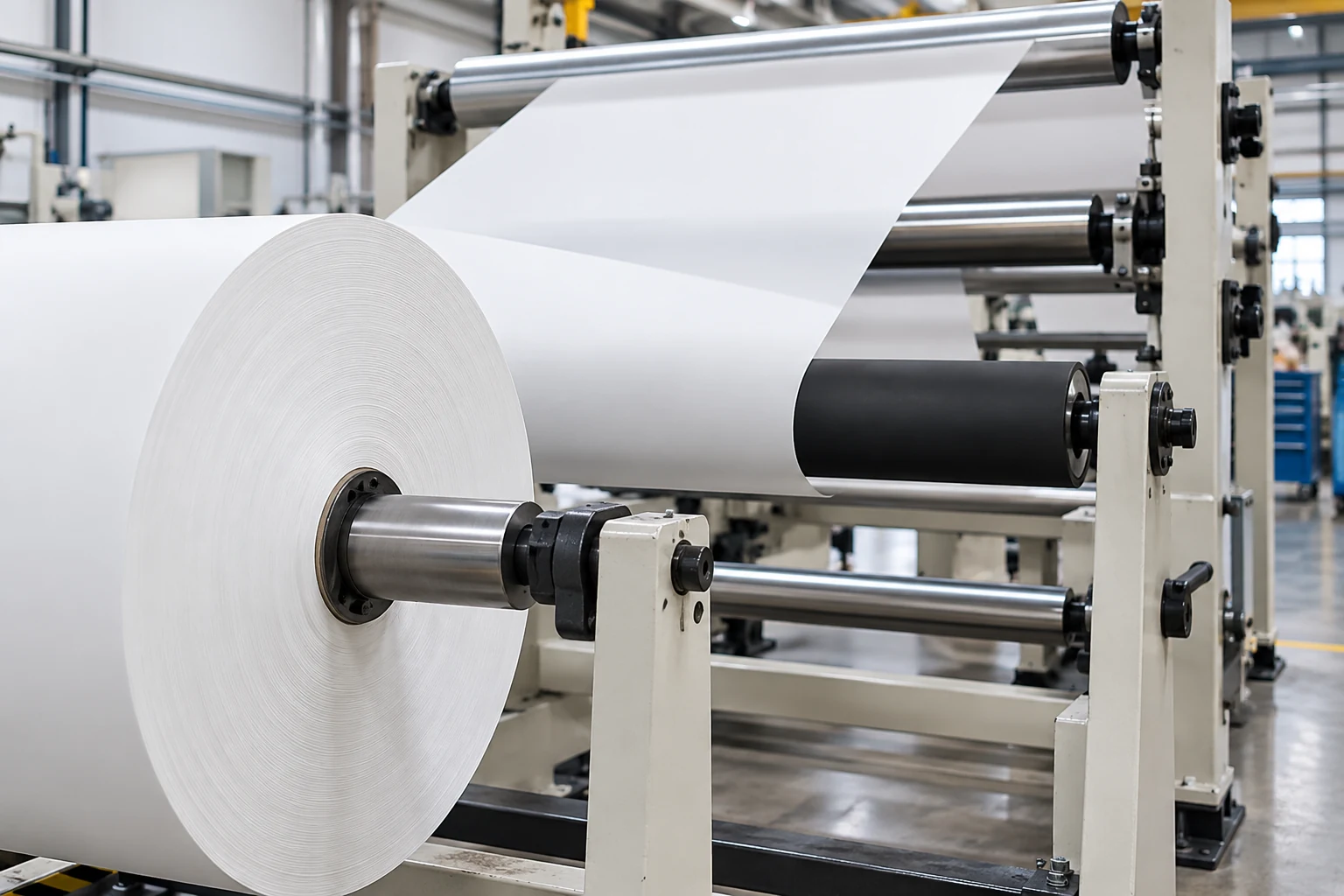
Roll converting turns a parent reel into a usable format
Slitting and rewinding answer different questions
Slitting establishes narrower widths; rewinding forms rolls suitable for the intended use. These operations may be integrated in a production line, but they remain different functions. Roll converting must preserve the usable surface while delivering the agreed format. A clean-looking reel face should be considered together with width consistency, edge condition and the way the roll sits and feeds in its intended holder.
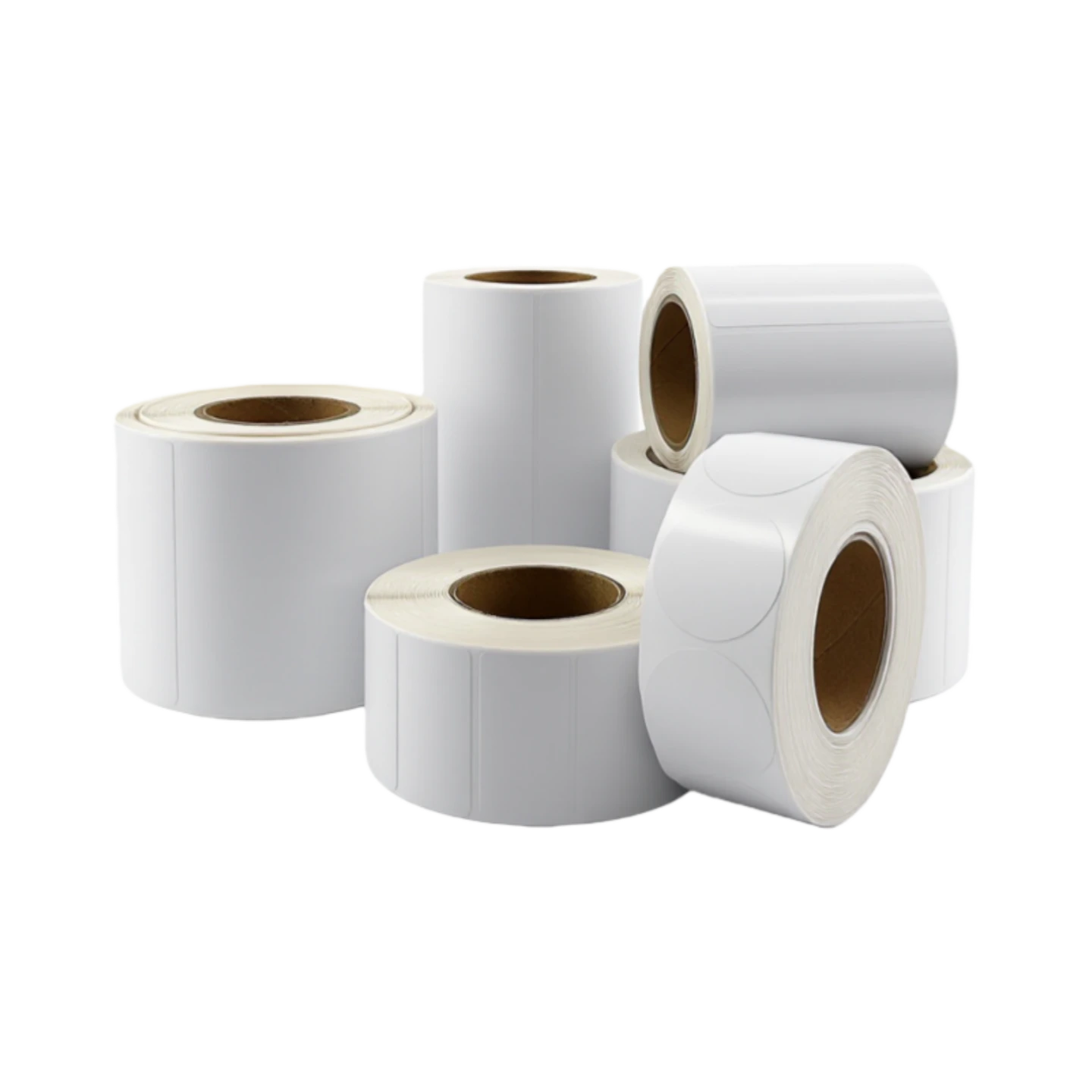
Length, thickness, core geometry and winding condition all influence outer diameter. Diameter alone is therefore an unreliable substitute for a stated length. If the order is priced by roll, the specification should still identify what each roll contains. An agreed measurement method helps avoid a disagreement in which one party evaluates diameter while the other has quoted a nominal length under different assumptions.
Edges, winding and core fit influence everyday feeding
Roll converting can introduce edge damage, loose winding or an unsuitable core arrangement even when the supplied paper grade is appropriate. These are finished-product issues that deserve their own checks. A roll can also be too large for a printer compartment despite appearing similar to a familiar consumable. Confirm fit using the actual equipment requirements and an identified sample, rather than estimating from a product photograph.
| Stage | Relevant observation | Useful evidence to retain |
|---|---|---|
| Paper grade and coating | Printing response under agreed conditions | Grade identity, sample source and trial conditions |
| Web handling | Creases, repeated marks or edge disturbance | Location pattern, photographs and reel reference |
| Roll converting | Width, winding, length and core fit | Specification and agreed measurement record |
| Packing and shipment | Protection, carton condition and lot identification | Pack specification and receipt observations |
The supermarket application page provides one usage context. Its relevance does not remove the need to identify the actual printer model, roll dimensions and storage conditions. An application label is a starting category; it is not a universal compatibility statement for every device used in that setting.
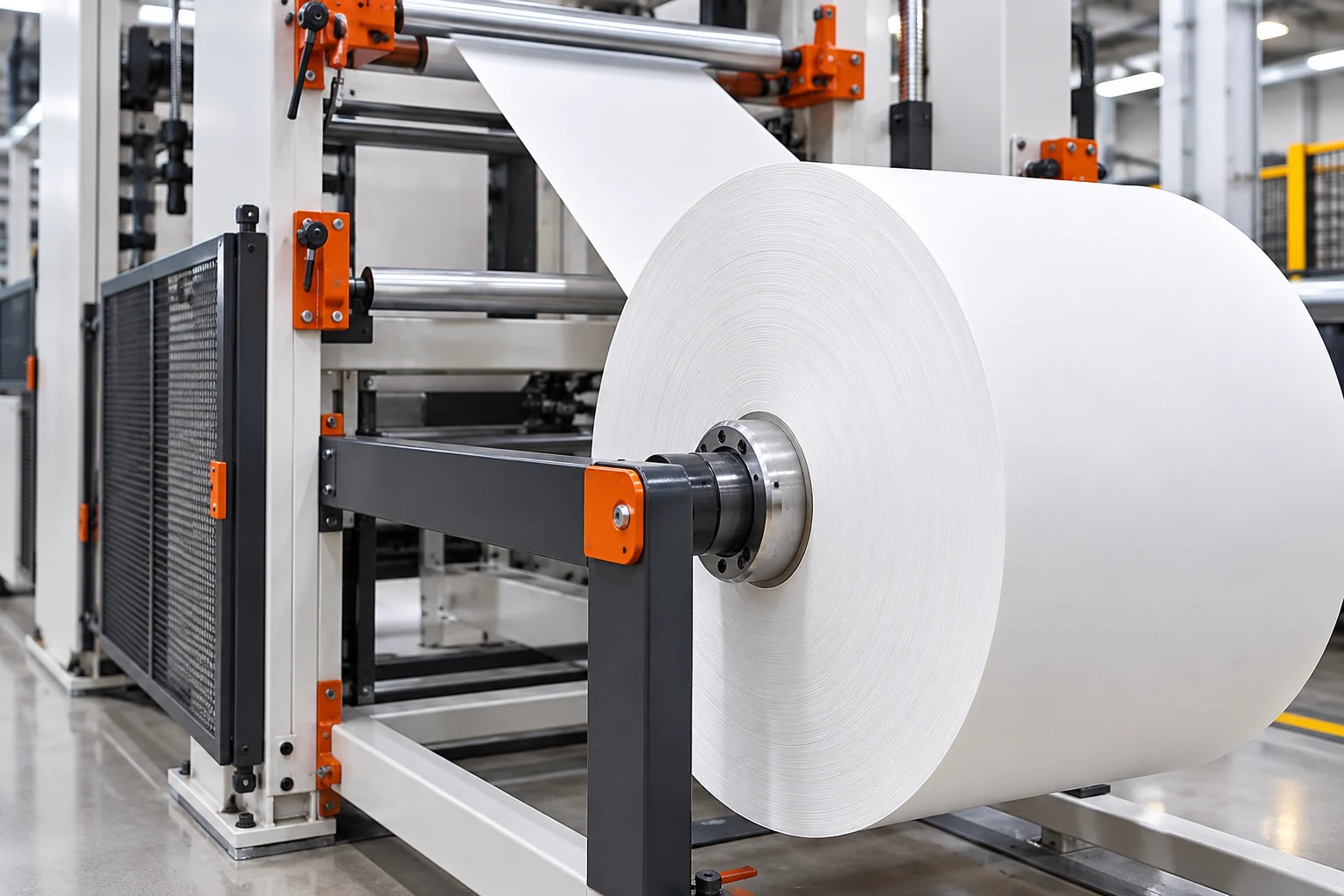
Packing and storage preserve the condition already achieved
After roll converting, packaging helps protect the surface and the finished roll during handling. Carton strength, internal arrangement, wrapping and storage instructions should match the agreed product and route. Protection should be evaluated as a system: a roll that is acceptable at packing can still arrive damaged if cartons are compressed, wet or handled outside the agreed conditions.
Thermal paper manufacturers publish grade-specific handling guidance because heat, moisture and contact conditions can influence the material. Mitsubishi's thermoscript product information is an example of such manufacturer guidance. It should not be applied as a universal specification for a different brand or grade. Request the guidance that belongs to the supplied material and keep it with the purchasing and warehouse records.

Read a process claim through the evidence it supports
A useful explanation of thermal paper production connects each claim to a stage. “Manufacturer” may describe coating, converting or a coordinated supply arrangement; ask what it means in the specific proposal. “High quality” becomes useful only when it is translated into a defined grade, dimensions, test conditions and acceptance criteria. Neither phrase alone allows a buyer to reproduce an evaluation.
For example, imagine an order in which sample rolls print clearly but delivered cartons contain a mix of outer diameters. The next step is to compare the agreed length, thickness and core requirements with measured samples and the converting records. The observation does not automatically prove a coating fault. A structured investigation protects both parties from replacing the wrong component or repeating an inconclusive trial.
The reverse situation also matters: uniform dimensions do not resolve inconsistent image response. Keep the paper grade, printer settings and sample handling conditions visible in that investigation. The purpose of process knowledge is to ask a more precise question at the correct stage. A request through the technical contact channel is more actionable when it includes those details and the affected lot reference.
When reviewing the technical article archive, distinguish general educational explanations from product-specific guarantees. The same distinction applies here: the sequence describes how stages relate, while a purchase specification and supported test record define what a particular supplied roll must achieve. That boundary makes the manufacturing story useful without turning it into an unsupported promise.
Frequently Asked Questions
Does every supplier coat its own thermal paper?
No. A supplier may coat paper, convert purchased reels or coordinate several sites. Confirm the actual manufacturing scope and preserve traceability between the paper source and the finished roll.
Can roll diameter establish paper length?
Not by itself. Thickness, core dimensions and winding also affect diameter. Use an agreed length specification and measurement approach instead of relying only on the outside appearance.
Why can two white rolls print differently?
The grade, functional coating and test conditions may differ. Printer settings and sample handling can also influence the observation. Compare identified samples under controlled, relevant conditions.
Is a slitting-machine photograph evidence of coating capability?
No. It illustrates a converting operation. Evidence of coating capability must relate to that separate stage and to the site responsible for it.
What is the most useful starting document for an enquiry?
A concise specification covering the intended printer, grade or performance needs, roll format and packaging provides a practical starting point. Add the relevant trial and storage conditions so that offers can be compared meaningfully.
Thermal paper production is best understood as a chain of distinct controls. The sheet must provide the intended printing response, the converting process must deliver the correct roll, and handling must preserve both. Keeping those questions separate makes the complete product easier to understand.
 You May Also Like