


 Home
 XBD
 Oct 24,2026

Selecting thermal rolls means matching the complete roll to the printer, the paper grade to the receipt's job, and storage conditions to the required reading period.
Begin With the Record the Paper Must Carry
A suitable roll is one that feeds correctly and leaves a useful record for its intended life. A short-lived order slip, a return receipt and a document kept for later reconciliation do not create identical requirements. Starting with the record prevents a familiar-looking roll or an attractive carton price from deciding the specification prematurely.
Describe the Journey After Printing
Record where the slip goes after leaving the printer: into a customer's wallet, onto a preparation counter, into a delivery pouch or into a filing system. Identify likely contact with moisture, oil, adhesive tape, plastic sleeves and strong light. These are different exposures, and resistance to one does not establish resistance to another. The selection question is which exposure the actual grade is documented to tolerate.
Keep the Printing Method Separate From the Roll Shape
Continuous receipt stock, adhesive labels and multipart paper can all arrive wound into rolls. Their shape does not make them interchangeable. Direct thermal media forms its image through a heat-responsive surface; a thermal-transfer application instead needs a compatible ribbon and substrate combination. Adhesive material introduces a liner, gaps or marks and handling requirements that ordinary receipt stock may not have.
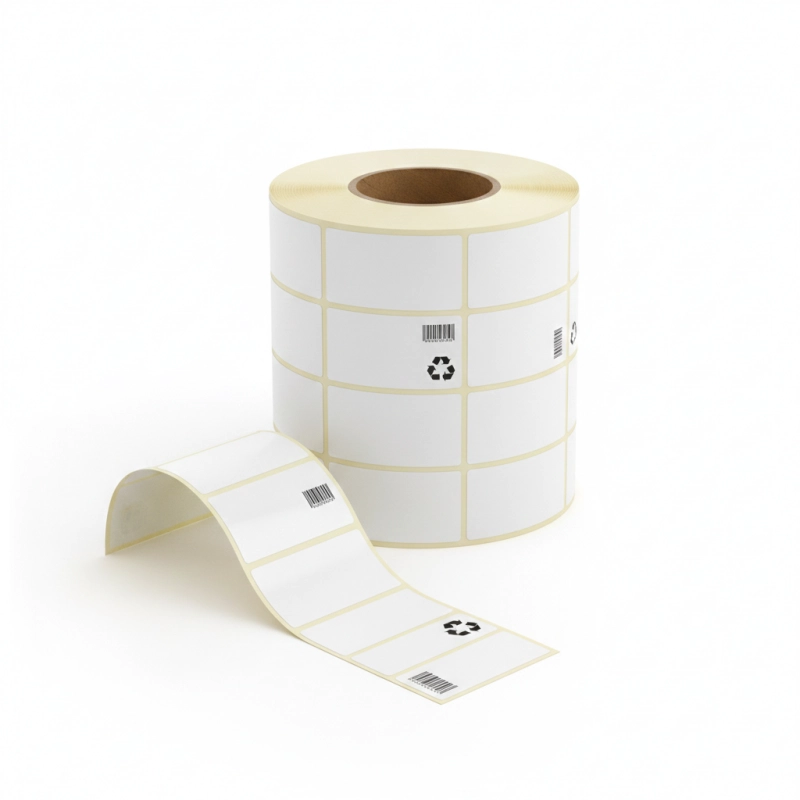
The site's self-adhesive label category therefore represents a separate media choice, even when its products look similar in a catalogue thumbnail. Establish the actual printer mechanism and media path before comparing width, colour or price. A category description helps locate options but does not replace the equipment's approved-media instructions.
Read the Entire Roll Specification Together
Roll dimensions describe several independent features. Width controls lateral fit; outside diameter determines whether a full roll clears the compartment; core size and winding direction affect how the roll is supported and presented. None of these values can be inferred reliably from a photograph or from the first number in a short product name.
Check the Full Roll and the Near-Empty Roll
A new roll may touch a lid or housing even though a partly used one appears to fit. At the other end of its life, the core, attachment method and residual curl may affect feeding or the near-end sensor. Compare the printer's specified limits with a drawing or measurement of an actual sample, then observe feeding at both stages. Avoid forcing a roll into a compartment or altering the holder to make an unapproved format work.
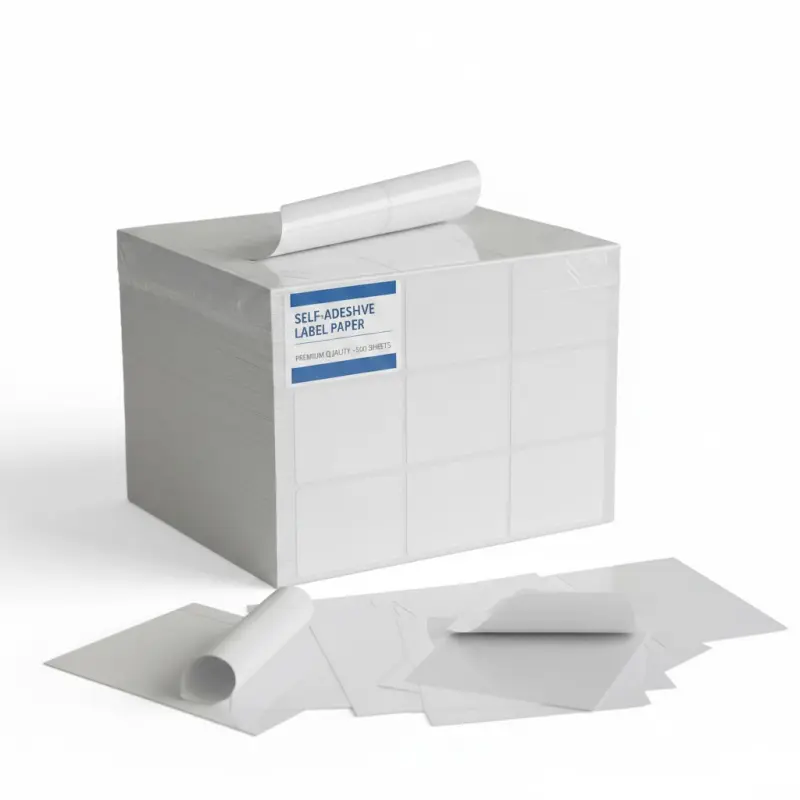
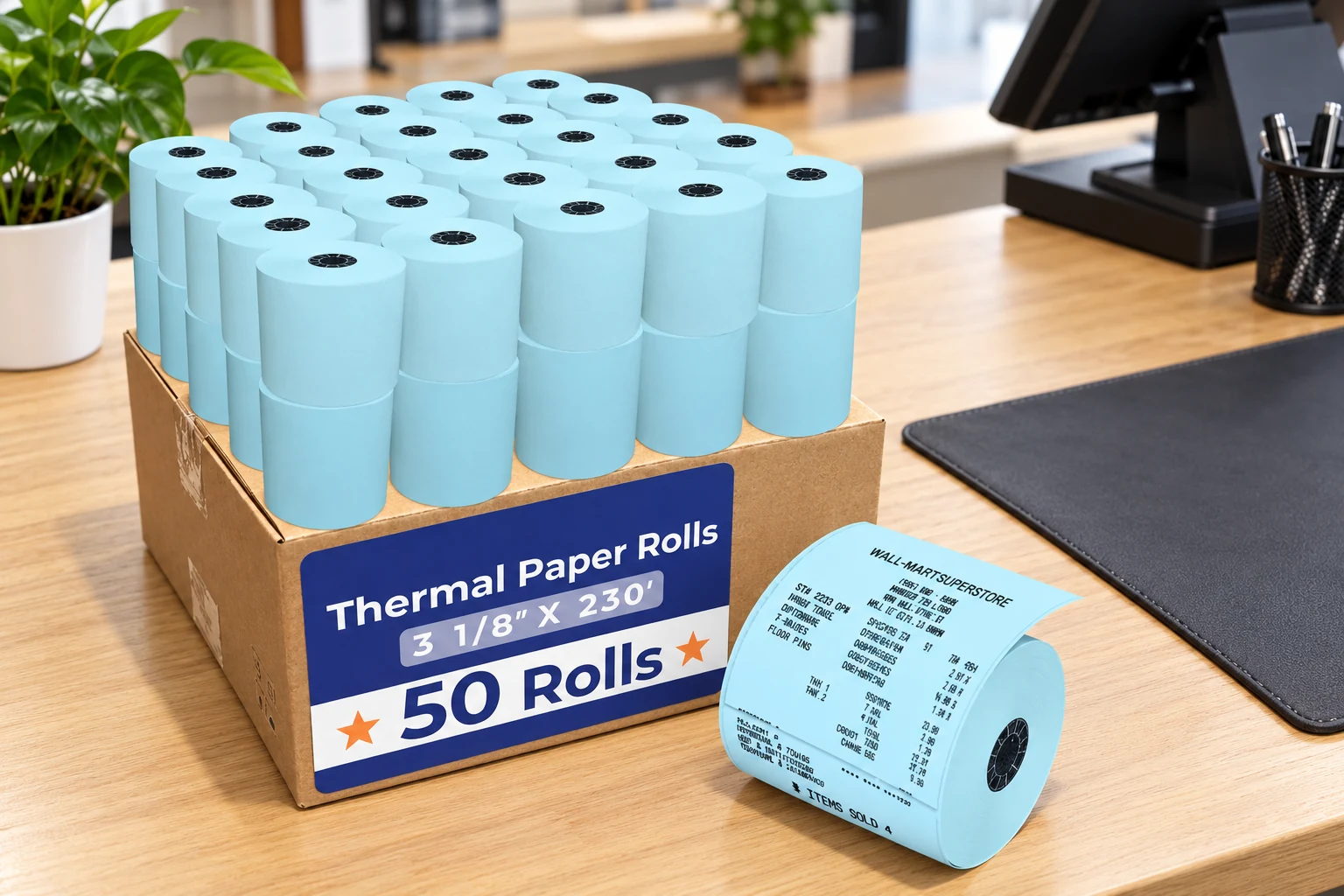
Package wording is useful for identification but can be incomplete. The blue receipt-paper listing shows a labelled carton and a matching example roll. Its visible size and quantity are package facts; they do not establish a universal core specification, allowable tolerance or compatibility with every printer. Those details need a separate specification and a check against the intended device.
Do Not Substitute Weight for Thickness
Basis weight expresses mass per unit area, while thickness describes the distance between the sheet's surfaces under a defined measurement method. They are related through the paper structure but are not the same parameter. A heavier sheet need not provide proportionally more printable length, and a thicker sheet occupies more radial space at a given length. Request both values when they matter to the printer or the order.
Manufacturer documentation illustrates why this distinction matters. Epson lists receipt-paper options with the same nominal width and outside diameter but different thickness and approximate length. Those figures apply to the listed Epson media, not automatically to another supplier's rolls. The general lesson is to compare the complete specification rather than transfer a length expectation from a similar-looking product.
Choose the Grade for Exposure and Reading Life
The paper grade connects coating behaviour with the intended use. Initial print darkness, background stability and image retention answer different questions. A roll that gives a dark sample immediately after printing has not thereby demonstrated resistance to months of handling, heat or chemical contact.
Define a Retention Condition Instead of a Longevity Slogan
Ask what a preservation statement means: which grade was assessed, how it was printed, how it was stored and what counted as a readable result. The site's long-lasting receipt-paper page is a relevant starting point for that discussion, but the category name is not a guarantee for a particular shipment or storage environment. A specification should make its conditions explicit.
Ricoh's technical guidance explains that light, heat, solvents, plasticisers and abrasion can affect thermal media. Its numerical storage limits are product-specific and should not be copied as universal limits for unrelated paper. The useful principle is to obtain the current handling guidance for the exact proposed stock and compare it with the real route from warehouse to printed record.
Translate Coating Claims Into Observable Requirements
Words such as waterproof, oil-resistant or three-proof need defined exposure conditions and an assessment method. A splash, prolonged soaking and rubbing a wet surface are different tests. Likewise, an image can remain dark while the paper itself curls or loses strength. Select the relevant behaviour and acceptable outcome before reviewing a sample result.
The coated thermal-roll range provides a verified same-site example of this product family. Its suitability for a specific process still depends on the offered grade and confirmed conditions. Do not treat a coating label as proof that an ordinary receipt becomes a durable outdoor label, or that every stock in the same category uses an identical construction.
| Decision | Information to compare | Evidence that remains necessary |
|---|---|---|
| Mechanical fit | Width, outside diameter, core and winding | Printer instructions and a complete-roll feeding check |
| Print response | Specified media grade and operating settings | Representative output on the intended equipment |
| Reading life | Retention statement and its storage conditions | Grade-specific documentation and a recordkeeping plan |
| Contact resistance | Coating claim and relevant exposure | A defined assessment, rather than an unexplained slogan |
| Delivery consistency | Approved revision, lot identity and packaging | Traceable incoming checks against the agreed specification |

Compare Usable Output Rather Than Carton Appearance
Usable yield is the amount of satisfactory output obtained under the same operating conditions. Comparing only the number of rolls per carton hides differences in roll length, thickness, unusable leader or tail, and interruptions during printing. A low carton price can be misleading when the compared products do different jobs.
Keep the Comparison Basis Constant
For thermal rolls, begin with a declared or verified length and a common receipt layout. Record whether that length includes sections that cannot be used, whether splices are allowed, and how damaged ends or loose winding are handled. Do not estimate saleable length from outside diameter alone when the core and sheet thickness are unknown. A calculation is only as reliable as its measured inputs.
A practical comparison uses the same device, settings, receipt content and acceptance rule. Note interruptions, skew, cut quality and rejected output without assuming that every issue originates in the paper. The coreless receipt-paper option illustrates another construction choice, but a coreless format is suitable only when the equipment supports it. Eliminating a core does not eliminate the need for feeding checks.
Keep Appearance, Chemistry and Documentation Separate
Colour can distinguish an order or support a visual workflow, but it does not identify the developer chemistry, prove image retention or establish regulatory suitability. A pink, blue or white roll should be selected as its own documented product. Similar packaging and a shared supplier do not demonstrate that the underlying grades are identical.
Ask What Each Declaration Actually Covers
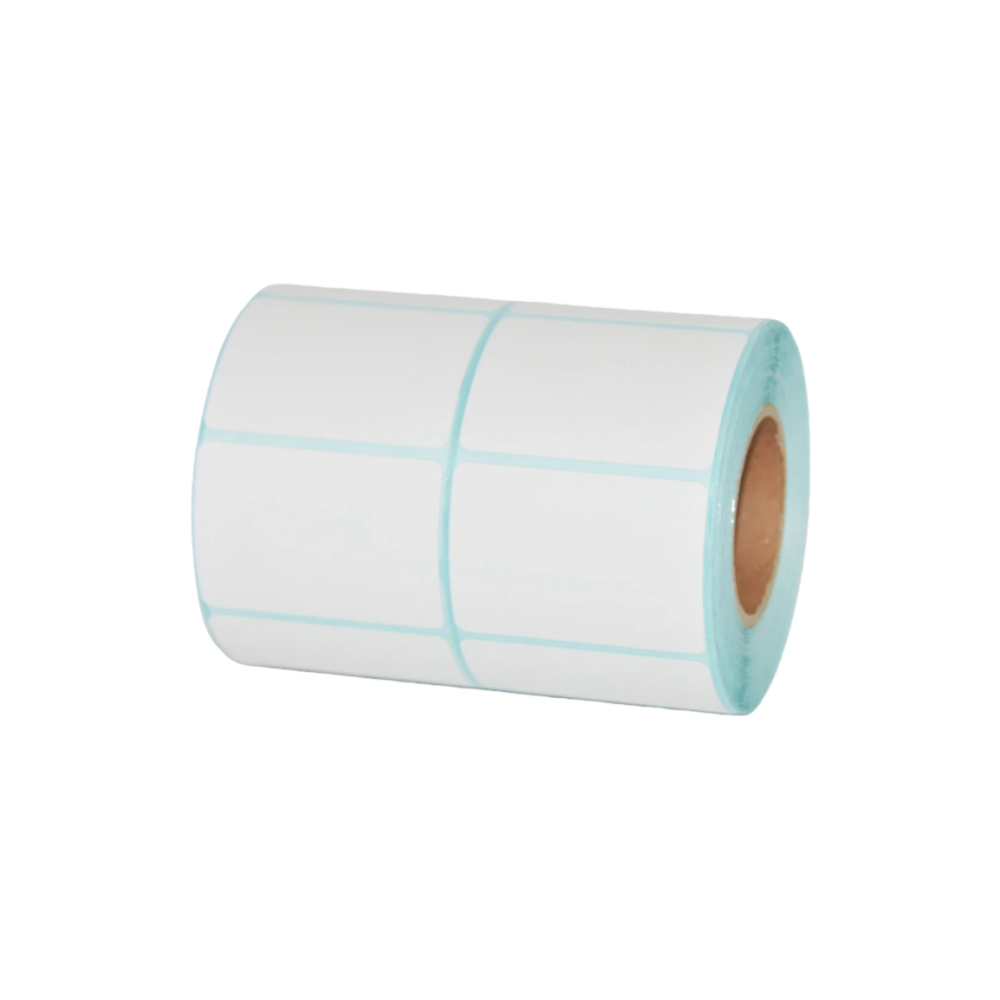
The pink thermal-paper product and the blue example in this article show that colour variants exist in the catalogue. Their photographs illustrate those variants only. Any claim about BPA, BPS or another constituent needs grade-specific evidence, a clear scope and an appropriate reporting basis. A colour, a smell or a scratch test cannot verify chemical composition.
ECHA's monitoring of BPA replacements in thermal paper shows why the absence of one named substance should not be read as the absence of all related substances. That historical evidence supports careful interpretation of declarations; it does not establish the current legal status of a shipment in every market. Check the applicable requirements separately and keep the supporting documentation tied to the exact stock being considered.
Protect the Selected Stock Through Storage and Use
Approving the paper grade is only part of the result. Storage and handling can undermine suitable media before it reaches the printer. Keep cartons protected according to the grade supplier's instructions, preserve lot identity, and avoid uncontrolled exposure while transferring stock between storage and the operating area.
Make Incoming Checks Match the Approved Record
On arrival, compare the carton identification, visible condition and sampled roll dimensions with the agreed record. Look for wet packaging, crushed rolls, contamination or changed winding. Keep questionable stock identifiable while the discrepancy is assessed. A photographic record should show the condition and relevant labels rather than being treated as a substitute for measurements or performance checks.

Frequently Asked Questions
Does a roll fit if its width matches the printer?
No. Width is only one part of the fit. The full outside diameter, core or coreless construction, winding direction, thickness and the printer's media guidance also matter. Check a complete roll and observe feeding through its useful life instead of judging compatibility from a partly used sample.
Are coloured rolls a different performance class?
Not necessarily. Colour is an appearance characteristic, while printing response, contact resistance and preservation depend on the documented construction. Compare each proposed variant using the same required conditions. Do not transfer a test or declaration from one colour to another without confirmation that it covers both.
Is a darker initial print always better?
No. Initial darkness is one observation under particular printing settings. Background discolouration, fine-detail readability, feeding and later exposure may change the practical result. Compare samples on the intended equipment and record the conditions so that output from different stocks is meaningfully comparable.
What should be settled before placing an order?
Settle the printing method, complete format, documented grade, required reading period, likely exposures and the acceptance record. Then compare offered stock against those requirements, including packaging and change control. This sequence leaves fewer ambiguities than starting with carton price and attempting to explain differences after delivery.
A sound selection of thermal rolls connects equipment fit, documented paper behaviour and handling conditions. The next useful step is a single comparison record for the intended application, with unknown values clearly marked for confirmation and no assumption that appearance alone proves suitability.
 You May Also Like