


 Home
 XBD
 Oct 12,2026

POS paper manufacturers should identify which organization controls the coated paper and which converts it into finished rolls. Those responsibilities affect the evidence behind each shipment. A capable converter can deliver consistent rolls without operating a coating mill, while a coated-stock producer still needs suitable conversion and packing controls to supply paper that works in the intended terminal.
Evaluate The Production Role Behind The Offer
The word manufacturer can describe several stages of the paper supply chain. It may refer to base-paper production, thermal coating, roll conversion or a combination of these activities. Supplier evaluation becomes more useful when those stages are named. The buyer can then ask for evidence from the responsible operation rather than assuming that every capability belongs to the entity issuing the quotation.
Ask Where The Thermal Surface Is Produced
Coating control concerns the thermal surface that develops an image under the printer's operating conditions. The offer should identify the supplied paper grade and the responsible source of that stock. A converting workshop's machinery photographs do not establish an in-house coating process. If the coating is sourced externally, the evaluator should ask how the converter qualifies that source and maintains continuity of the approved grade.
Identify The Scope Of Finished Roll Conversion
Roll conversion includes turning larger reels into the dimensions and winding configuration required for the finished product. Width, core, roll build and end treatment belong to this stage. POS paper manufacturers should show how these requirements are controlled against an approved specification. A clean-looking roll may still have the wrong geometry for a particular printer; appearance does not replace measurement or a terminal trial.
The site's company profile and factory information can help identify the operations described by the business. They are starting points for questions about actual responsibility and process scope. Published site claims should not be treated as an independent audit or as proof that every product page shares the same upstream source.
Separate Surface Performance From Roll Geometry
A finished receipt roll combines a suitable paper surface with suitable conversion. Coating control and roll conversion address different failure possibilities, so they should have separate acceptance evidence. A supplier comparison that merges both into a single phrase such as good quality makes it difficult to understand what was checked and who can correct a discrepancy.
Define A Repeatable Surface Evaluation
Surface evaluation should use the actual printer model and agreed settings, with a defined test pattern and review criteria. Print response depends on the media and operating conditions. A dark receipt from an unspecified device cannot establish performance across a terminal fleet. The evaluation should record the paper grade, sample identifier, printer condition and settings so that a later result has a meaningful comparison basis.
The Star TSP100LAN hardware manual, for example, separates roll requirements from recommended papers and notes that print density can vary with the paper and operating environment. Its dimensions belong to that particular printer family; they are not universal approval limits. The lesson for procurement is to use the intended device's documentation and a controlled trial, rather than borrowing another model's acceptable media list.
Measure The Converted Roll Independently
Roll dimensions should be checked independently of print appearance. The approved specification should identify the required width, outside diameter, core dimensions and winding orientation. Measurements need a defined approach and tolerances agreed for the purchase. A nominal size in a catalogue does not describe every allowance relevant to fitting the roll in a terminal or feeding it reliably.
POS paper manufacturers should also explain how the finished roll is identified after slitting and packing. A coating record linked only to a large incoming reel is not enough if the resulting cartons cannot be traced back to it. The conversion record connects the upstream paper grade to the outgoing rolls and gives the quality team a way to isolate affected material.
| Evaluation dimension | Coated-stock responsibility | Conversion responsibility |
|---|---|---|
| Material identity | Named grade and controlled source | Incoming reel identification retained through processing |
| Print response | Surface characteristics of the offered grade | Trial sample represents outgoing supply |
| Roll fit | Relevant stock thickness and properties | Width, core, winding and outside diameter |
| Change notification | Source or grade changes disclosed | Changes affecting finished roll requirements disclosed |
| Investigation | Upstream technical records available | Outgoing identifiers connected to the processing record |
Keep Product Formats Attached To Their Own Specification
Different paper formats can look similar while carrying different requirements. The thermal paper category contains several roll formats, and the broader site also describes labels and carbonless products. A supplier evaluation should focus on the continuous receipt media required for the terminal. Another paper family should not enter the comparison simply because its photograph is clearer.
Do Not Transfer A Carton Label To Another Format
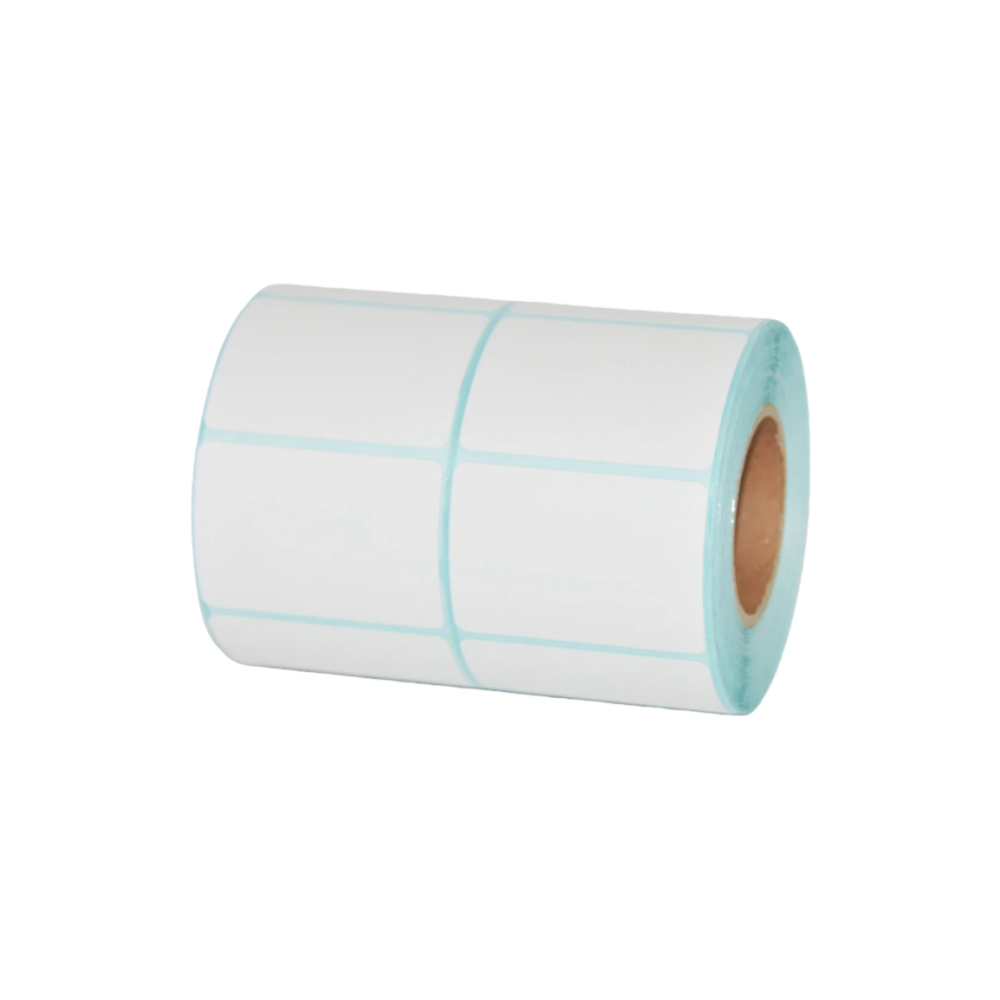
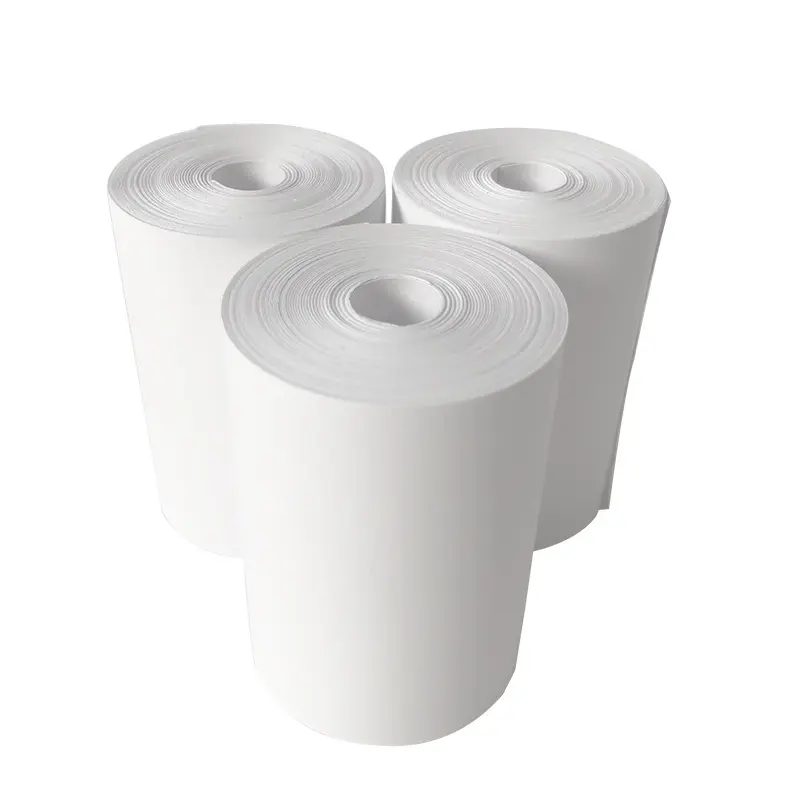
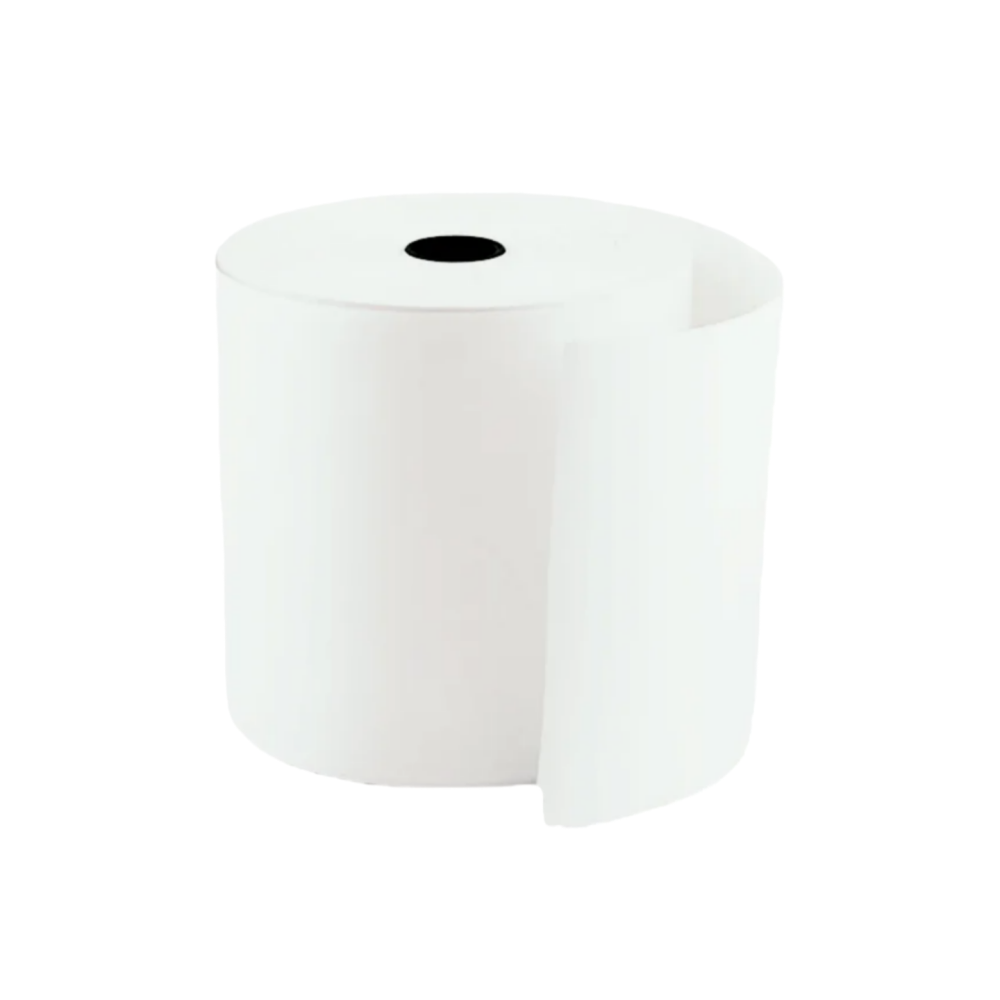
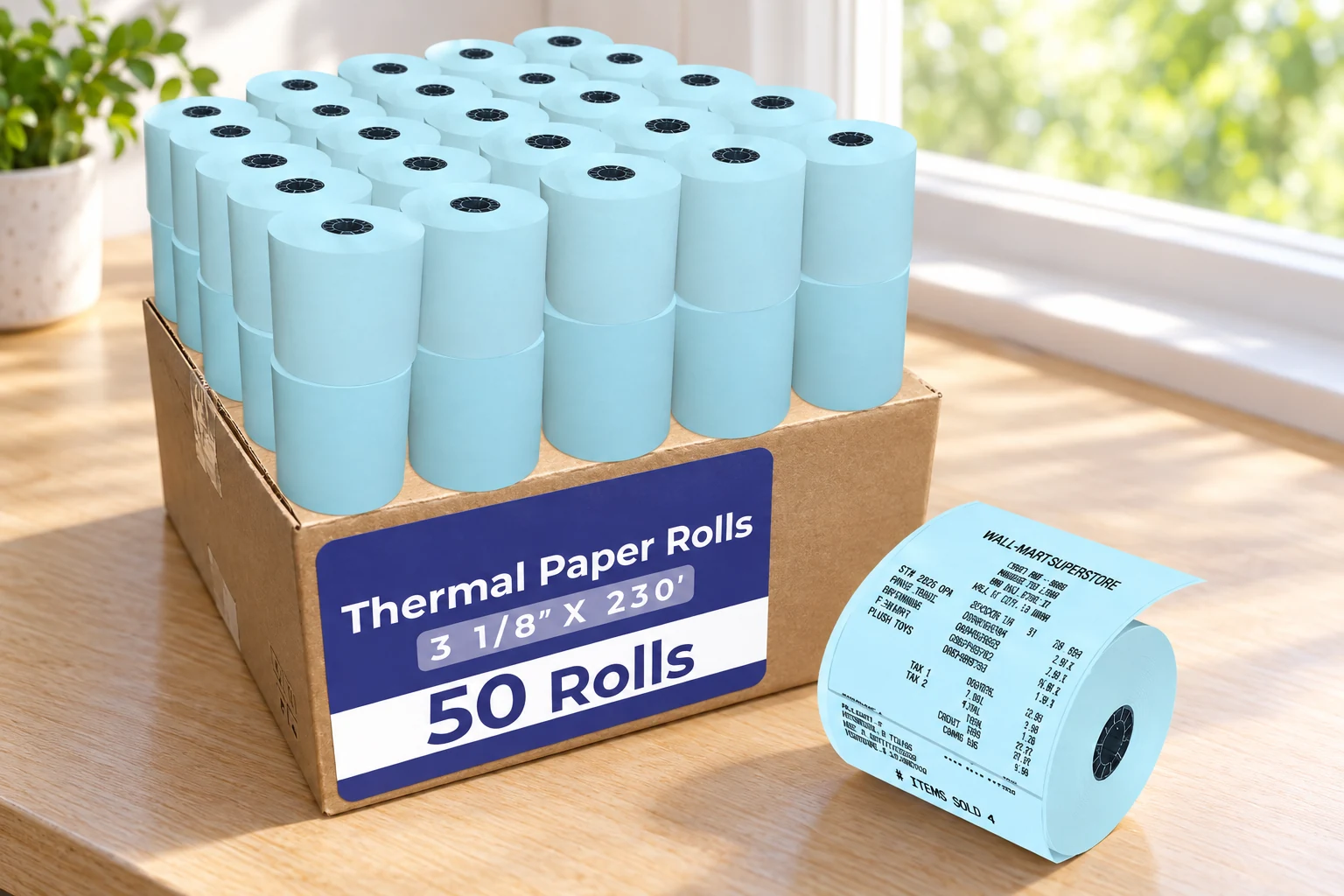
The site's white-roll carton and blue thermal paper format illustrate distinct packaged products. Their printed dimensions and carton quantities belong to their respective offers. A specification from one should not be used to approve the other without evidence that it meets the required device and application conditions.
A label helps connect the sample to the offer, but it is not a measurement result. The carton may state a nominal format and quantity while the receiving team still needs to confirm the delivered product and agreed dimensions. POS paper manufacturers should provide a clear product identifier on the offer and supporting records so that a photograph cannot accidentally become the only link between approval and repeat orders.
Distinguish Sample Print From Verified Test Evidence
A printed receipt shown beside a product demonstrates its presentation, not a controlled print-quality test. Sample item names, amounts and barcodes should not be treated as measured scanning or image-retention evidence. If those outcomes matter, the supplier comparison needs a test under specified conditions and a result connected to the actual media. This keeps illustrative pictures useful without assigning them an unsupported technical meaning.
Use The Production Record To Locate Responsibility
The production record should show how the approved paper becomes the delivered roll. A coating concern and a conversion concern may require different technical teams. Clear links between records help those teams investigate without exchanging guesses. POS paper manufacturers can be evaluated through a representative example showing how incoming material, processing and outgoing cartons are connected.
Follow An Incoming Reel Into Outgoing Cartons
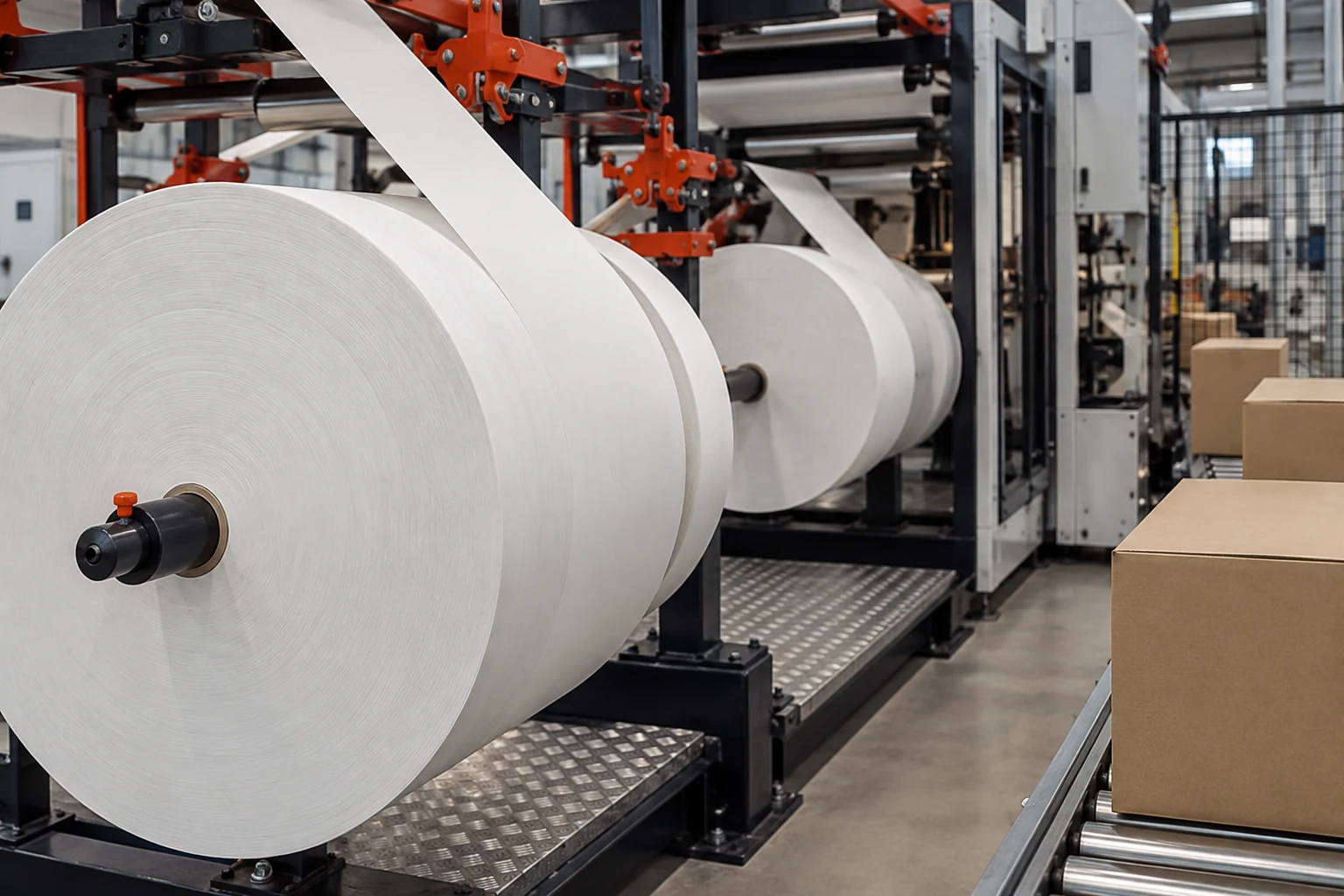
The evaluator can request an example of the identifier relationship, with sensitive commercial information appropriately controlled. The example should show which incoming reel fed the conversion run and which outgoing identifiers belong to that run. If multiple reels were used, the record should preserve that distinction. Reusing a single convenient carton identifier across unrelated inputs makes targeted investigation harder.
Trial The Complete Supply Arrangement
A trial should evaluate the delivered media in the actual intended device and handling environment. It should not be limited to whether one receipt can be printed. The sample needs to represent the proposed paper grade, converted dimensions and packaging. The record should identify those inputs so that the supplier and evaluator can understand what was approved and which conditions remain outside that approval.

Check fitting and feeding using the printer manufacturer's instructions, then review the agreed print pattern and relevant operating conditions. Cleaning, installation and device settings should be handled consistently during the trial. A different result should be investigated across media, conversion and device factors, rather than assigned immediately to the coating. Such separation makes the qualification outcome more defensible.
Confirm The Response After Packing And Shipment
Packaging and shipment controls should preserve the approved media and its identifiers. The supply agreement should specify applicable handling instructions and how damage or missing records are investigated. A carton that arrives in good condition still needs to contain the approved format. Conversely, a damaged carton needs review rather than an assumption that the paper inside has changed performance.

When a complaint occurs, POS paper manufacturers should identify the affected outgoing supply and the upstream stock relationship. The investigation can then examine the relevant paper grade, roll conversion and handling conditions. The buyer should agree on the disposition of affected stock and how corrective information reaches future orders. A replacement shipment without that explanation may resolve the immediate shortage while leaving the underlying issue unknown.
Supplier comparison is strongest when each offer can explain the same responsibility chain. A coating mill and a specialist converter can both be suitable under different arrangements, but their evidence will come from different operations. Qualification should establish who controls each requirement, how the records connect and what happens when the supplied product departs from the agreed scope.
FAQ
Must A Suitable Roll Supplier Own A Coating Mill?
No. A converter can be suitable if its source, material identity and finished-roll controls meet the purchase requirements. Ownership of a mill should not substitute for relevant performance evidence. The division of responsibilities must be transparent enough to support qualification and investigation.
Can A Dark Sample Receipt Prove The Paper Grade?
No. It shows one appearance under conditions that may be unknown. A useful evaluation connects the sample to a named grade, device and test conditions. It then compares the agreed outcomes instead of treating a photograph as a controlled result.
Are Different Roll Colors Interchangeable?
They should not be assumed interchangeable. Color and presentation do not establish equivalent surface performance, dimensions or compatibility. Each offered format should be connected to its own requirements and reviewed for the intended terminal.
Where Should A Feeding Concern Be Investigated?
Start with the affected product and recorded conditions. Roll geometry, winding, device setup and handling can all be relevant. A structured investigation separates those possibilities before deciding whether the upstream stock or conversion process requires action.
What Makes A Manufacturing Claim Useful?
A useful claim identifies the actual operation and provides evidence for its responsibility. POS paper manufacturers become comparable when coating control, conversion requirements and outgoing records can be examined on the same basis, with missing evidence left visible for resolution.
An evaluation request can name the terminal model, required roll format, intended operating conditions and the records needed to connect sample to supply. The relevant paper product team can then clarify its coating and conversion responsibilities and identify the sample evidence available for the proposed grade.
 You May Also Like