


 Home
 XBD
 Oct 14,2026

Printing paper roll manufacturers should connect each supplied lot to an approved specification and explain changes before they reach a customer's printers.
A repeat order can arrive in familiar cartons while the paper inside behaves differently. The cause might involve a paper grade, winding setting, core, packing method or storage exposure. A purchasing team needs a way to distinguish these possibilities. The carton description alone is rarely enough to connect a complaint to the conditions under which a roll was made and approved.
For Malaysian distributors and business users, the practical objective is a consistent supply record across the manufacturer, importer, warehouse and end user. That record should identify the agreed format, the sample used for approval, the first lot affected by a change and the evidence needed before stock is accepted. It should not rely on a promise that every paper roll works in every printer.
Define The Roll Before Comparing Suppliers
Separate Roll Geometry From Paper Performance
Width, outside diameter, core dimensions, length and winding direction describe different aspects of a roll. A roll can fit the compartment yet fail another requirement. Conversely, a paper with acceptable imaging characteristics may be supplied on an unsuitable core. The purchasing specification should distinguish these attributes and identify how each one will be checked.
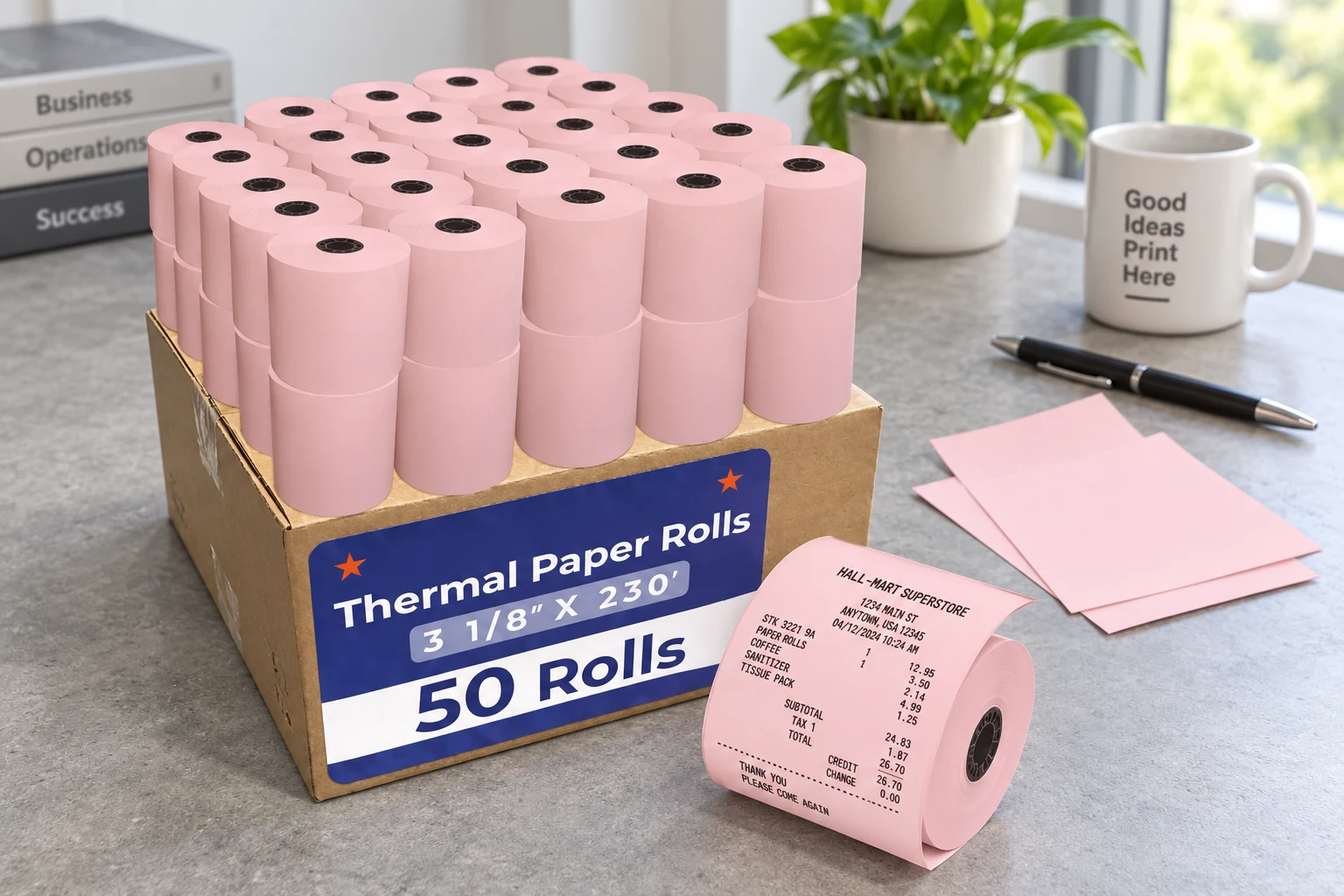
Paper grade, surface treatment and the intended printing process also matter. Direct thermal receipt paper, carbonless paper and adhesive labels are different product categories. An enquiry that uses the broad phrase “printing paper” should resolve that distinction before quotations are compared. The thermal paper catalogue is a useful route to candidate formats, but a catalogue category is not a model-specific approval.
Record What The Approved Sample Represents
An approved sample should have a reference, date and scope. A buyer may approve appearance, feeding, cutting or readability under stated conditions. Those observations do not automatically establish storage life, chemical resistance or suitability for a different printer. The record should say which attributes were examined and which questions remain open.
Keep the sample identity connected to the proposed supply specification. If a sample was taken from a development run, that fact should be clear. If it represents normal production, the relevant lot should be identified. An attractive loose roll sent without a code is difficult to use as a meaningful reference when a later shipment is questioned.
Require A Change Notice That Can Be Assessed
Identify The Material Or Process Being Changed
A change notice should state the present specification, proposed replacement, reason and affected products. “Same quality” does not explain whether the paper mill, coating grade, core source or converting process changed. The notice should describe the relevant difference and the evidence proposed to support acceptance.
Printing paper roll manufacturers should also identify the expected first shipment or lot affected. This allows the buyer to plan a review before new and old stock become mixed. The notice need not reveal unrelated commercial information, but it must provide enough detail to evaluate the change against the agreed use. A confidential grade reference can still be controlled and traceable between the parties.
Match The Review To The Actual Consequence
A new carton design and a new paper grade do not need the same assessment. A carton change may affect identification, handling or packing strength. A paper change may require a new printer trial and a review of imaging or storage requirements. Change control should make this distinction visible, with an owner for each required check.
The supplier's factory information can support a discussion of converting stages, but it does not establish that a particular change has been qualified. Ask for the relevant record: what was compared, which sample was used, what acceptance criteria applied and who approved the outcome. A general factory photograph answers none of those questions by itself.

Keep Printer Qualification Specific
Use The Intended Device And Operating Conditions
A printer trial should identify the model, relevant settings, paper orientation and intended receipt content. It should include the actual use conditions that matter to the buyer, rather than a single demonstration print. Where feeding or cutting is the concern, the record should describe how the sample was loaded and what behaviour was observed.
Printer manufacturers publish media requirements for particular devices. Epson technical material, for example, is tied to named printer families; its dimensions or operating guidance should not be transferred to an unrelated model. The buyer should use the current documentation for the installed device and resolve any difference between that documentation and the proposed roll specification.
Separate Readability From Retention
A readable receipt immediately after printing does not prove that it will remain readable throughout the required retention period. Heat, light, humidity and contact with other materials can matter, depending on the paper grade and conditions. The supplier should identify the relevant guidance and limitations for the selected grade, not apply one universal life claim to all thermal paper.
For a supermarket receipt application, the purchaser can distinguish operational readability from later document handling. A till operator needs dependable printing and handling during the transaction. A records team may need a separate retention process. These needs should be discussed explicitly so that a paper purchase is not expected to solve every recordkeeping problem.
The approved sample is a defined reference. It is not a guarantee for untested printers, storage conditions or future material substitutions.
Preserve Lot Identity Through Converting And Dispatch
Connect Parent Material To Finished Rolls
The supplier should be able to connect the relevant incoming material to the finished lots made from it. The exact internal system can vary, but a complaint should not depend on someone's memory of which parent roll was on the machine. If material is split across several converting runs, the records should preserve that relationship.
Finished-roll checks should refer to the agreed specification and sampling approach. A buyer can ask how nonconforming output is separated and what happens when a check fails. This is more useful than assuming that a final visual inspection will detect every possible paper or winding issue. Some characteristics require a different method or additional evidence.
Keep Carton Marks And Dispatch Records Consistent
Lot identity needs to remain usable after packing. The code on the carton should connect to the supplier's records and to the buyer's receiving entry. If a shipment contains several lots, the packing list should make that visible. Repacking at a distributor's warehouse should preserve the original relationship rather than create an untraceable mixture.
The company profile can help establish the commercial party involved, while the order and dispatch documents identify the actual supply. A brand name, exporter and converting facility may serve different roles. The buyer should understand which party receives a complaint and which party can retrieve the production evidence.

Agree The Evidence Needed At Each Supply Change
A short change control table helps purchasing, quality and warehouse teams ask consistent questions. The examples below show the type of evidence to discuss; they do not prescribe a universal test method or acceptance limit. The actual criteria should follow the product, printer and intended use.
| Proposed Change | Question To Resolve | Evidence To Retain |
|---|---|---|
| Paper grade or source | Does the replacement meet the agreed imaging and handling needs? | Grade reference, comparison scope and review decision |
| Roll dimensions or core | Does the roll match the specified device and loading arrangement? | Measured attributes and model-specific trial record |
| Winding or converting setting | Could feeding, edges or roll integrity be affected? | Relevant process assessment and finished-roll checks |
| Colour or preprinted artwork | Are identity, readability and intended presentation maintained? | Approved artwork or colour reference and sample |
| Carton or wrapping | Can the stock be identified and protected during handling? | Pack specification, code layout and handling review |
| Storage or delivery route | Are the selected grade's handling conditions still appropriate? | Supplier guidance, route assumptions and receiving observations |
Before accepting the first changed lot, the buyer can compare its identification with the notice and check that the required evidence is present. A missing record should be resolved before the stock is mixed with previously approved supplies. This is an administrative control with a practical purpose: it keeps an uncertain lot distinguishable while the question is investigated.
Storage guidance should travel with the product where necessary. A distributor can preserve lot identity while still exposing cartons to unsuitable conditions, so traceability and handling must both be considered. Appvion's direct thermal material guidance illustrates why paper grade and environment belong in that discussion. It should not be converted into an unsupported universal storage-life promise for another supplier's rolls.

FAQ
Is A Familiar Carton Label Enough To Accept A Repeat Order?
No. The receiving team should connect the carton identity to the order, agreed specification and relevant lot. Familiar artwork can remain unchanged while the material or process changes. The required checks depend on the supply agreement and any change notice.
Can One Roll Sample Qualify Every Printer In A Business?
Only the devices and conditions included in the assessment are covered by its evidence. Different printer models may have different media requirements. A business with several devices should identify the relevant groups and agree an appropriate qualification scope.
Does A Different Paper Colour Mean The Grade Has Changed?
It may, but colour alone is not a reliable way to identify a grade. The supplier should state the material reference and explain the proposed variation. The buyer should assess the consequences for the intended printing and presentation requirements.
What Is The First Step When A New Lot Causes Problems?
Record the product and lot code, affected printer, settings and observed behaviour. Keep representative samples and separate uncertain stock. Compare the records with the approved specification before deciding whether the cause is material, converting, device condition or handling.
Should Every Change Trigger A Complete New Qualification?
Not automatically. The review should follow the nature and consequence of the change. A documented assessment can justify a focused check where appropriate. It should also identify when the available evidence is insufficient and a broader trial is needed.
Make The Next Order Refer To A Controlled Baseline
Printing paper roll manufacturers can be compared more meaningfully when quotations refer to the same specification, sample scope and change-notification expectations. A low unit price does not explain what happens when the paper grade, core or packing arrangement changes during a repeat supply programme.
A buyer preparing an enquiry can use the supplier contact page to provide printer models, required roll attributes, expected handling conditions and the proposed change control table. The resulting discussion should produce a clear approved baseline and a way to identify the first lot made after any accepted change.
 You May Also Like