


 Home
 XBD
 Oct 19,2026

Paper thermal describes paper that forms an image through heat. Understanding the coating, printer method and handling conditions helps explain why an ordinary roll cannot simply replace it.
The Image Starts In The Coating
Heat Creates A Local Response
In direct thermal printing, a printhead applies controlled heat to selected points on a responsive coating. Those points darken to form text, lines or a barcode. The printer therefore needs media designed for that process. An ordinary sheet can have the right width and still lack the layer needed to make an image. Whiteness, a smooth surface and a roll format are physical observations; none alone identifies how the paper prints.
The term direct thermal media describes this relationship between the surface and the printhead. The coating is part of the imaging system, rather than a passive background that merely receives ink. That distinction explains both the convenience of printing without a ribbon and the need to protect the stock from unsuitable conditions before and after printing. It also explains why two visually similar rolls can behave differently in the same machine.
The Base And The Surface Have Different Jobs
The base supports feeding, winding and handling, while the responsive surface produces the visible record. Some grades also use protective layers suited to particular applications. Their presence and performance must come from the grade documentation. A glossy photograph does not establish that a roll has a protective topcoat, a specified resistance level or a particular chemical formulation.
Separate Direct Printing From A Ribbon Process
Follow Where The Image Material Comes From
A direct thermal printer activates the media itself. In thermal transfer printing, heat acts through a ribbon to transfer an image onto suitable media. Both methods use a heated printhead, so the word thermal in a printer description does not settle the consumable requirement. The presence of a ribbon path, the selected print mode and the equipment manual provide more useful evidence than a casual description of the machine.
Ribbon printing introduces another matched component: the ribbon must suit the media and the application. A thermal transfer label and a direct thermal receipt roll should not be treated as interchangeable because both are white. Equally, a printer that supports more than one method still requires the correct setup for the stock installed. Compatibility belongs to the complete combination of printer, settings and media.
| Observation | What It Helps Explain | What It Does Not Establish |
|---|---|---|
| A ribbon is required for the selected mode | The image is transferred through a consumable ribbon | That any paper or any ribbon will work |
| The manual specifies direct thermal stock | The paper surface must respond to the printhead | The exact roll dimensions or retention life |
| The roll fits inside the compartment | Its outside dimensions may fit the holder | Correct winding, sensing, coating or feed quality |
| A dark image appears on a sample | The tested setup produced a visible mark | Long-term readability or chemical composition |
| A product page names a grade | There is an identity to reconcile with supplied stock | Independent proof of every advertised property |
The phrase paper thermal can appear in short search queries or purchasing notes, but it is not a complete media specification. Translate it into a printer method first. Then identify width, maximum roll diameter, core arrangement and any sensing requirements from the equipment documentation. This ordering avoids spending time comparing paper characteristics for a printing process the machine is not configured to use.
A Roll Has A Printing Side And A Feeding Geometry
Orientation Is Separate From Appearance
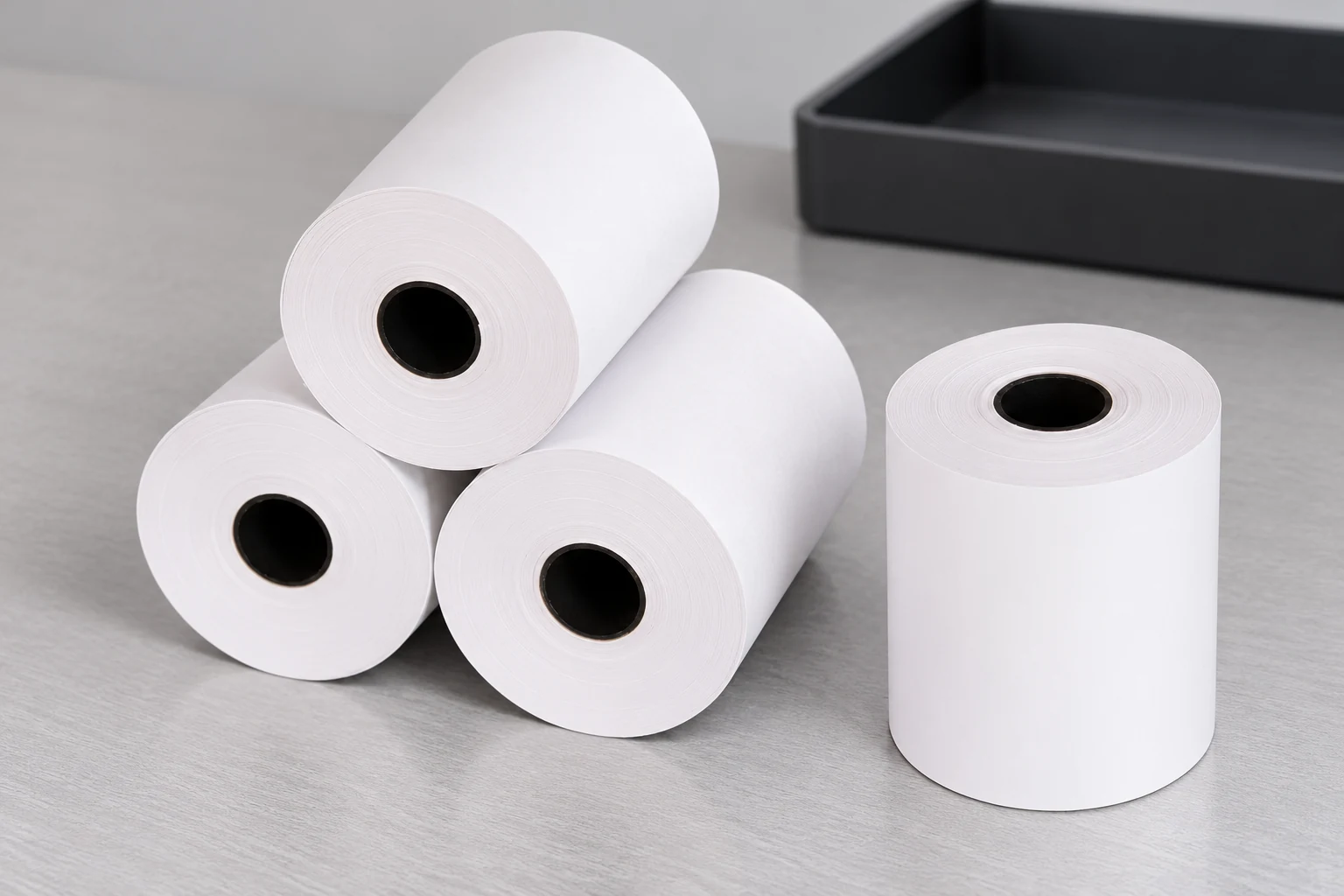
Direct thermal media normally has a designated imaging side. The roll must present that side to the printhead in the intended feed direction. A roll can unwind neatly and still produce a blank result if its orientation is wrong for the device. Follow the loading diagram and keep the supplied identification with the sample; a bright surface or an improvised marking test is not a substitute for the documented loading arrangement.
Coreless rolls and rolls wound on a core may look similar from a distance, yet their holders and unwind behavior can differ. Width controls the path across the mechanism, while outer diameter affects whether the roll fits and turns freely. A specification should distinguish each measurement instead of compressing several dimensions into an unexplained number. Any printed marks, perforations or sensing features also belong to the particular media format.
A Successful Feed Is More Than A First Line
A short printed line shows only a brief operating condition. Feeding over a representative job can reveal edge tracking, winding or handling issues that the first few centimeters do not show. This is a reason to keep the printer model, mode and stock identity in a sample record. It is not a reason to run unknown media outside the equipment manufacturer's recommended settings or to raise heat until any surface produces a mark.
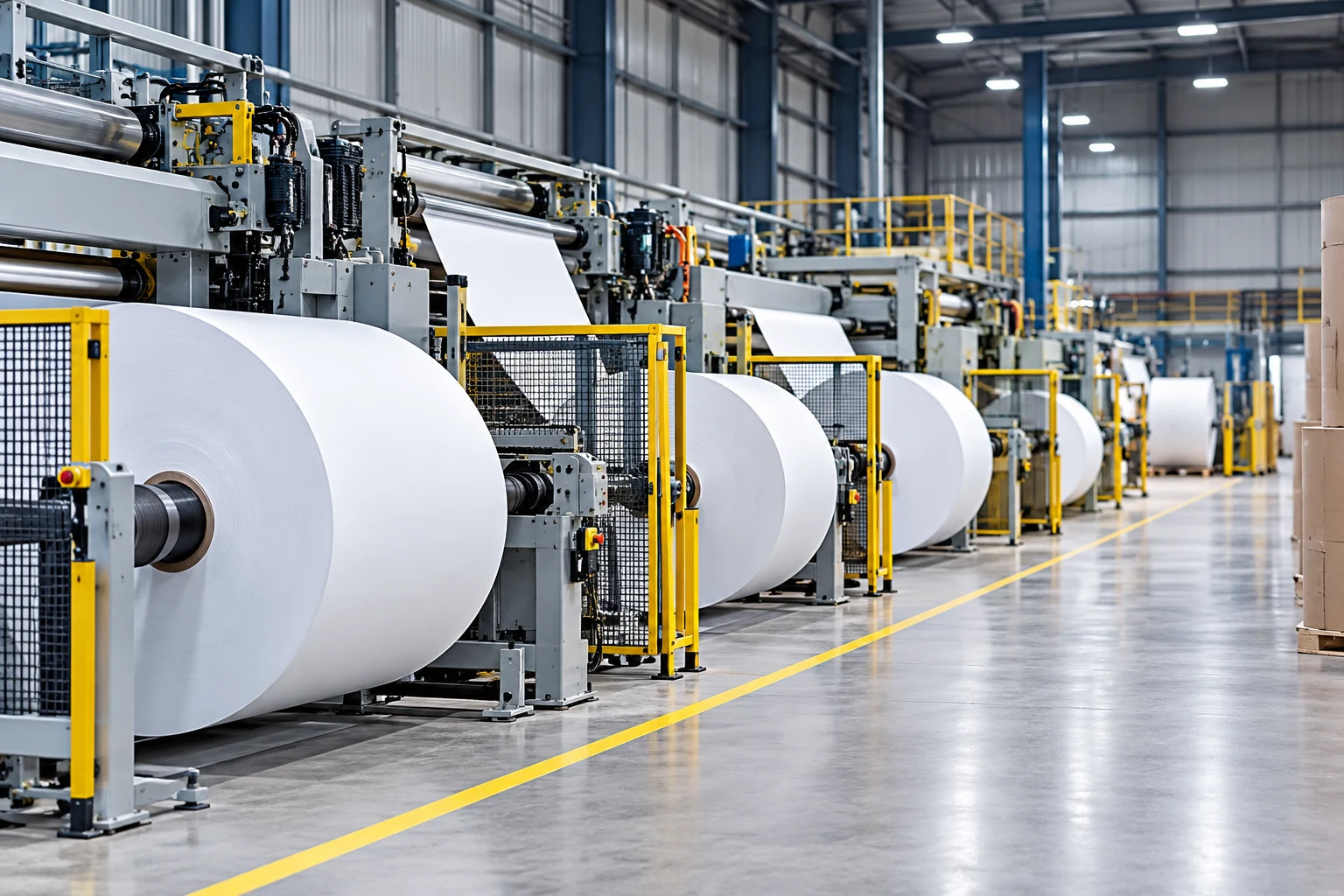
Manufacturing context on the factory page helps locate the converting stage within the supply chain. It does not replace the grade and dimensional information for the exact item supplied. Cutting, winding and packing turn stock into a usable roll format, while the suitability of that format remains tied to the intended equipment and use.
The Record Continues To React After Printing
Storage Exposure Is Part Of The Application
The same responsive system that makes a direct image convenient can also make the record sensitive to its surroundings. Heat, strong light and contact with unsuitable substances may change the background or the printed area. Manufacturer care guidance discusses these influences because a legible receipt at the printer is only the beginning of its useful life. The relevant question is how and where the document will actually be handled.
Consider a receipt kept briefly at a checkout, a label handled through a busy packing area and a document expected to remain readable in a file. Their conditions are different. A grade intended for one setting should not be assumed suitable for the others. Protective packaging, compatible sleeves and sensible placement can reduce avoidable storage exposure, but they do not create a retention guarantee that the grade documentation never provided.
Care guidance from Ricoh identifies concerns including heat, light, water, certain plastics and chemical contact. These are general categories to investigate, not universal numerical limits for every thermal product. A specific grade may have different protective features and recommended conditions. The practical response is to keep the supplier's current care instructions with the product identity and distinguish unprinted-stock storage from the retention conditions for printed records.
Preserve The Information, Not Just The Sheet
Readability concerns the contrast and completeness of the information. A sheet can remain physically intact while a code or transaction reference becomes difficult to read. Where records matter for a business process, decide how the information will be retained and retrieved, including any appropriate digital record. A paper selection alone cannot establish the whole organization's recordkeeping method or its obligations.
The company profile can help identify who supplies the material, while the grade record explains what was supplied. Keeping both identities distinct is useful when requesting storage instructions. A familiar company name should not turn a general claim about its product range into a specific performance promise for every roll in that range.

Build A Small Evidence Record Around A Sample
A simple sample review can connect the mechanism to daily use without becoming a laboratory claim. Its purpose is to establish what was tried, under which ordinary conditions and with what visible result. The record should remain specific enough that another person could identify the same stock and printer setup. An unlabeled loose roll and an undated photograph provide little basis for a later comparison.
- Record the supplier's product identity and the sample or lot reference available on delivery.
- Check the printer method and allowed media format against the equipment manual.
- Load the roll according to the documented orientation and use the intended settings.
- Print representative content and inspect feed, contrast and any machine-readable elements used in the actual job.
- Keep the sample with a note of conditions and any open questions about care or retention.
This sequence separates an observed result from an explanation that has not yet been established. A pale output might involve settings, orientation, contamination, media condition or equipment maintenance. One observation does not identify the cause. Avoid changing several variables at once, because a better-looking result would then offer little evidence about which change mattered.
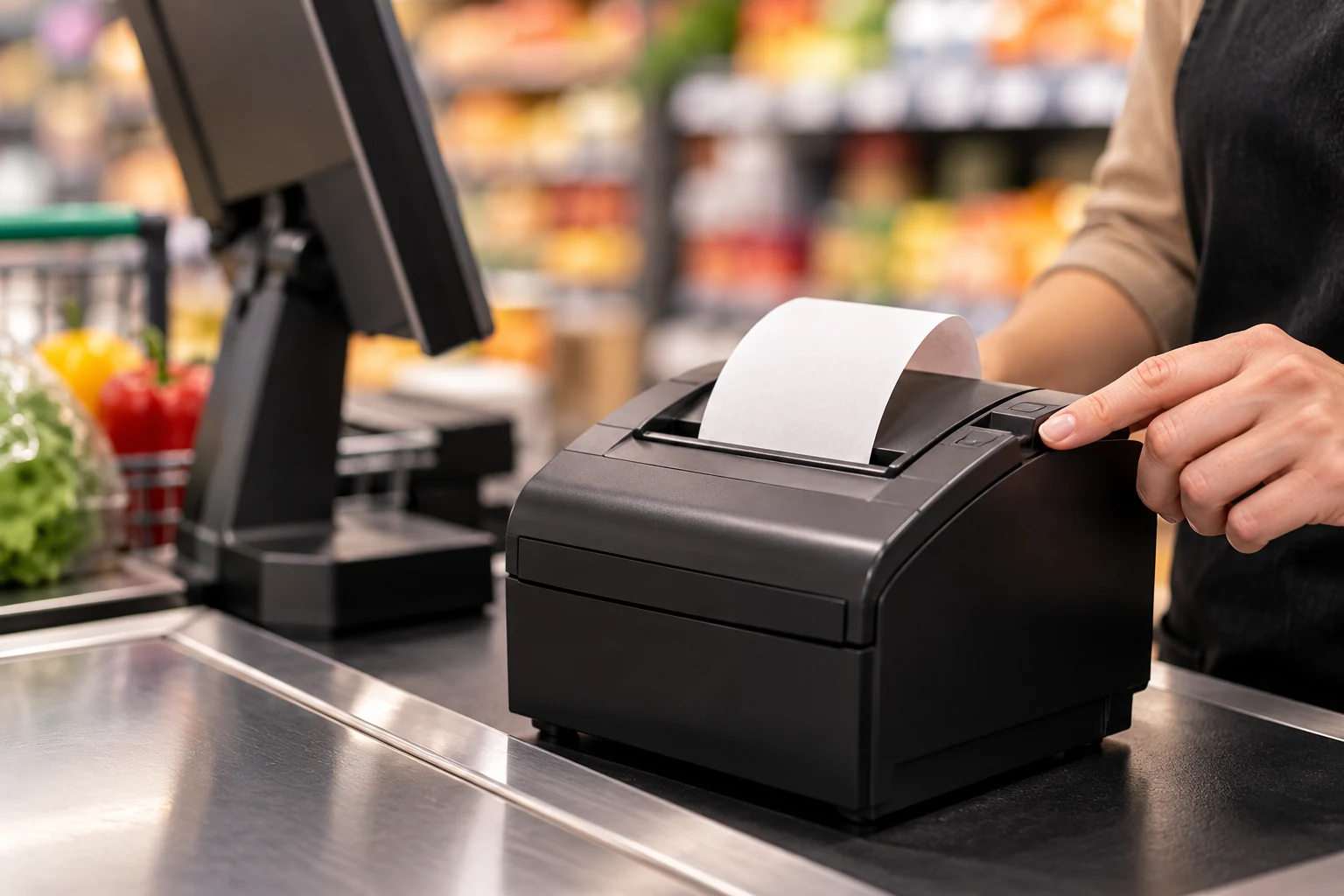
The site's supermarket application page illustrates a familiar receipt setting. Its usefulness is contextual: transaction printing makes speed, legibility and reliable loading visible concerns. It does not mean a receipt printer image proves compatibility with a named device, nor does it establish that the same roll is suitable for every label or ticket application.
Understanding paper thermal starts with the image-forming method and ends with a matched use. Coating, roll geometry, printer configuration and handling conditions answer different questions. When a product description leaves one of those questions unresolved, the published contact channel provides a route for obtaining the missing grade information. A clear question about the exact stock is more useful than an unsupported assumption based on appearance.
Frequently Asked Questions
Does A White Roll Always Mean Direct Thermal Paper?
No. White appearance and roll format do not identify the imaging method. Check the product description and printer requirements. Ordinary paper, transfer media and direct thermal stock can look similar while serving different systems.
Why Can A Roll Fit The Printer But Still Print Blank?
Physical fit does not establish the right coating or orientation. The selected print mode, loading direction and media identity need to agree. Equipment condition can also matter, so a blank result should be investigated rather than assigned to one cause immediately.
Is Ribbon Printing The Same As Direct Thermal Printing?
No. A ribbon process transfers image material from a separate consumable, while direct printing activates the responsive media surface. Both involve heat, which is why the equipment's exact operating method matters.
Can A Dark Sample Prove A Long Image Life?
No. Initial contrast is an observation at one time. Retention depends on the grade and its actual conditions of use and storage. Long-term claims need applicable evidence rather than a photograph of a newly printed sample.
What Should Be Kept With An Approved Sample?
Keep its product identity, available lot reference, printer configuration, review date and observations. Add current handling guidance and unresolved questions so the next comparison concerns the same stock and conditions.
 You May Also Like