


 Home
 XBD
 Oct 09,2026

A billing roll manufacturer should disclose material substitutions before they enter an approved supply program. A repeat order can look unchanged while using a different paper grade, core, winding setup or protective pack. The useful supplier question is therefore how a proposed change is identified, evaluated and linked to the first affected shipment. A clear process protects continuity without treating every improvement as a reason to restart qualification from zero.
An Approved Roll Needs A Traceable Baseline
Change control starts with knowing what was approved. A description such as “white billing roll” cannot distinguish the base paper from the finished converted roll. Record the required printing method, dimensions, paper grade or agreed performance basis, core construction, winding direction, roll length and pack arrangement. The exact fields depend on the printer and application, but the agreed baseline should be specific enough to compare two deliveries.
Connect The Sample To The Production Specification
A retained sample is useful only when it can be connected to the specification and lot that produced it. Identify the sample, record the trial conditions and preserve the acceptance decision. A loose roll in an office drawer may show color and print appearance, but it cannot reliably establish its paper source, declared length or production revision. The manufacturer should explain how sample approval becomes a controlled production requirement.
Separate Paper Grade From Finished Roll Geometry
The approved paper grade describes the material, while width, core and finished diameter describe the converted format. Either can change independently. A roll with familiar dimensions may use a different coating system, and unchanged paper can behave differently when converted with a new core or winding arrangement. Maintain both identities so that a later performance difference can be investigated without assuming that the visible diameter tells the whole story.

Material Change Has More Than One Form
A material change can be intentional, such as introducing an alternative paper source, or arise when an upstream supply becomes unavailable. Neither circumstance removes the need to evaluate its effect. Ask the manufacturer which changes are handled within the existing specification and which require buyer notification. The distinction should depend on potential impact and agreed responsibilities, not simply on whether the finished roll looks different.
Review Base Paper And Coating Substitutions
Changing the paper source or grade can affect printing behavior, storage response and conversion settings. A similar basis weight alone does not establish equivalent performance. The proposed substitute should have an identifiable technical description and a reason for selection. Where a paper producer changes a grade internally, the converter needs a way to receive and assess that information rather than relying only on the commercial product name.
Include Core, Adhesive And Wrap Changes
Core dimensions and construction influence how the roll fits and unwinds. Packaging changes can affect protection during storage and shipment. Any adhesive or attachment used around the roll must be assessed against the printer requirements and intended handling. These items may be less visible than the paper, but they should not disappear from the specification simply because their individual purchase value is small.
Change Notification Should Arrive Before The Trial
A useful change notification explains what is changing and makes an evaluation possible. It should identify the current and proposed materials, the reason, the products affected and the planned implementation point. “Same quality, new source” is too vague to support a decision. The manufacturer should show which characteristics remain unchanged, which may differ and what evidence supports the proposed equivalence.
State The First Affected Lot Or Order
When old and new stock overlap, tie implementation to an identifiable lot or order. Explain whether existing stock will be consumed first and whether mixed deliveries could occur. Receiving staff need to recognize the new version from its agreed identification.
Make Exceptions Visible And Time Limited
If a temporary substitute is proposed, document its scope and end condition. Approval for one trial shipment should not silently become approval for all future deliveries. Record who accepted the exception, what checks apply and how the original or newly approved baseline will be restored. An urgent supply situation is a reason for clear records, because later investigations otherwise struggle to separate temporary choices from the normal specification.
| Notification Item | Question It Answers | Useful Record |
|---|---|---|
| Current and proposed identity | Which material or component changes? | Grade, component code and revision |
| Technical effect | Which properties may be affected? | Comparison against the approved baseline |
| Evaluation scope | What needs to be checked again? | Trial plan and acceptance criteria |
| Implementation boundary | Which delivery first contains the change? | Identified lot or order |
| Disposition | Is the change accepted, limited or rejected? | Decision owner and documented conditions |
Conversion Records Explain What The Material Becomes
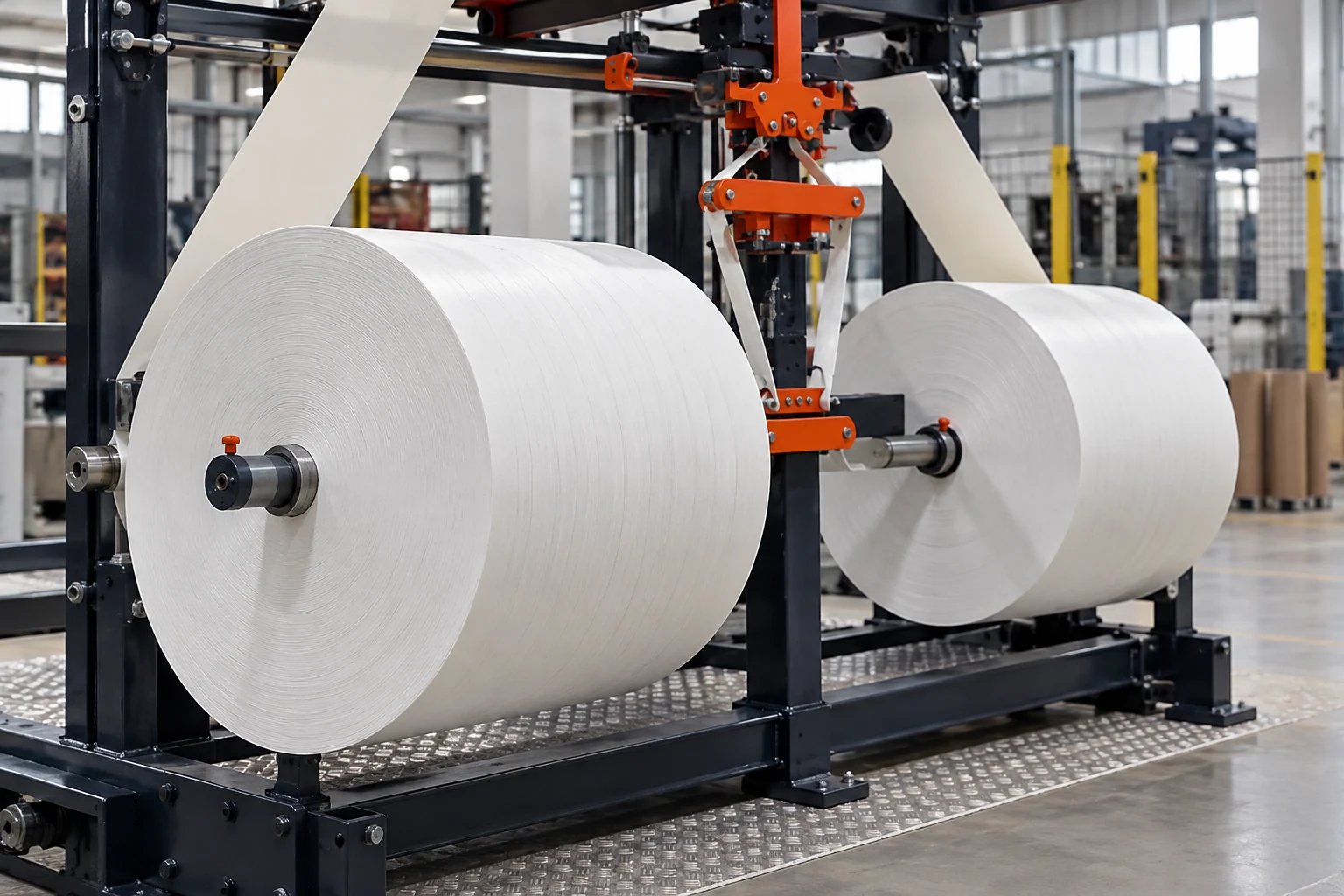
The manufacturer turns parent reels into finished rolls, so a proposed substitute should be considered alongside conversion settings. Slitting, winding, core loading and packing can influence the final result. A material comparison that ends at the incoming-paper certificate misses this part of the process. The trial should establish whether the new input can be converted consistently to the approved finished-roll requirements.
Preserve The Link From Parent Reel To Finished Lot
Traceability should connect the incoming material to the converted lot and the cartons shipped. The form of the record can vary, but the relationship must be recoverable. If a concern appears in one delivery, the supplier should be able to identify the affected material and production window. A generic certificate sent with several unrelated orders cannot provide that connection on its own.
Record Adjustments Without Hiding Their Significance
A different winding setup may be a normal response to the material, but its effect still needs assessment. Record the relevant adjustments and the resulting checks rather than describing the trial as identical when it was not. The factory information can help frame questions about conversion capability. It does not replace the records for a particular proposed change.
Repeat The Checks That The Change Can Affect
A billing roll manufacturer should be able to explain why its proposed evaluation is sufficient. Repeating every historical test may waste effort, while checking appearance alone can miss a printing or feeding problem. Start with the changed characteristic and follow its possible effects through conversion, printer use, storage and delivery. Keep the acceptance criteria established before reviewing the new results.
Use A Controlled Printer Comparison
Compare approved and proposed rolls under recorded conditions on the relevant printer configuration. Keep the print content, settings and handling consistent enough to interpret a difference. Observe feeding, cutting where applicable, print readability and behavior near the end of the roll. If a setting changes during the trial, record it explicitly so that a better-looking receipt is not mistaken for evidence of material equivalence.
Review The Receipt In Its Intended Use
A clear fresh print is useful, but the intended use may require additional handling or retention checks. Define what readability means for text, barcodes and other required marks, then evaluate the relevant conditions. Do not infer barcode performance from an image of a printed receipt. Actual scanning and retention expectations belong in the trial plan when they matter to the application.

Keep The Transition Visible Through Delivery
Technical acceptance and shipment control should meet at the first affected order. Confirm how cartons identify the new material version, how old stock is separated and which records accompany the delivery. A technically sound change can still cause confusion if different versions are mixed under an indistinguishable packing label. The warehouse should be able to follow the transition without relying on informal messages.
For a multi-location retailer, define how a trial result reaches the people who receive and use the rolls. The supermarket application page is relevant context for distributed receipt use. A central purchasing approval should specify which printer configurations and locations it covers, especially when the same commercial roll description serves several equipment types.

Retain both the approved paper grade record and the change decision after the transition. If an issue appears later, the comparison should establish whether the problem concerns the old version, the new version or another handling condition. Clear lot boundaries make that investigation more focused and reduce the temptation to replace an entire supply program before the affected scope is understood.
Supplier Evaluation Should Include A Change Scenario
Ask a shortlisted billing roll manufacturer to walk through a realistic case: its usual paper source becomes unavailable before the next order. A useful answer identifies notification, proposed replacement evidence, trial responsibility, implementation control and the decision path if the substitute is not accepted. This reveals how the relationship will work after the initial sample has passed.
The company profile and published capabilities help establish the supplier's stated role. Follow that with project-specific questions about who receives upstream notices and who can authorize a finished-roll change. Good communication is measurable here: it produces an identifiable proposal and decision before the affected shipment, rather than an explanation after a complaint.
Frequently Asked Questions
Does The Same Roll Size Mean The Material Is Unchanged?
No. The paper grade, coating, core or packaging can change while the roll retains similar dimensions. Compare the controlled specification and lot records, not just the visible diameter and width.
Must Every Material Change Restart All Qualification Work?
Not necessarily. The evaluation should follow the possible effects of the change. The responsible technical team can decide which existing evidence remains applicable and which printer, conversion or handling checks need to be repeated.
What Makes A Change Notification Useful?
It identifies the old and new materials, affected products, expected effects, evaluation plan and first affected lot or order. It also names the decision owner and records any limitations on acceptance.
Can A Supplier Ship A Temporary Substitute Without A New Baseline?
A temporary exception can be handled through an agreed documented process. Its scope, acceptance conditions and end point should be explicit so that a one-order exception does not become an uncontrolled permanent change.
Why Keep Old And New Samples After Approval?
Identified samples and their records support later comparisons. They help separate material differences from printer settings, storage or handling effects. Unidentified samples have much less investigative value.
When discussing an ongoing roll program, share the approved format, printer models, current paper requirements and expected order pattern through the contact page. Ask for a proposed change-notification process, trial responsibilities and first-lot identification method alongside the supply offer.
 You May Also Like