


 Home
 XBD
 Oct 17,2026

Thermal printer roll suppliers should obtain documented approval before replacing an agreed paper grade, even when the new roll fits the same printer.
A replenishment order may look routine until a supplier proposes a different base paper, coating or converted roll. The carton count and nominal width can remain unchanged while the product behaves differently in use. For distributors supplying retailers in Malaysia, the question is how the supplier proves the proposed change is acceptable, communicates its limits and keeps the affected delivery identifiable.
Replacement approval is a decision about a defined product and application. It should not rest on a general statement that two white rolls are equivalent. The buyer needs a comparison against the approved baseline, an agreed verification plan and a clear rule for what happens to existing stock. This article provides a supplier review framework; it does not claim that any two catalogue items are interchangeable.
Identify the Change Before Discussing Equivalence
Separate the paper grade from the converted roll
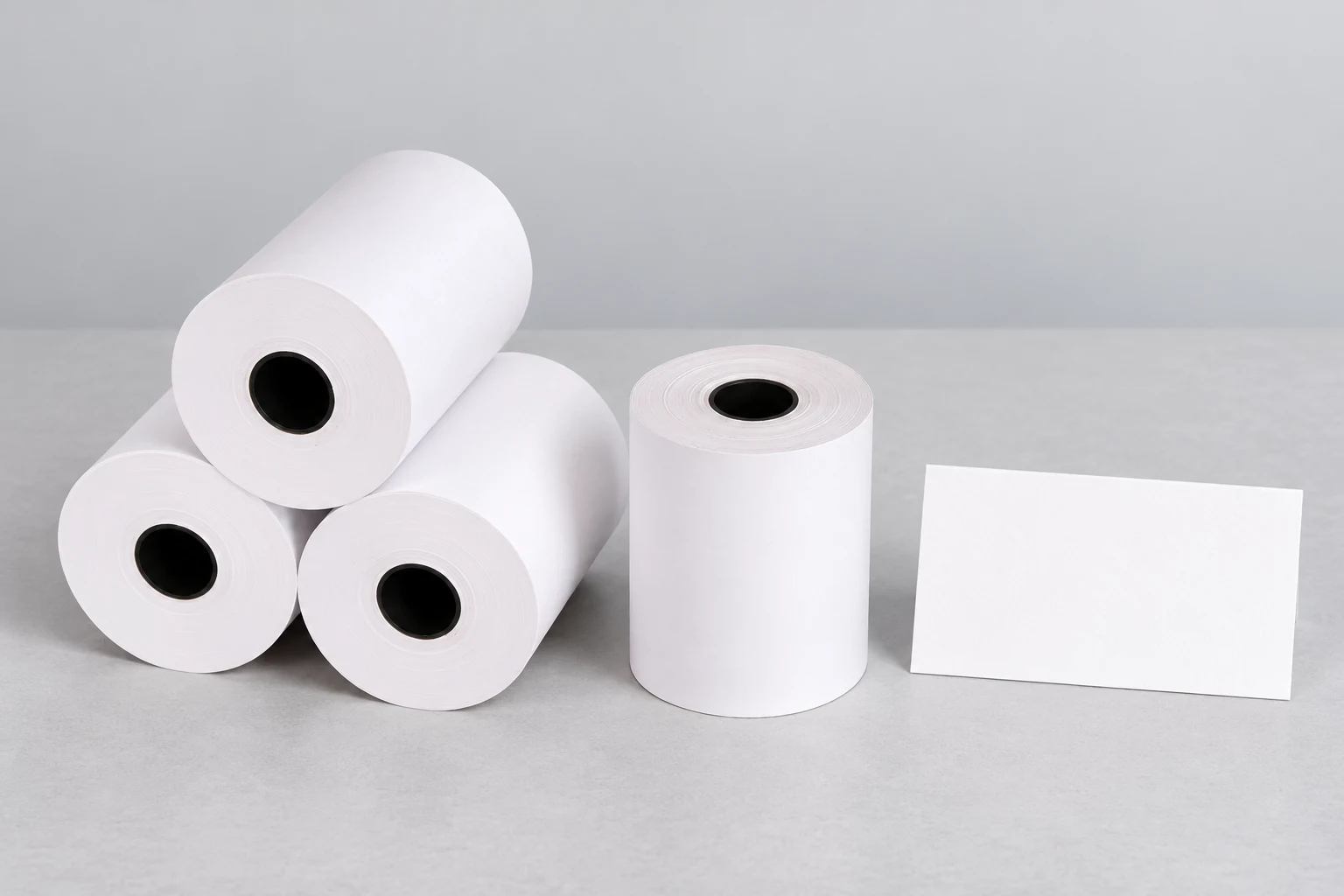
The paper grade describes the underlying material supplied for conversion, while the finished roll also has width, winding, core and packaging characteristics. A converter might keep the same grade but change the roll construction, or keep the same nominal dimensions while changing the material. Ask the supplier to state precisely which part is changing. A quotation that only repeats the finished size can leave the central question unanswered.
Compare the proposed product with the last approved specification, not with an informal description from an old email. Record the current item code, supplier reference and relevant revision. Then give the proposed alternative its own identity until the review is complete. This prevents an unapproved sample from being mistaken for the normal item simply because both are described as receipt paper.
Require a reason and a defined scope
A supplier may propose substitution because of availability, sourcing or a planned product change. The reason helps the buyer understand the commercial context, but it does not establish technical equivalence. Ask whether the proposal applies to one shipment, a particular customer programme or all future orders. The approval record should define that scope and any expiry or review condition, rather than leaving a temporary exception open indefinitely.
When reviewing supplier background information, distinguish general business capability from evidence for this change. A broad product range or factory introduction can support a discussion, but the supplier still needs to identify the proposed paper grade and explain how the specific order will remain traceable.
Compare the Requirements That Matter in Use
Check physical fit against the printer documentation
Printer compatibility depends on the applicable model and media requirements. Epson's official TM-T88VII brochure, for example, describes paper dimensions for that particular printer; those values should not be treated as universal requirements for every device. Obtain the documentation for the actual printer fleet and identify the relevant width, roll diameter and other media constraints. A roll fitting inside the compartment is only one part of acceptance.
Measure the proposed converted roll using an agreed method and sample plan. Where a dimension is important, record its tolerance and measurement condition rather than relying on a rounded product name. Check winding direction and the usable presentation of the roll. Do not infer the paper length from outer diameter alone without considering the material and construction information needed to make that comparison meaningful.
Compare print response under the intended conditions
Replacement approval should address the intended printing task. Define the printer model, configuration, test content and observations to be recorded. A dark image produced under one setting does not establish suitable performance across different printers or settings. Keep the comparison controlled: if several variables change at once, the result may not show whether the paper grade caused the difference.
For barcode or detailed receipt content, identify what successful reading means for the actual workflow. Use the relevant equipment and agreed assessment method. Record feed behaviour and visible defects as observations rather than claiming universal reliability from a short trial. The supermarket application information can help frame use conditions, while each retailer's equipment and handling practices still need their own review.
Ask What the Supplier Can Trace and Control
Connect material identity to the delivered cartons
A useful traceability explanation connects the proposed material reference with the converted lot and the shipping identification. Ask which information appears on documents and cartons, how mixed lots are prevented or identified, and who can retrieve the relevant records if a customer reports a problem. The buyer does not need a decorative flowchart; it needs a workable route from a delivered carton back to the supplier's production and material records.
Thermal printer roll suppliers should also explain how the approved comparison sample relates to the future delivery. A sample from an unspecified source may demonstrate a possible appearance but cannot establish the identity of shipped goods. Record the sample reference and the conditions under which it is representative. If those conditions change, the earlier replacement approval may need to be reconsidered.
Distinguish process evidence from marketing claims
A factory overview provides context for converting and packing operations. It does not independently verify a particular batch or every process control. Request the relevant evidence for the proposed change: specification comparison, inspection records where applicable, and a clear description of responsibilities. If a requested record is unavailable, capture the limitation and decide what additional verification is necessary.

Use a Written Decision for Each Proposed Replacement
The review can be organised around five questions: what changes, what remains controlled, how the change was evaluated, where approval applies and how the shipment is identified. The following table is an original planning aid for those questions. It is not a certification scheme or a substitute for requirements in the buyer's own supply agreement.
| Review area | Supplier evidence to request | Buyer decision |
|---|---|---|
| Material identity | Current and proposed paper grade references | Confirm the exact scope of substitution |
| Roll construction | Dimensions, tolerances, winding and core information | Compare against the approved printer requirements |
| Printing task | Defined trial conditions and recorded observations | Accept, reject or request further investigation |
| Handling and storage | Applicable material guidance and packaging description | Check the actual distribution environment |
| Delivery identity | Lot references and carton identification method | Keep approved and unapproved goods distinguishable |
| Approval scope | Proposed shipment or programme coverage | Record conditions and responsible approver |
Use explicit decision states. “Under review” does not mean “approved for delivery.” A conditional acceptance should identify the condition and who checks it. A rejection should explain the unmet requirement, allowing the supplier to respond to the actual issue. Avoid a vague email saying “looks fine” when the reviewed sample is only one part of the evidence.
Keep the Distribution Conditions in the Review
Koehler's thermal paper durability guidance describes the influence of storage and contact conditions, including heat, humidity, light and certain chemicals. This is useful background for identifying questions, but a paper manufacturer's stated durability conditions cannot be transferred automatically to another supplier's products. Obtain guidance applicable to the actual material and intended use, including the distinction between unused stock and printed records.
For a distribution route with warm warehouses or changing humidity, document the conditions that the supplier expects its product to tolerate and the handling measures the buyer can actually maintain. Avoid turning a country name into an assumed operating specification. The relevant facts are the storage location, transit exposure, packaging and customer handling, which may differ substantially within the same market.

The current thermal paper range can support product discussions, but the order should identify the specific agreed item. If a buyer uses several printer models, replacement approval should say which models and applications were reviewed. An approval for one use should not silently become approval for every customer in the distributor's portfolio.
Frequently Asked Questions
Can a supplier substitute paper if the roll dimensions are unchanged?
Unchanged nominal dimensions do not establish unchanged material or performance. The supplier should identify the proposed paper grade and any construction differences, then follow the agreed review and approval process. The buyer should assess the requirements that matter for the intended printer and application.
Is a successful print sample enough for approval?
A sample is useful evidence only when its identity and test conditions are known. It may not answer questions about storage, future lot consistency or every printer in use. Replacement approval should state what was evaluated and what remains outside its scope.
Should the alternative use the same item code immediately?
Keep the proposed alternative distinguishable while it is under review. The eventual coding arrangement should preserve traceability and make the approved scope clear to purchasing, receiving and customer service. An unchanged code should not conceal a material change that users need to know about.
Can one supplier's shelf-life statement be used for another product?
Such a statement depends on the actual material, conditions and evidence. Request guidance for the specific receipt paper being supplied. Do not copy a durability claim from an unrelated technical sheet or assume that a storage statement for unused stock covers printed records.
What should be included in a substitution request?
Include the existing and proposed references, the reason for the change, the affected orders, a requirement comparison and the available verification records. Ask thermal printer roll suppliers to list open questions rather than treating incomplete evidence as an automatic approval.
Before accepting a substitution, put the proposed decision in writing and confirm that the supplier, buyer and receiving team understand the same scope. The contact page can be used to request a product-specific comparison with those details. The useful outcome is an identifiable, supported supply decision that remains understandable when the next shipment arrives.
 You May Also Like