


 Home
 XBD
 Oct 23,2026

Thermal printer paper quality claims need checks of print conditions, coating resistance and batch consistency before they can support a reliable purchase decision.
A Product Description Is The Start Of Qualification
Words such as premium, clear and durable describe a desired outcome, but they do not identify the conditions under which a roll will achieve it. The useful question is what evidence connects the offered grade to the intended receipt, printer and handling routine.
Separate An Offered Feature From A Measured Result
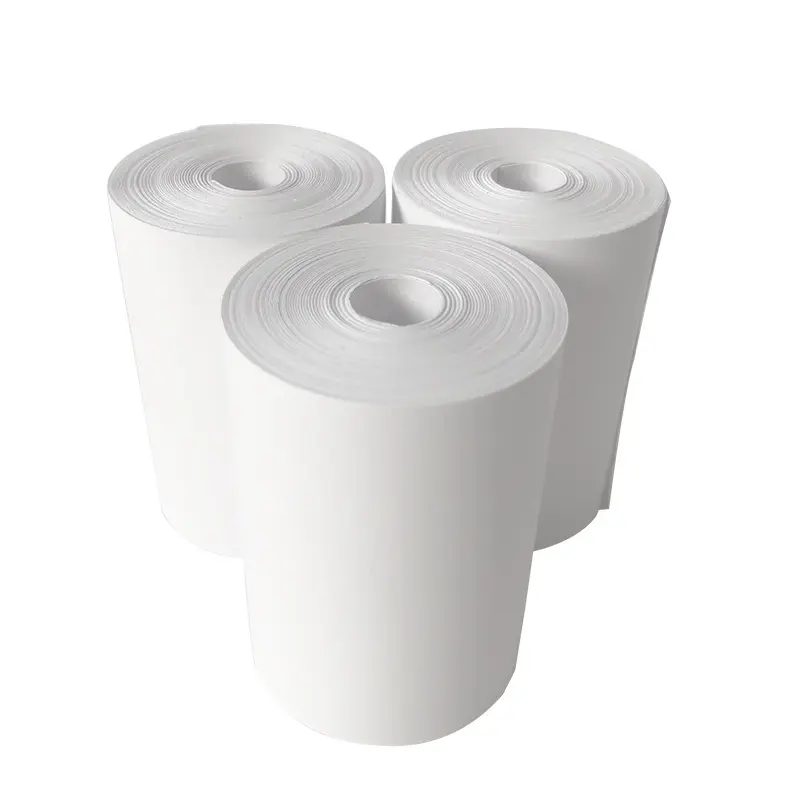
The site's premium receipt paper listing describes sharp imaging, image durability and low residue. These are supplier descriptions, not an independent test report for a delivered batch. Before relying on a feature, identify the grade, the method used to assess it and the applicable operating conditions. A claim without those details can guide a question, but should not become an acceptance threshold.
Define The Record That Must Survive
Determine what the printout must do after leaving the printer. A receipt read immediately at a counter has a different exposure history from a record filed for later reconciliation. Write down the necessary readable content, expected handling, storage method and review period. This converts a vague requirement for quality into a practical decision about print performance and image stability.
Print Darkness And Sensitivity Answer Different Questions
A grade should produce useful contrast at settings that the printer can sustain. A very dark sample produced under unknown conditions gives little information about that requirement. Thermal sensitivity describes the response to printing energy; the maximum darkness that a material can reach is a separate characteristic. Neither is a complete description of long-term performance.
Compare Paper Under Recorded Printer Conditions
Use the same document, printer model and supported settings for an initial comparison. Record the speed or density setting, paper grade and sample identifier. If one candidate needs a different supported setting, repeat the check and record that difference explicitly. An undocumented adjustment makes the samples look comparable while hiding an operating requirement that matters during rollout.
Epson's TM-T20III technical guide gives paper-dependent density recommendations and notes that increasing density can reduce speed. This is a model-specific example of the interaction, not a universal setting for other printers. Consult the intended machine's documentation and avoid treating maximum heat as a general remedy for unclear thermal printer paper.
Look Beyond A Solid Black Patch
Include small characters, closely spaced lines, ordinary transaction text and any codes used in daily work. Inspect whether fine details stay separate and whether the background remains distinguishable from the printed image. Record observations consistently rather than awarding a pass simply because one large block looks black. A useful test document resembles the information the printer actually has to deliver.
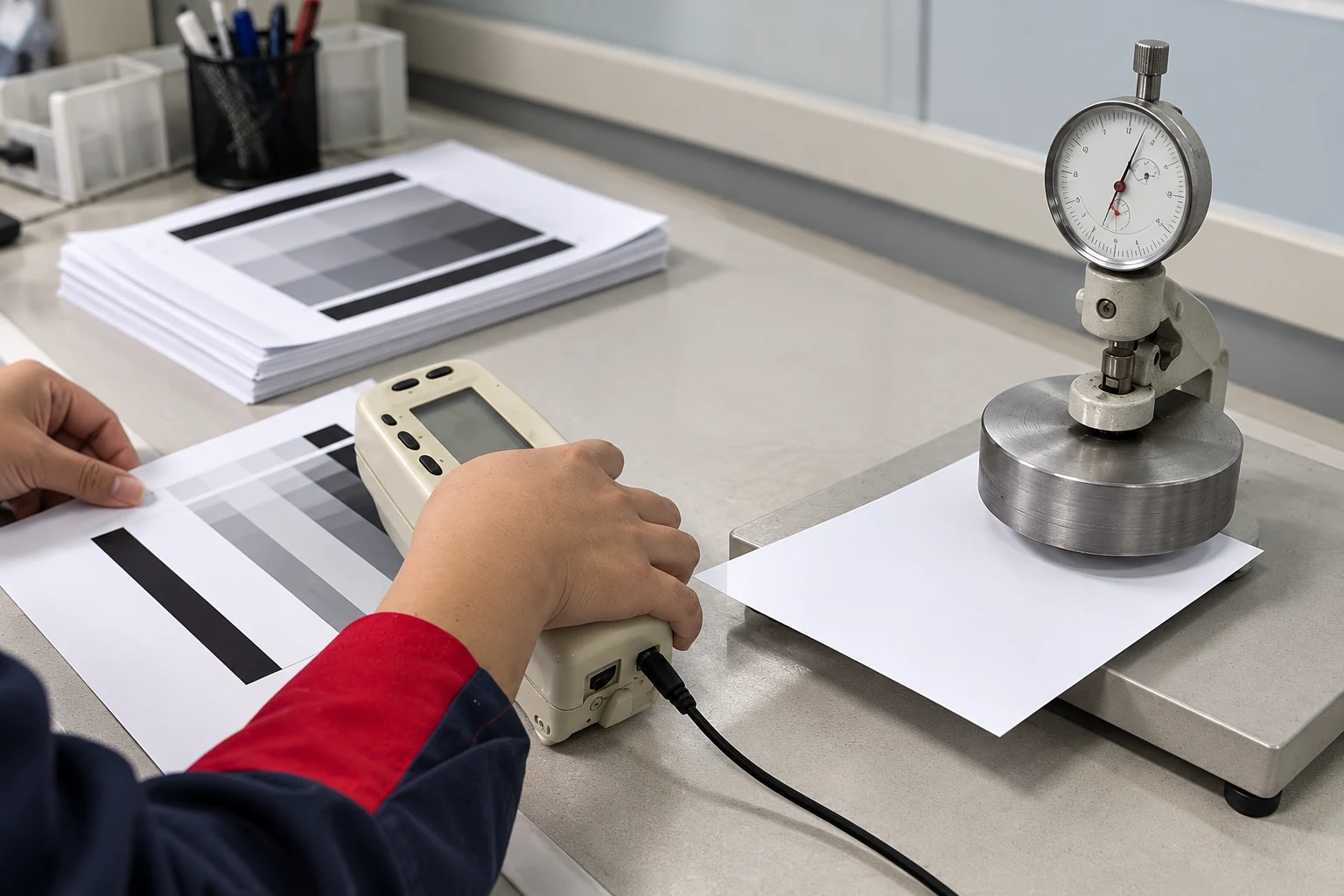
Measure optical density only with an identified method and suitable instrument. A photograph taken with automatic exposure cannot provide a comparable density value. The supplier's published quality-inspection overview shows optical-density and barcode checks, but the photographs do not disclose an applicable result for a particular order. Ask for the relevant measurement record when a numeric limit matters.
Resistance Claims Need An Exposure And An Endpoint
Water resistance, oil resistance and abrasion resistance are different requirements. A broad protective-coating description does not show how long exposure lasted, what material contacted the paper or which failure was assessed. Read claims against the actual environment and request conditions precise enough to reproduce.
Check The Image And The Background Separately
After an agreed exposure, the printed image may fade while the background darkens, or either change may occur alone. Both can reduce useful contrast. A record that mentions only retained blackness can therefore miss a relevant failure. Keep an unexposed comparison sample and assess the background as well as the smallest information that must remain readable.
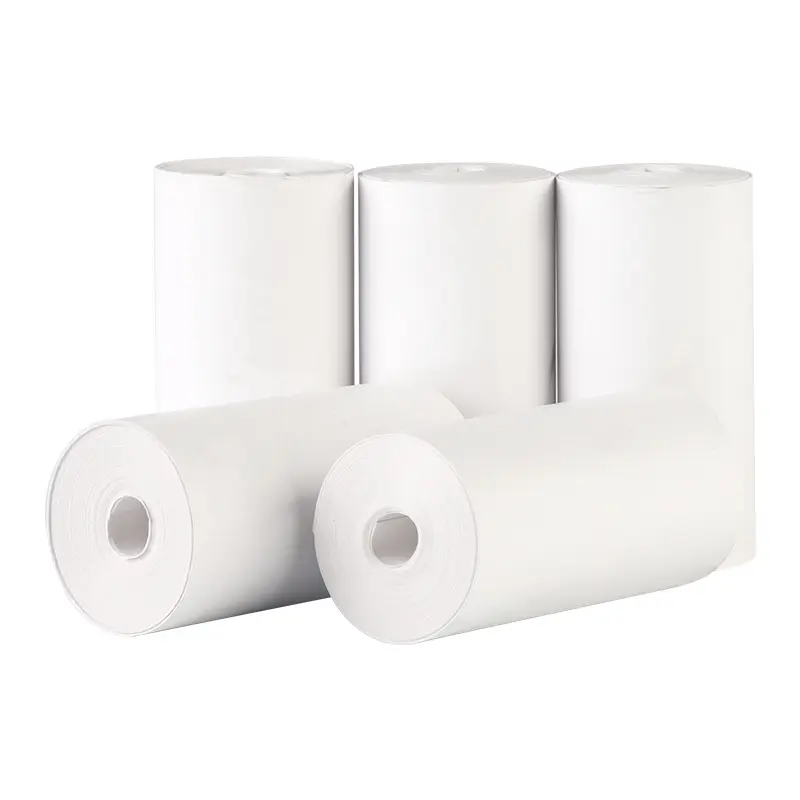
The three-proof coating product page is a starting point for discussing protective options. It does not make every listed paper suitable for every chemical or storage condition. Confirm which coating is being supplied and which performance statement applies to it; a shared category name is not a substitute for an identified grade.
| Claim Being Considered | Condition To Record | Useful Observation | What The Observation Does Not Prove |
|---|---|---|---|
| Clear printing | Printer, document, speed and density setting | Readable fine text and usable contrast | Performance at every setting or on another printer |
| Water resistance | Contact method, duration and drying procedure | Image and background after the agreed exposure | Resistance to oil, cleaners or prolonged immersion |
| Low residue | Print run, maintenance baseline and inspection method | Observed deposits and any feed or print change | A lifetime guarantee against printhead wear |
| Long-lasting image | Storage conditions, duration and assessment method | Legibility and contrast relative to an initial sample | The same life under sunlight, heat or chemical contact |
| Consistent supply | Grade revision, lot identity and sampling plan | Results linked to the delivered lot | That one good sample covers all future production |
Do Not Turn A Quick Demonstration Into A Service-Life Claim
A brief wipe or wetting demonstration can reveal an immediate weakness under that particular procedure. It cannot establish years of image stability. Accelerated testing also needs a stated method and a justified relationship to normal use; hotter or harsher treatment is not automatically a valid simulation of time. Do not invent a conversion from test hours to years.
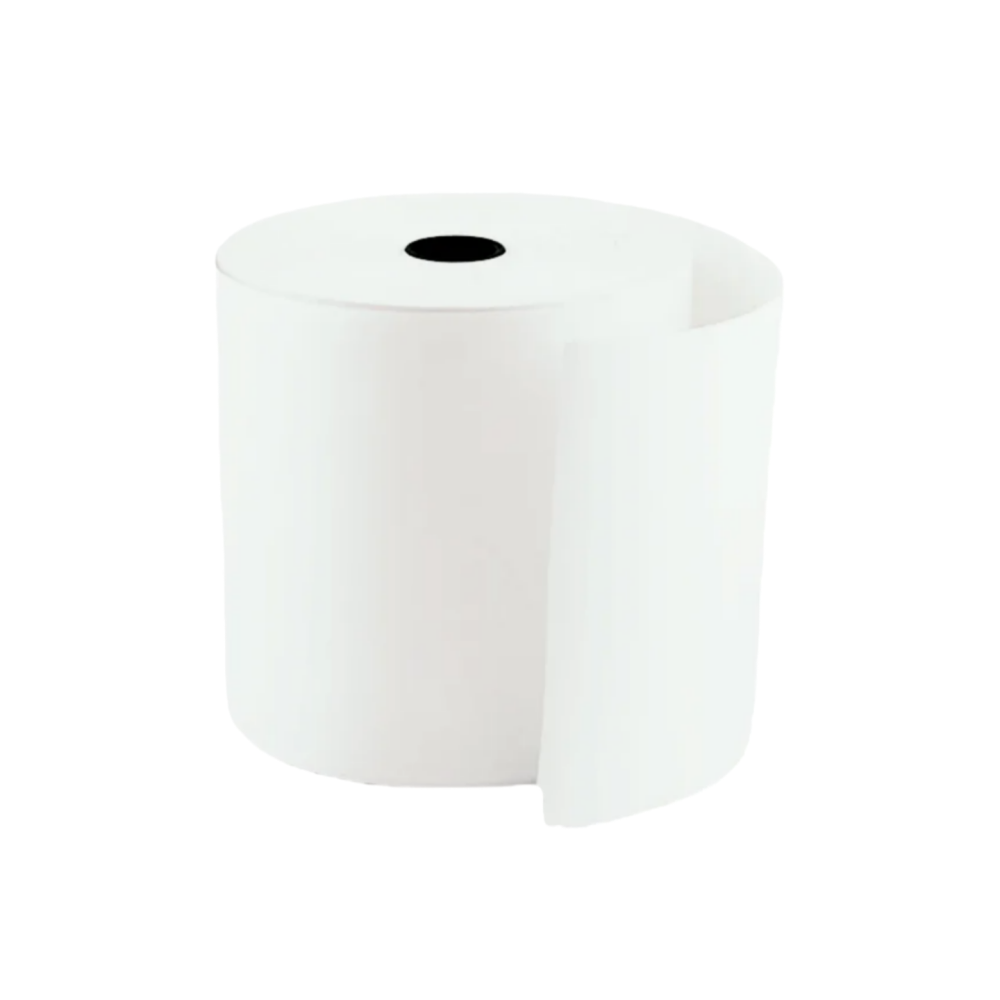
For the long-lasting receipt paper option, seek the offered grade's storage guidance and evidence behind the preservation claim. Jujo Thermal and Ricoh publish different care guidance for their own materials. Their instructions show why grade-specific conditions matter; their limits and stated service lives should not be transferred to an unrelated supplier's paper.
Visible Packaging Identifies A Sample, Not Its Coating Performance
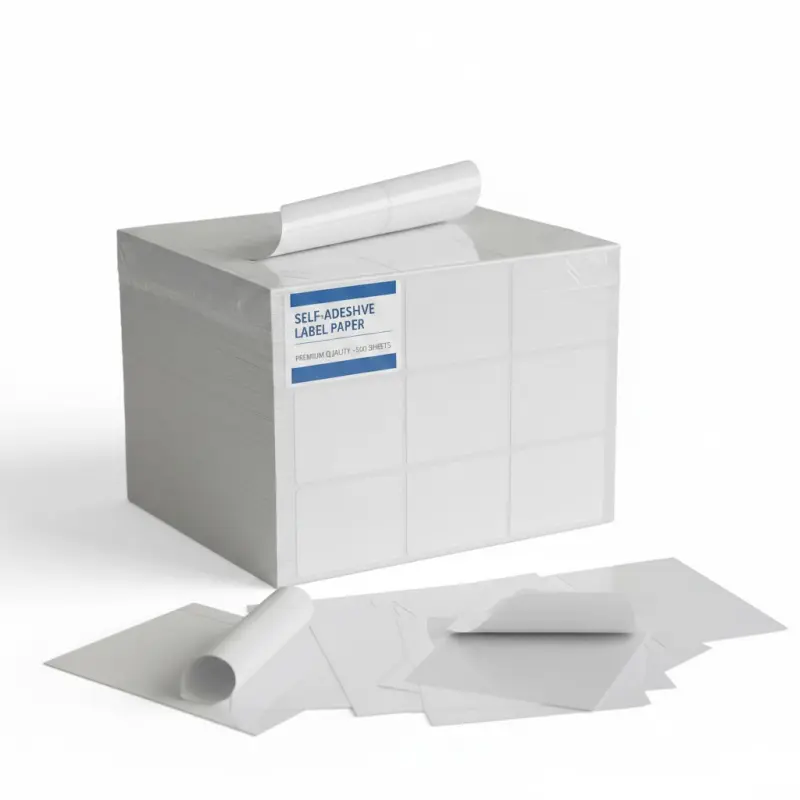
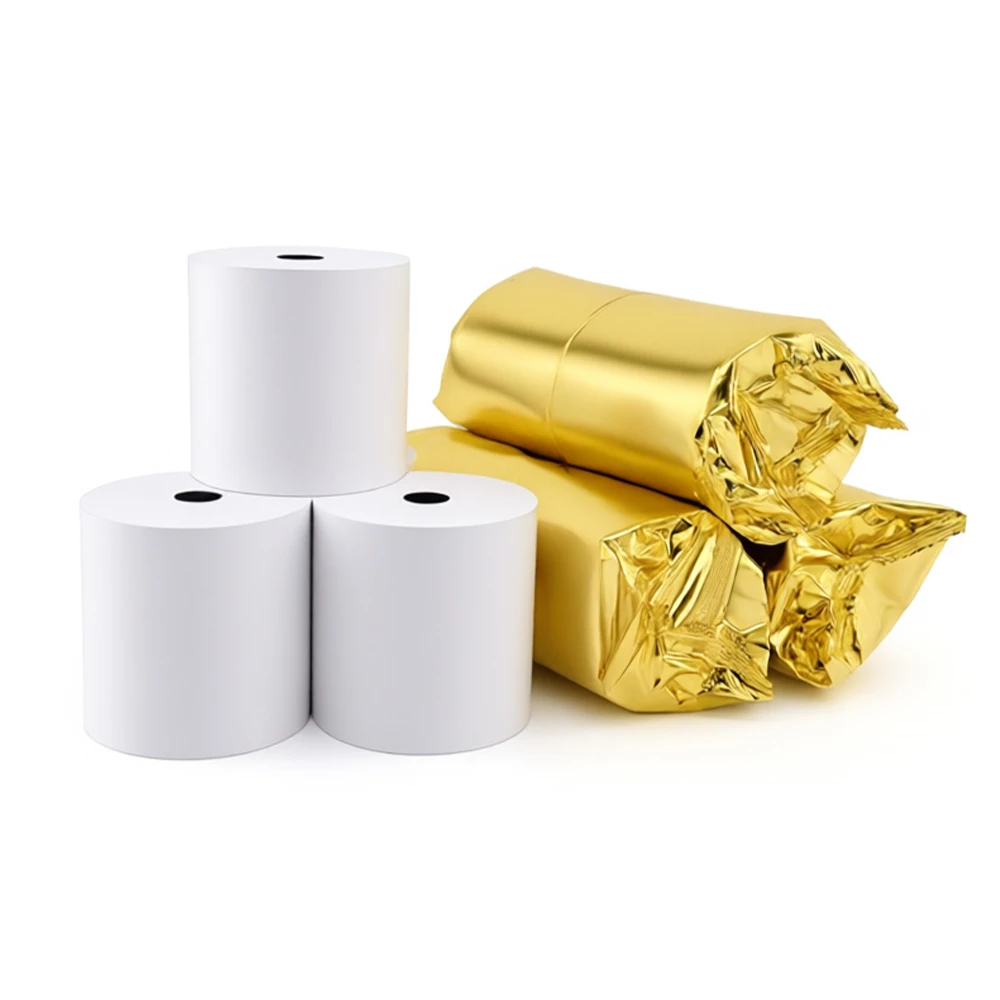
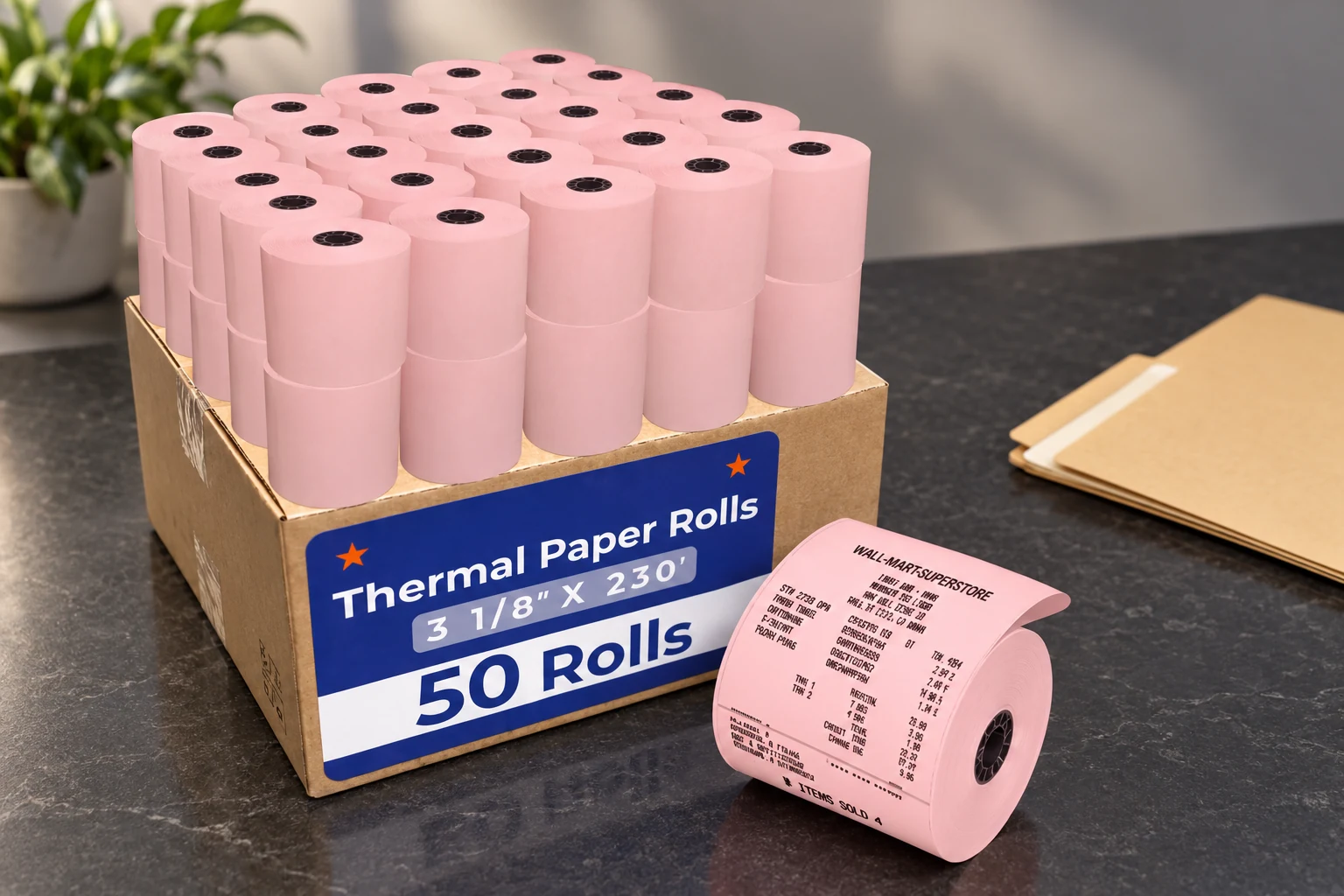
A package label helps connect a test specimen to a purchased format. It does not establish the chemistry or performance of the paper coating. Keep the packaging information in the sample record, then connect the package to a separately identified grade or technical document. This prevents a familiar carton design from becoming an unsupported assurance of unchanged material.
Keep Format, Colour And Grade Distinct
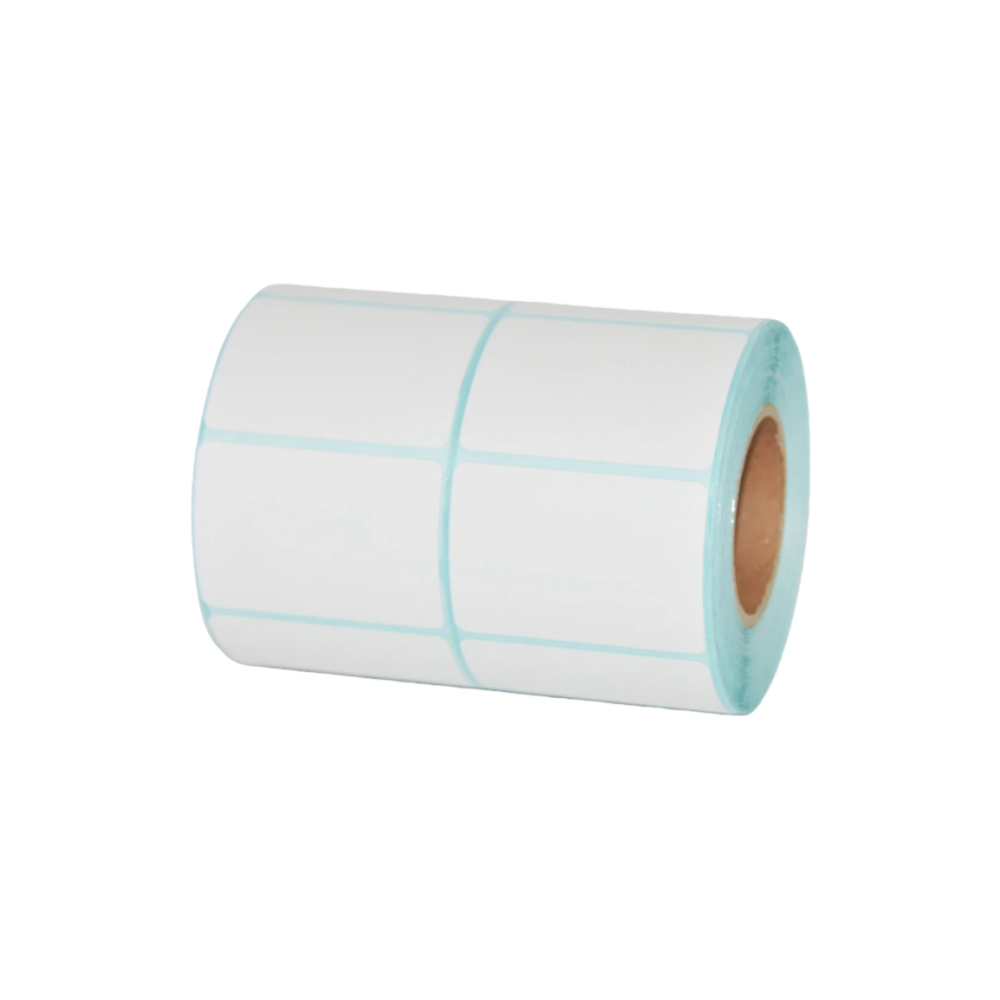
The 80 mm thermal roll listing provides a concrete packaged format to discuss, while the catalogue also includes coloured receipt media. Package quantity, nominal dimensions and paper colour are descriptive facts. They do not by themselves establish thermal sensitivity, protective coating or resistance to a cleaning fluid.
Coloured stock is not automatically better or worse than white stock. Its background changes the visual context in which text is read, so the actual printed format still needs assessment. Do not substitute a coloured sample to demonstrate a white grade's properties, or treat two matching cartons as proof of identical paper. Record the exact specimen used for every observation.
Make Batch Identity Survive Repacking
Compare the delivered thermal printer paper with the approved reference using a defined sampling approach. Record where samples came from, which packs were opened and which criteria were checked. A convenient roll from the top of one carton is a demonstration specimen; it should not be described as a representative statistical acceptance plan unless such a plan was actually established.
Control The Trial So Its Result Means Something
The strongest small trial removes obvious confounding factors and records what remains uncertain. The aim is not to recreate a laboratory with improvised equipment, but to decide whether the evidence is sufficient for the intended use or whether a supplier test is still needed.
Separate Paper Variation From Equipment Condition
Start with a printer maintained according to its manufacturer's instructions. Use a known acceptable reference roll where available and retain its output under the same conditions. If all candidates show the same defect in the same position, investigate the equipment before blaming a new grade. If only one candidate fails repeatedly under controlled conditions, preserve the samples and operating record for review.

For thermal printer paper sold with customised characteristics, keep the agreed grade or coating description with the sample rather than relying solely on a sales name. The site's custom thermal paper offering can inform which options to discuss. Confirm the supplied option in writing before treating the trial as approval for repeat orders.
Decide What To Accept, Hold Or Investigate
An approval record should distinguish observed compliance from unresolved questions. Accept the characteristics supported by the agreed checks; hold conclusions that depend on missing conditions or unidentified material. This is more useful than a single quality score that combines appearance, a brief print demonstration and an unverified durability promise.
Retain an initial printed sample, an unprinted reference, the operating record and the lot identification under appropriate conditions. If a later complaint occurs, those records help distinguish changes in incoming material, printer settings or handling. Do not put the reference in an unsuitable sleeve or leave it in sunlight, then interpret its deterioration as proof of the original grade's performance.

A change in grade, paper coating or production specification should trigger a review of the checks affected by that change. Repeating every test without a reason wastes effort, while repeating none can conceal a meaningful difference. A clear approval boundary states what was tested, under which conditions, what passed and what must be reconfirmed when the material changes.
Frequently Asked Questions
Does A Darker Receipt Always Mean Better Paper?
No. Darkness depends on both the material and printing conditions. Useful quality also includes readable fine detail, background contrast and performance after relevant handling. Compare samples at documented supported settings before drawing a conclusion from their appearance.
Can A Scratch Test Prove The Quality Of A Roll?
A scratch may show that the surface responds to frictional heat, but it does not measure thermal sensitivity under a printhead, code readability or image retention. It is a crude identification clue, not a purchase-acceptance test or evidence of a preservation period.
Does Three-Proof Mean Resistance To Every Liquid?
No. The term needs a definition for the offered material. Ask which exposures are covered, how contact is applied and how the result is assessed. A water test does not establish resistance to alcohol-based cleaners, oils or other chemicals.
Can A Good Sample Approve Every Later Delivery?
Only within a documented agreement that connects the sample to the supplied grade and subsequent checks. Keep lot identity and any agreed change-control procedure. A sample of unknown origin cannot support a reliable claim about later production.
What Should Be Checked Before A Quality Claim Is Accepted?
Identify the exact material, relevant operating conditions, assessment method and recorded result. Match those four elements to the intended use. A claim becomes decision-ready when the evidence supports its actual scope, while unsupported conditions remain clearly unresolved.
 You May Also Like