


 Home
Home XBD
XBD  Jul 31,2026
Thermal paper manufacturers in the world should be compared by documented converting, chemistry, print, packing, and supply controls—not by geography alone. A global shortlist becomes useful only when every candidate receives the same roll drawing, printer context, end-use conditions, compliance questions, and acceptance test. This framework turns a broad international search into evidence that can be compared.
Define the Manufacturer You Are Actually Comparing
“Manufacturer” can describe different operating models. One company may coat base paper, another may buy coated jumbo rolls and convert them, and another may coordinate partners. Ask which steps are performed at the quoted facility, which materials are purchased, and which operations are subcontracted.
POS rolls, ATM rolls, labels, and tickets can differ in facestock, coating, dimensions, core, print, packaging, and storage needs. Start with the exact application, then connect the chosen configuration to a printer and use condition.
- Name the printer models or provide the verified roll envelope and sensor requirements.
- Define width, roll diameter, core dimensions, winding direction, and permitted tolerances.
- Describe heat, humidity, light, friction, storage duration, and handling conditions.
- State whether preprinting, branding, sequential marks, or special packaging is required.
Compare Four Layers of Capability
A cross-market comparison works when it separates material, converting, verification, and continuity. A low unit price can be real, yet still conceal an unsuitable developer system, loose winding, inconsistent paper length, weak packaging, or an undefined change route. Score the evidence behind each layer rather than the number of claims in a sales presentation.
| Capability Layer | Evidence to Request | Sample Check | Decision Risk |
|---|---|---|---|
| Thermal material | Grade, coating or developer declaration, basis-weight and storage information | Image density, background stability, rub and environmental exposure | Readable at first, unstable later |
| Converting | Slitting, winding, core, length, splice, dust and edge-control plan | Dimensions, feed, curl, telescoping and printer fit | Jams, premature replacement, variable yield |
| Release | Specification, sampling plan, test method, lot record and disposition authority | Repeat tests across samples or lots | A good sample that production cannot repeat |
| Supply continuity | Material approval, change control, packing standard and disruption response | Packaging and shipment simulation where justified | Unannounced change or transit damage |
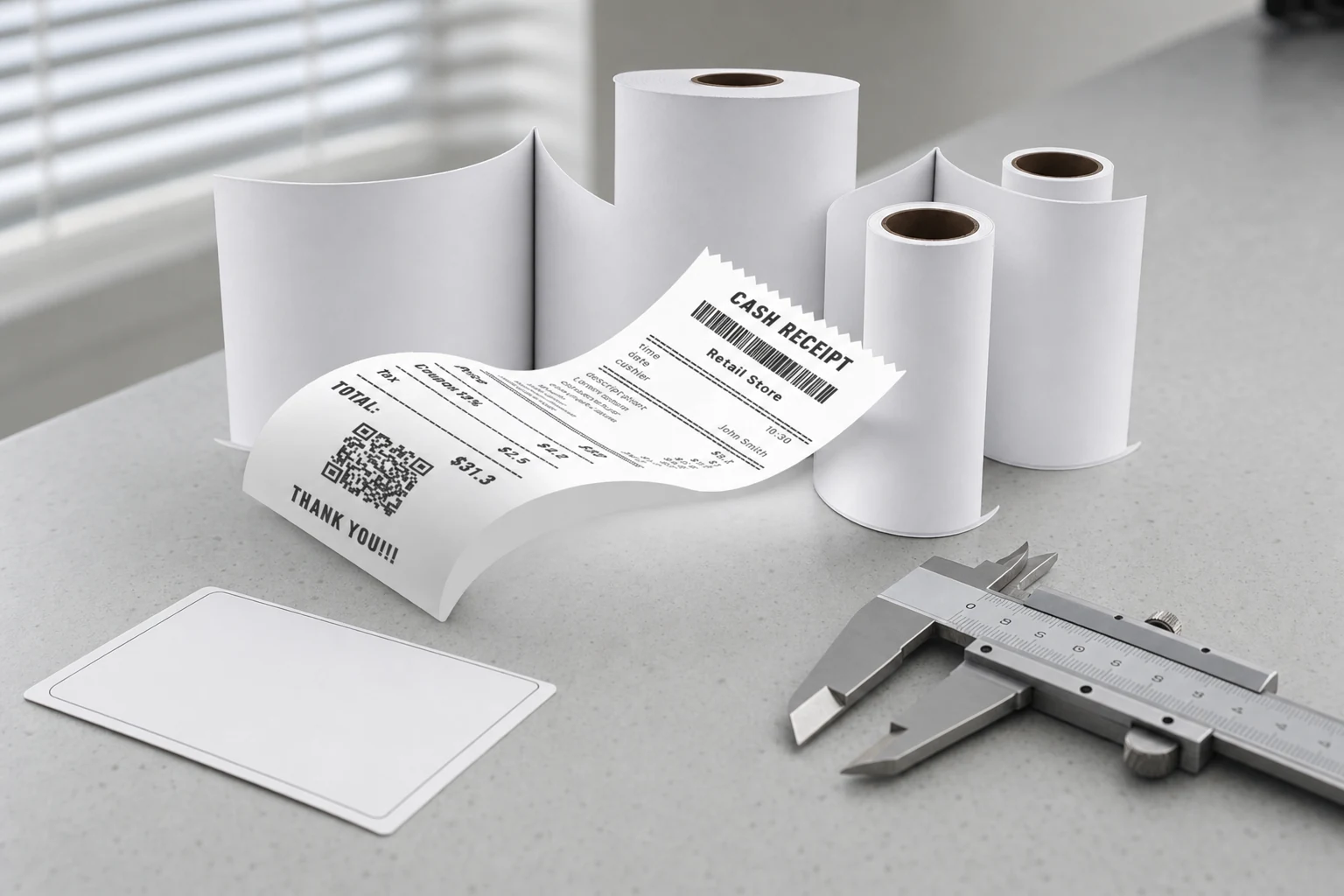
Make Chemistry and Compliance Market-Specific
Thermal-paper chemistry cannot be reduced to “BPA-free.” ECHA confirms that BPA use in EU thermal paper has been restricted since January 2020 and notes concern about BPS substitution. Ask for the destination, end use, applicable restriction, declaration method, and evidence for the exact grade.
Blue Angel DE-UZ 223 covers thermal paper and finished thermal-paper products while excluding labels from that scope. This is why buyers must verify the product category, criteria revision, issuing route, covered grade, and response to a chemistry change.
Inspect Converting Control, Not Just the Jumbo Roll
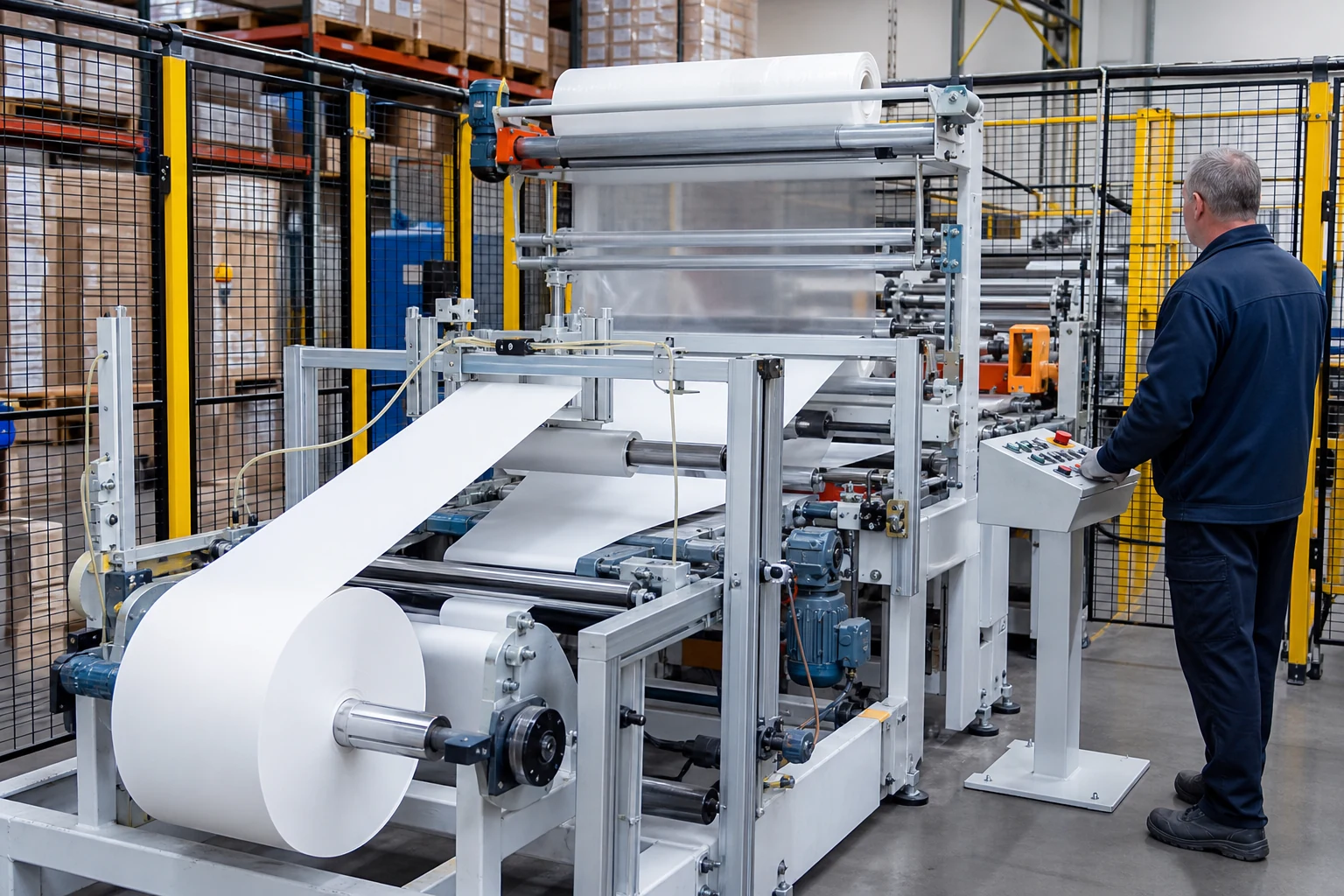
Even a suitable coated paper can fail at checkout if converting is inconsistent. The manufacturer should translate the printer envelope into controlled width, diameter, core, winding, edge quality, splice policy, paper length, and packaging. The site’s factory page shows converting equipment; qualification should connect that equipment to the specific roll and the records used to release it.
Ask for the measurement method, instrument, sampling frequency, tolerance, reaction plan, and record owner. For print response, agree on the device, setting, pattern, and acceptance boundary. Define how dust, curl, or residue will be observed and when a lot fails.
- Measure the sample before running it and record the conditioning environment.
- Test feed, cut, sensor behavior, print density, residue, curl, and end condition.
- Repeat across several rolls and compare results with the production specification.
- Require written approval before a material, core, coating, pack, or process change.
Build a Global Shortlist Without Inventing a Ranking
A worldwide search does not require a “top ten” list. Compare fit, evidence, unresolved risk, and landed supply conditions. Remove any candidate that cannot identify its production role, document the quoted grade, or agree to acceptance and change control.
Use the article archive and product pages for discovery, then verify claims through documents and samples. Once scope is stable, send the drawing, printer list, packing plan, destination requirements, and open questions through the factory contact page.
Frequently Asked Questions
Which country makes the best thermal paper?
Country alone does not establish fit. Compare the exact grade, converting process, test evidence, quality release, change control, packaging, and supply route for the intended application.
Should a buyer require BPA-free thermal paper?
Requirements depend on destination, product scope, customer policy, and current law. Verify the exact chemistry declaration and do not assume that replacing BPA automatically resolves every bisphenol concern.
What is the first document to send a manufacturer?
Send a controlled brief with printer information, dimensions and tolerances, material and compliance requirements, packaging, tests, and forecast assumptions.
How many rolls should be tested?
One sample cannot show repeatability. Select a quantity and sampling plan based on the risk, then test multiple rolls and later confirm production-lot performance.
Choose the Evidence Path Before the Supply Path
The most defensible global shortlist makes geography a logistics factor rather than a quality shortcut. When every manufacturer answers the same grade, converting, chemistry, test, packaging, and change-control questions, the remaining differences become visible and negotiable. That evidence is what turns an international list into a controlled supply decision.
Send the printer list, roll drawing, packing plan, and compliance questions through the factory contact form.
 You May Also Like