


 Home
Home XBD
XBD  Jul 31,2026
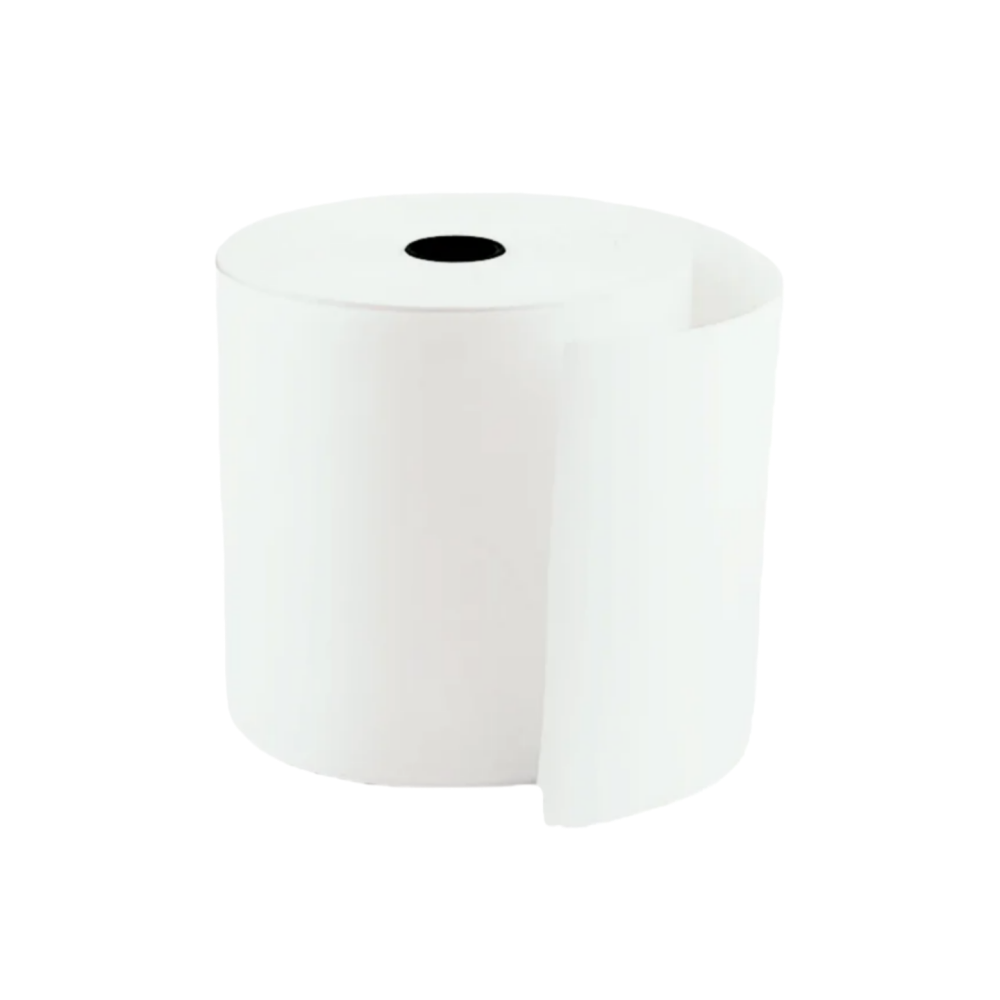
A thermal paper roll supplier should pass the same dimensional, print, rub, feed, and packing checks before a sample becomes an approved repeat-order item. The goal is not to create a laboratory standard from scratch. It is to give Malaysian supermarket purchasing teams one reproducible screen that exposes obvious mismatch before a price comparison becomes a supply commitment.
A Sample Is Not Yet An Approved Item
A roll that prints one receipt proves little. It may come from a favorable lot or lack commercial packing. Start an acceptance record with sample ID, source, item code, stated dimensions, paper grade, date, and test printer models.
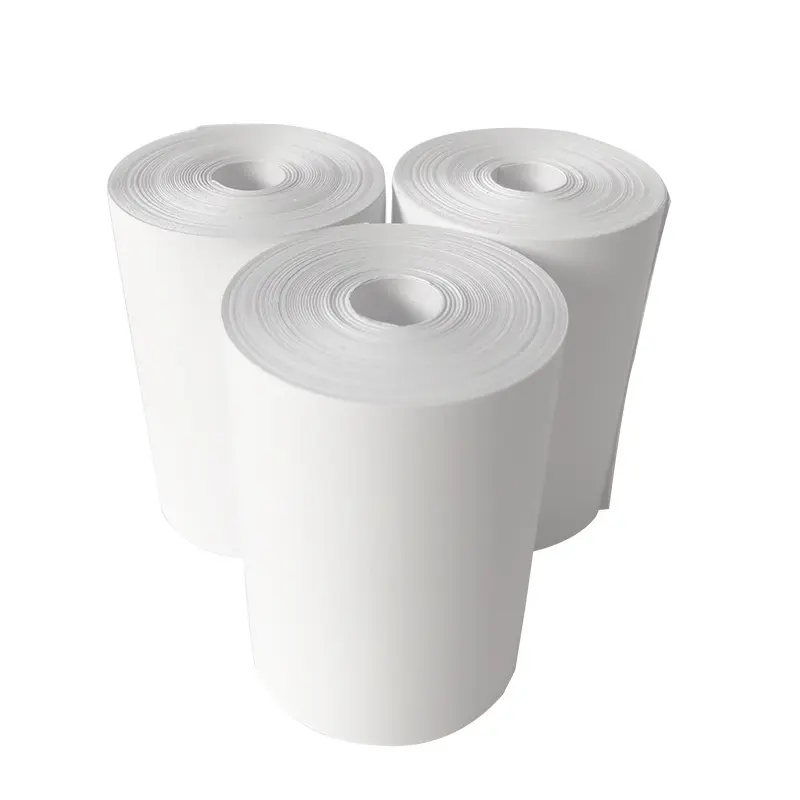
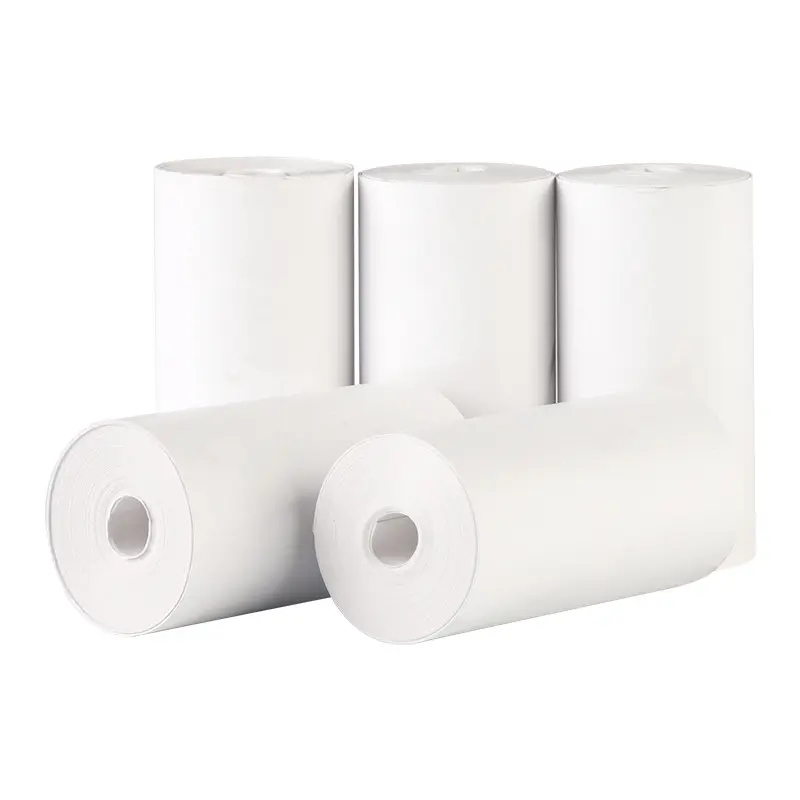
Choose a reliable control roll and run both under the same printer settings, receipt design, conditions, and sequence. The supermarket application page identifies 80 mm and 57 mm formats, but width alone does not define fit. Core, diameter, winding, thickness, edges, sensitivity, and pack protection also matter.
Approval should belong to the written sample specification and test result, not to a loose roll that can no longer be traced.
Run The Bench Check First
Begin with measurements that require no printer. Use a calibrated caliper for width and outer diameter, then record core inside diameter, core outside diameter where accessible, and roll orientation. Do not squeeze a soft roll while measuring. Take more than one width reading across the roll and check whether the sides are parallel. A roll can meet the average while still having a telescoped or uneven edge that rubs inside the printer.
| Check | Simple Method | Reason To Reject Or Escalate |
|---|---|---|
| Width | Measure at left, center, and right without compression | Outside printer tolerance or visibly tapered |
| Outer diameter | Measure across the widest point | Exceeds compartment clearance or varies across samples |
| Core | Record inside diameter, material, and deformation | Wrong fit, crushed core, loose winding, or adhesive contamination |
| Edges | Inspect under bright light and rub with a clean cloth | Dust, burrs, crushed layers, moisture marks, or telescoping |
| Winding | Unroll one meter and observe curl and tension | Blocking, sudden slack, wrinkles, or inconsistent tension |
| Paper side | Mark the thermal side before loading | Unclear orientation or inconsistent coating side |
Print, Feed, And Rub Under One Receipt File
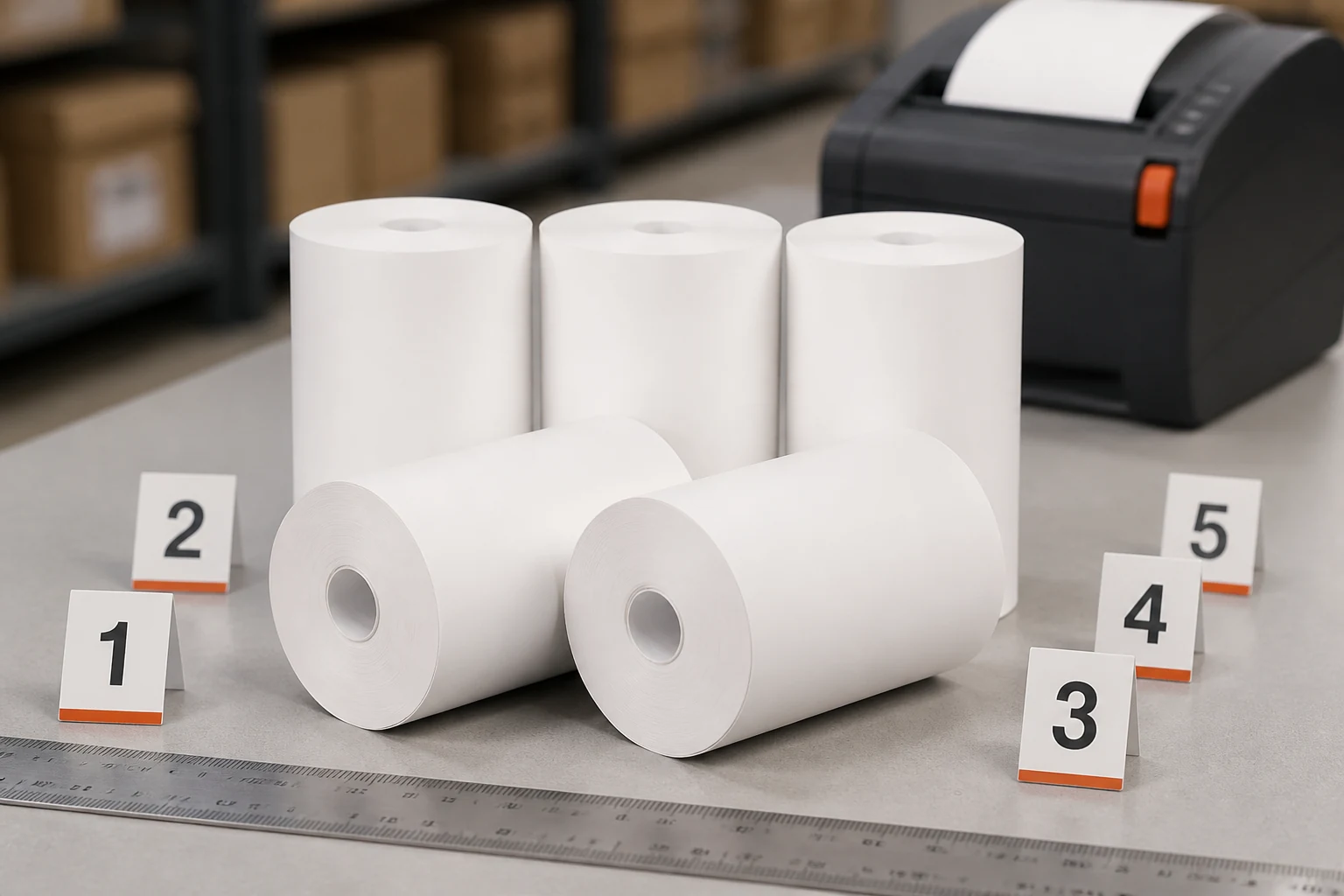
Load the same receipt file for every candidate. Include dense black areas, small text, a barcode or QR code used in operations, long horizontal rules, and blank feed. Print several receipts in succession rather than one short strip. Observe initial pickup, feed noise, cutting, paper curl at the exit, head marks, and whether dust accumulates near the path.
Compare darkness only after controlling printer energy and speed. Judge background cleanliness, text edges, and barcode readability beside the control, then repeat after warm-up. Test at least one unit from every material printer family.
For a defined rub test, wrap clean cotton around a flat block, apply the same number of passes, and compare smearing, transfer, and legibility. Add a timed water-drop check only when moisture exposure is relevant.
Make The Carton Part Of The Test
Request a commercial-pack sample. Count rolls, inspect protection, verify carton strength, dimensions, and weight, and look for crushed edges after normal handling.
Traceability should connect roll, pack, carton, inspection, and purchase order. The online factory information gives process context and the certificate page gives document context; neither replaces lot-specific packing and inspection records.

Storage matters in a warm, humid environment. Keep samples wrapped and away from heat, sunlight, solvents, oils, and plasticizers. Record conditioning time; investigate any change in curl, background, or print response before approval.
Set A Decision Rule Before Results Arrive
Classify every check as a gate, a scored preference, or a recorded observation. Printer fit, core compatibility, reliable feed, readable output, and agreed dimensions are usually gates. Darkness preference, carton convenience, or curl within a usable band may be scored. Observations capture non-failing differences that operations should know. This prevents a low quote from quietly changing the meaning of “pass.”
Approve the sample with a concise control record: supplier item code, buyer item code, nominal specification, permitted tolerances, printer matrix, test file version, control roll, photos, results, pack configuration, lot-marking method, and approver. State whether approval is conditional on a pilot carton or first-shipment inspection. Define reapproval triggers such as base-paper change, coating change, core change, production-line transfer, packaging change, or repeated complaint.
For the first delivery, sample more than one pallet and carton position, compare against the approved control, and retain labeled rolls. If results drift, stop release and request lot evidence before distribution.
FAQ
How Many Rolls Are Needed For Sample Approval?
Use enough rolls to measure variation, run every printer family, repeat feed and rub checks, and retain an untouched control. A commercial pack is stronger evidence than loose handpicked rolls.
Which Dimension Causes The Most Fit Problems?
Width, outer diameter, core, and thickness interact with each printer. Compare the candidate with documented limits for the actual printer matrix.
Is The Darkest Print The Best Paper?
No. Evaluate background, edges, barcode readability, printer energy, residue, rub resistance, and feed. A balanced normal-setting result matters more than maximum darkness.
Should The First Shipment Be Tested Again?
Yes. Sample across cartons or pallets, document lot codes, and retain controls before releasing the entire shipment.
What Should A Sample Request Specify?
State printer models, dimensions, core, paper side, volume, pack, carton, print needs, destination, and expected evidence. Require every deviation to be declared.
To apply this acceptance test to a specific roll, send the printer matrix, required dimensions, pack configuration, forecast, and destination through the site’s contact form, then ask for samples and a quotation tied to the same written specification.
 You May Also Like