


 Home
Home XBD
XBD  Jul 30,2026
Thermal roll manufacturers are most useful when they can convert a printer list into seven controlled measurements and document how every packed roll will fit, feed, print, and store. A familiar nominal size is only a starting label; machine fit depends on a complete, toleranced roll definition and evidence from production.
Use A Printer Matrix Before Comparing Catalogs
A qualified manufacturer should ask which printer models will use the roll, not simply whether the buyer wants a common width. Manuals can define width, maximum diameter, core, paper thickness, loading, and media limits differently. Build a matrix from current manuals and actual machines. The manufacturer’s application examples can identify use categories, but model-specific limits must come from equipment documentation.
- Record exact printer model, loading method, and approved media notes.
- Compare several known-good rolls with the manual.
- Mark the controlling minimum, maximum, and tolerance.
- Separate printers that cannot share one validated construction.
Define The Seven Measurements That Control Fit
The seven measurements below create a practical manufacturer brief. State a nominal value, tolerance, method, and sampling rule for the actual printer matrix.
- Roll width: match the guide and cutter path; ask how slitting variation is controlled.
- Maximum outer diameter: protect closed-compartment clearance and include roundness.
- Core inside diameter: define the bore for the printer’s holder or loading design.
- Core outside diameter: control wall, stiffness, remaining paper, and winding support.
- Paper caliper: connect thickness to finished diameter, stiffness, and heat response.
- Usable length: define exclusions and reconcile length with core, caliper, and diameter.
- Side clearance and edge alignment: limit telescoping, dishing, and compartment rubbing.

Connect Every Measurement To Production Evidence
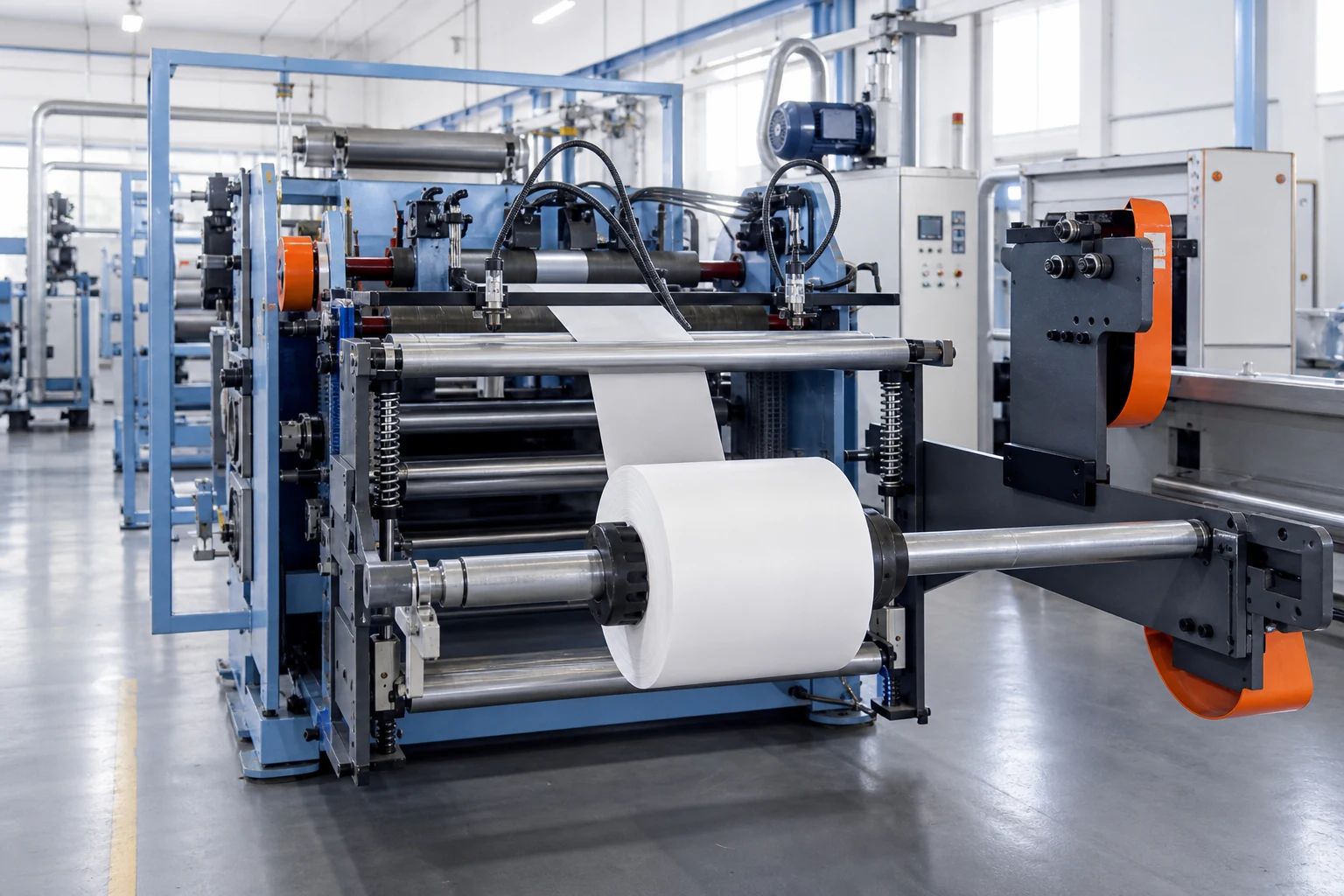
A useful manufacturer shows how the seven values are created and checked. Width comes from slitting; core dimensions from the approved core; diameter and length from paper and winding; edge alignment from web control. Map every specification to an incoming check, setup, in-process observation, or finished-roll inspection.
| Requirement | Production Control | Finished Evidence | Risk If Unclear |
|---|---|---|---|
| Width and edges | Slitter setup and web alignment | Width and edge sample | Binding, dust, or skew |
| Diameter and length | Caliper, core, counter, winding | Diameter and length method | Interference or short capacity |
| Core geometry | Core specification and inspection | Inside and outside diameter | Poor loading or crush |
| Winding | Tension and web guiding | Roundness and edge review | Loose wraps or rubbing |
| Print response | Paper grade and print side | Device-specific print sample | Low contrast or poor scan |
Tie evidence to the quoted item. A sample inspection record is useful when it identifies the characteristic, method, sampling point, acceptance rule, and response to nonconformance. The site’s factory overview gives converting context; the proposal still needs item-specific controls.
Test Print Performance, Packing, And Storage
Physical fit is necessary but not sufficient. Load approved paper into representative printers and check density, uniformity, barcode or QR readability where applicable, feed, cut, curl, residue, and near-end behavior. Record printer, settings, sample code, and result.
Ask how rolls are wrapped, boxed, marked, and protected from heat, light, moisture, pressure, and incompatible contact. Define count, inner wrap, carton dimensions, pallet pattern when applicable, and traceability. The packing sample should represent the intended shipment.
Compare Manufacturers On Deviations, Not Adjectives
Send every supplier the same matrix and toleranced specification, then require a compliance column: meets, does not meet, or proposes an alternative. Alternatives must state the affected printer, capacity, paper, pack, test, cost, or schedule.
The proposal should identify paper construction, dimensions, winding direction, print side, roll-end treatment, packing, quantity basis, inspection, sample plan, traceability, and delivery basis. A relevant manufacturing product page establishes capability context, but the signed specification defines the item.
The strongest supplier is not the one that says every roll is standard. It is the one that can show how the agreed standard survives slitting, winding, inspection, packing, and repeat orders.
Frequently Asked Questions
Can one nominal roll size fit every printer?
Not by name alone. Compare each printer’s documented width, diameter, core, thickness, loading, and media limits. Validate one construction only after it fits and prints in every listed model.
Should roll length or outer diameter be specified?
Specify both with core and caliper. Length describes capacity; maximum diameter protects clearance. The values must be physically consistent.
How many samples are needed for approval?
Base the number on the printer matrix and risk. Use proposed materials and enough rolls to observe loading, printing, cutting, near-end behavior, and packing.
What proves consistent winding?
Review the winding control plus roll roundness, aligned edges, telescoping limits, stable cores, and feed results. One photograph does not establish consistency.
What should be locked before a purchase order?
Lock paper grade, seven measurements, tolerances, print side, winding direction, core, roll-end treatment, packing, inspection, traceability, approved sample, and deviation process.
Submit the printer matrix and seven-measurement specification through the thermal paper manufacturer contact page, then ask for a proposal that identifies the exact roll construction, inspection evidence, packing, and every proposed deviation.
 You May Also Like