


 Home
Home XBD
XBD  Jul 30,2026
A thermal paper supplier protects repeat-order consistency by controlling source material, converting setup, measurement conditions, print verification, packing, and change notification. The first sample may run cleanly, yet a later shipment can still cause dust, light images, tight rolls, premature curl, or barcode read failures if the approved baseline is not translated into production controls.
Consistency is a measurable supply requirement. The supplier conversation should start with a golden sample and end with lot records that explain why later rolls should perform like it.
Consistency Starts With A Controlled Golden Sample
An approved roll should become a controlled reference. Record paper grade, caliper, width, length or diameter, core inside diameter, winding orientation, splice rule, end treatment, packaging, and print-response target. Also identify the printer, energy setting, test image, and measurement conditions used for approval.
Link the sample to a signed specification and revision. Photographs show pack appearance but cannot replace measurements. Retain an equivalent roll, and preserve the barcode test file and verifier setup when symbols are part of the receipt.
Define The Measurement Conditions
Numbers are comparable only when the method and conditioning match. Paper caliper depends on the test method and instrument pressure; TAPPI T 411 provides a recognized approach for thickness and variation. Roll length may come from converting data, calibrated measurement, or an unwind audit, so the controlling method must be agreed.
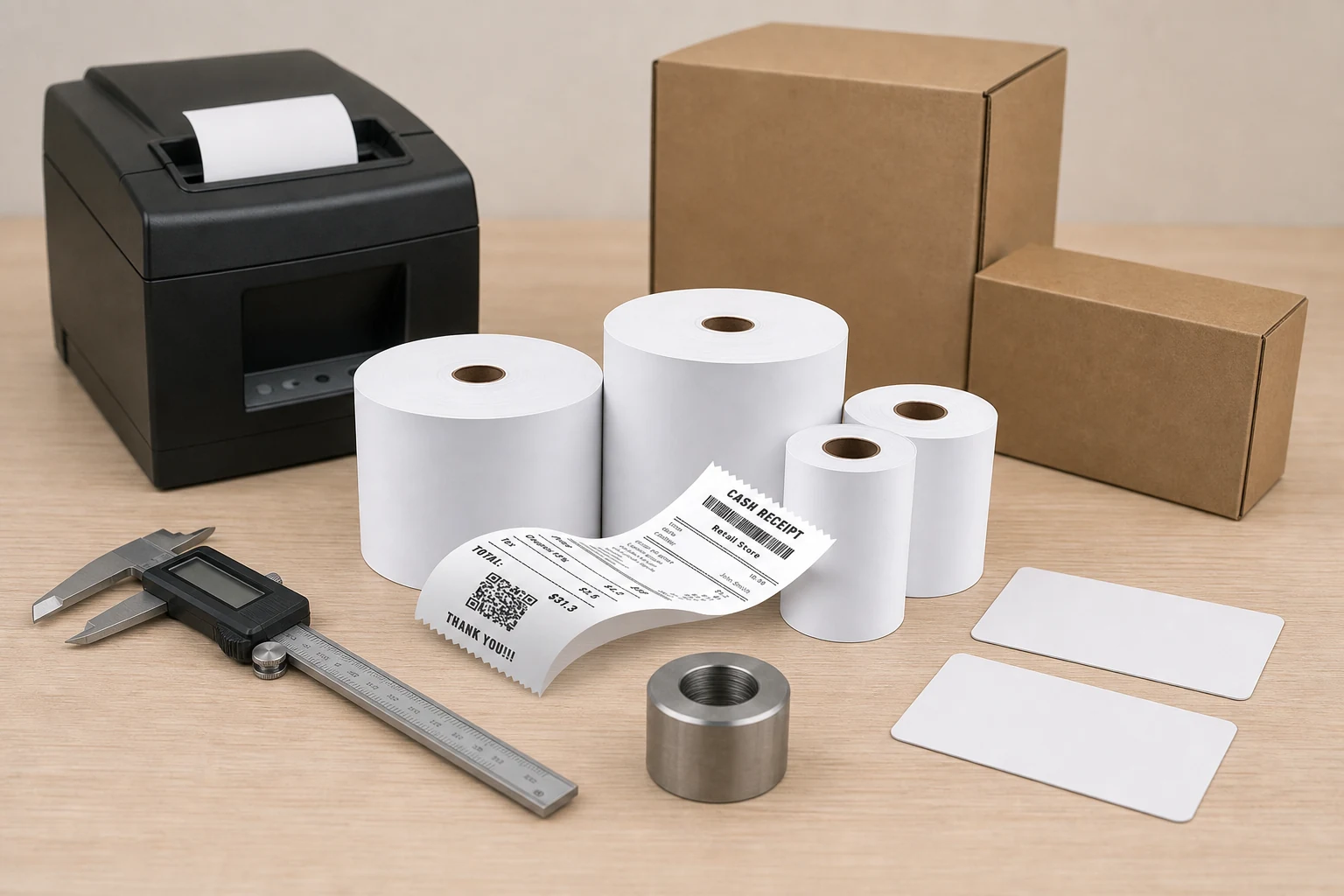
Tolerances should reflect printer fit and commercial performance. Sample around jumbo changes, adjustments, and shifts; define individual limits as well as averages, plus the action after a failure.
| Characteristic | Controlled baseline | Repeat-order trigger |
|---|---|---|
| Width and core | Calibrated tool, measurement points, tolerance, and core material | New tooling, core source, or printer model |
| Length or diameter | Named method, winding tension, and individual minimum | Rewinder setup or paper caliper change |
| Print response | Printer, setting, test file, density range, and background limit | Coating lot, paper grade, or test-device change |
| Barcode quality | Specified symbol, verifier setup, minimum grade, and scan checks | Artwork, orientation, printer, or substrate change |
| Pack integrity | Wrap seal, carton count, label fields, and pallet pattern | Film, carton, route, or stacking change |
Link Jumbo Lots To Finished Cartons
A finished carton code should connect to the jumbo-roll lot, paper grade, core batch, line, setup, inspection results, pack material, and production time. If several jumbo rolls feed one order, carton identification should preserve those boundaries.
Review the supplier's converting and factory capability against the proposed size mix. Ask how knives, dust, winding tension, tails, splices, and rolls after an adjustment are controlled. Retain a protected sample from each defined lot so later claims can be investigated against the production record.
Challenge Print Consistency Across Retail Conditions
A laboratory print can look acceptable yet fail at checkout. Test representative printers with different age, head condition, speed, and energy settings, including cold start, continuous receipts, end-of-roll feed, cutter action, and scanner distance. GS1 guidance supports defined verification and relevant scanning environments for retail symbols; a phone-camera scan is not equivalent.

Separate initial print response from durability. If receipts support returns or audit records, define the expected life and storage assumptions. Heat, light, humidity, contact materials, and abrasion can change results, so lifespan claims need supporting test conditions.
Treat Packing And Change Notice As Process Controls
Packaging is a process control: weak wrap, loose cartons, and mixed labels can damage edges or send the wrong size to a store. Define roll orientation, wrap, carton count, lot fields, barcode format, pallet protection, and loading arrangement.
A new base paper, coating, jumbo source, core, film, carton, line, test method, or site may affect approval. Specify which changes require notice, comparison evidence, and buyer approval or retesting. The site's qualification information supports due diligence, but its current scope must still match the ordered item.
Frequently Asked Questions
Is roll diameter enough to confirm roll length?
No. Diameter varies with caliper, core size, tension, and technique. Specify the controlling method and audit it with calibrated measurement or unwind checks.
How often should print quality be checked?
Check startup, defined intervals, jumbo changes, adjustments, and end of run. Frequency should reflect order risk and process capability.
Why test more than one POS printer?
A representative printer matrix exposes sensitivity, feed, cutter, and scanning issues that one well-maintained laboratory printer may miss.
What should a change notice contain?
Identify the old and new condition, reason, affected lots, comparison evidence, risk, transition date, remaining stock, and required buyer decision.
Make Repeatability A Release Decision
Consistent supply needs a measurable reference, traceability through converting, repeatable test conditions, and protected change approval. Those controls reveal variation and the operating value behind competing quotations.
For an item-specific consistency review, send the printer matrix, target dimensions, roll or carton tolerance, forecast, packing plan, and destination through the manufacturer's contact page; ask the team to map each requirement to its proposed production check and change-notice rule.
 You May Also Like